Africa-Press – Liberia. The education system is confronting what officials now describe as a quiet but far-reaching emergency—one that is not immediately visible in enrollment figures or classroom attendance but is steadily undermining learning outcomes across the country.
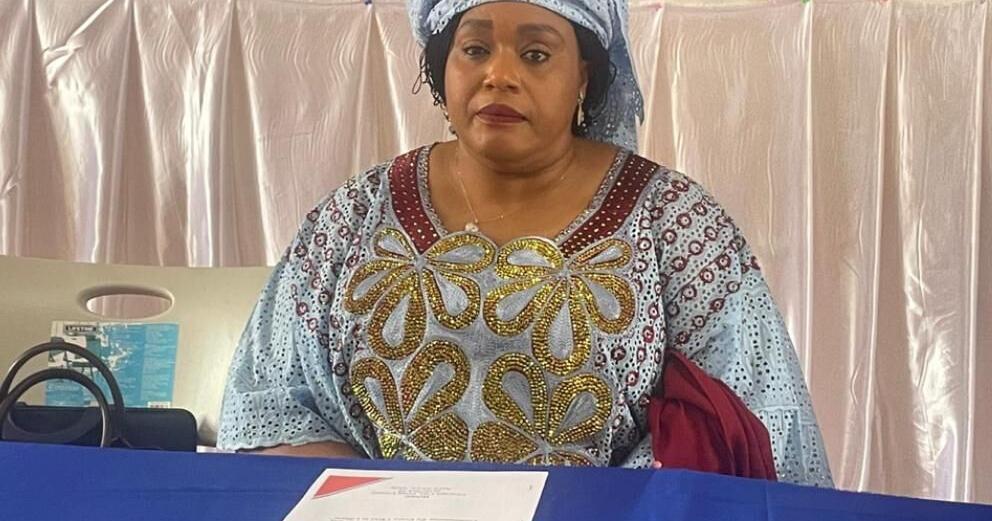
Speaking during the National Week of the Young Child celebrations, organized by the Ministry of Education’s Bureau of Early Childhood Education, Education Minister Jarso Maley Jallah delivered a candid assessment of what she termed a “hidden crisis” in Liberia’s classrooms—the failure to build strong foundational skills in early childhood.
“At the point children reach first grade, many are already playing catch-up,” Jallah warned, highlighting a systemic gap that begins long before formal schooling and compounds as children progress through the education system.
Her warning signals urgent need for structural reform beyond access, and who is better suited and situated to address this?
This is a crisis hidden in plain sight. Unlike more visible education challenges—such as school access or infrastructure deficits—the crisis identified by the Minister lies in learning quality, particularly in literacy and numeracy at the foundational level.
In a revealing anecdote, Jallah recounted encountering a student who could neatly copy text from a blackboard but could not read what she had written.
“That is the issue of foundational learning,” she said. “It is not always visible, but it is there.”
This phenomenon—often described by education experts as “learning poverty”—is increasingly recognized across developing countries. It reflects a situation where children are in school but not acquiring basic skills, creating a disconnect between schooling and actual learning.
The Liberian education system has undergone significant expansion since the end of the civil conflict, with increased school enrollment and broader access to primary education. However, analysts say that expansion has not been matched by improvements in quality.
Years of underinvestment, teacher shortages, limited training, and weak early childhood systems have contributed to a structural imbalance such as more children are entering school, but fewer are achieving foundational competencies.
This imbalance is particularly acute in early grades, where the absence of strong literacy and numeracy skills creates a learning deficit that is difficult to reverse.
Research in education consistently shows that the first years of learning—typically ages 3 to 8—are critical for cognitive development. Weak foundations at this stage can lead to poor academic performance in later grades, higher dropout rates, reduced employability and long-term economic consequences.
Jallah’s warning reflects growing recognition within government that early childhood education is not a peripheral issue—it is central to national development.
The Ministry of Education has begun rolling out a series of reforms aimed at addressing these gaps.
Among the flagship initiatives is the Excellence in Learning (EXCEL) Project, which focuses on improving teaching quality, strengthening curriculum delivery and expanding access to learning materials.
In addition, the government has launched a national e-learning platform targeting early-grade learners, with plans to ensure offline accessibility for rural communities.
School feeding programs are also being expanded, with new feeding centers under construction nationwide.
These interventions reflect a multi-pronged strategy—addressing not just teaching, but also nutrition, access, and learning resources.
While the reforms are significant, experts caution that they may not fully address the depth of the crisis without broader systemic changes.
Teacher capacity remains a bottleneck as many early-grade teachers lack specialized training in foundational learning, particularly in handling diverse learning needs such as dyslexia or autism.
Minister Jallah acknowledged this gap, “We cannot call a child stupid because they learn differently.”
This highlights a critical issue of teacher preparedness, not just teacher availability, is key to improving outcomes.
Home environment as a missing link is another issue, and the Minister placed strong emphasis on the role of families, “In many communities, learning begins at home—often without books, without structure, and sometimes without time.”
This marks a shift toward shared responsibility, but it also raises difficult questions.
In a country where many households face economic hardship, expecting parents to provide structured early learning environments may be unrealistic without support systems such as community-based early learning centers, parental education programs and access to affordable learning materials.
Digital divide and e-Learning limitations is another critical issue. While the introduction of an e-learning platform is a positive step, its effectiveness will depend on internet access, electricity availability and digital literacy.
Without addressing these constraints, digital solutions risk widening inequalities rather than closing them.
The expansion of school feeding programs is a strategic intervention, as nutrition directly affects cognitive development.
However, sustainability and coverage remain key challenges. If not scaled effectively, the impact may be limited to specific regions rather than national transformation.
Jallah’s remarks underscore a fundamental reality: Liberia’s education crisis is not confined to classrooms—it is systemic.
It involves schools, teachers, families, communities and policy frameworks. And perhaps most critically, coordination among these actors.
The long-term implications of failing to address foundational learning gaps are profound.
If early learning deficits persist, students will continue to struggle in higher grades, national productivity will be affected and inequality will deepen.
Jallah’s warning was unequivocal, “If we do not fix this, we would have failed our country.”
Addressing the crisis will require a shift from incremental reform to system-wide transformation. Key priorities include strengthening early childhood education systems, investing in teacher training and specialization, expanding community-based learning support, bridging the digital divide and integrating nutrition and education policies.
As Liberia approaches two centuries since its founding, the education system stands at a critical crossroads and the recognition of a “hidden crisis” is, in itself, a significant step. It signals a willingness within the government to confront uncomfortable truths.
But recognition alone is not enough.
The real test lies in whether policy ambition can translate into measurable improvements in learning outcomes—and whether the current generation of children will be equipped with the skills they need to thrive.
For More News And Analysis About Liberia Follow Africa-Press