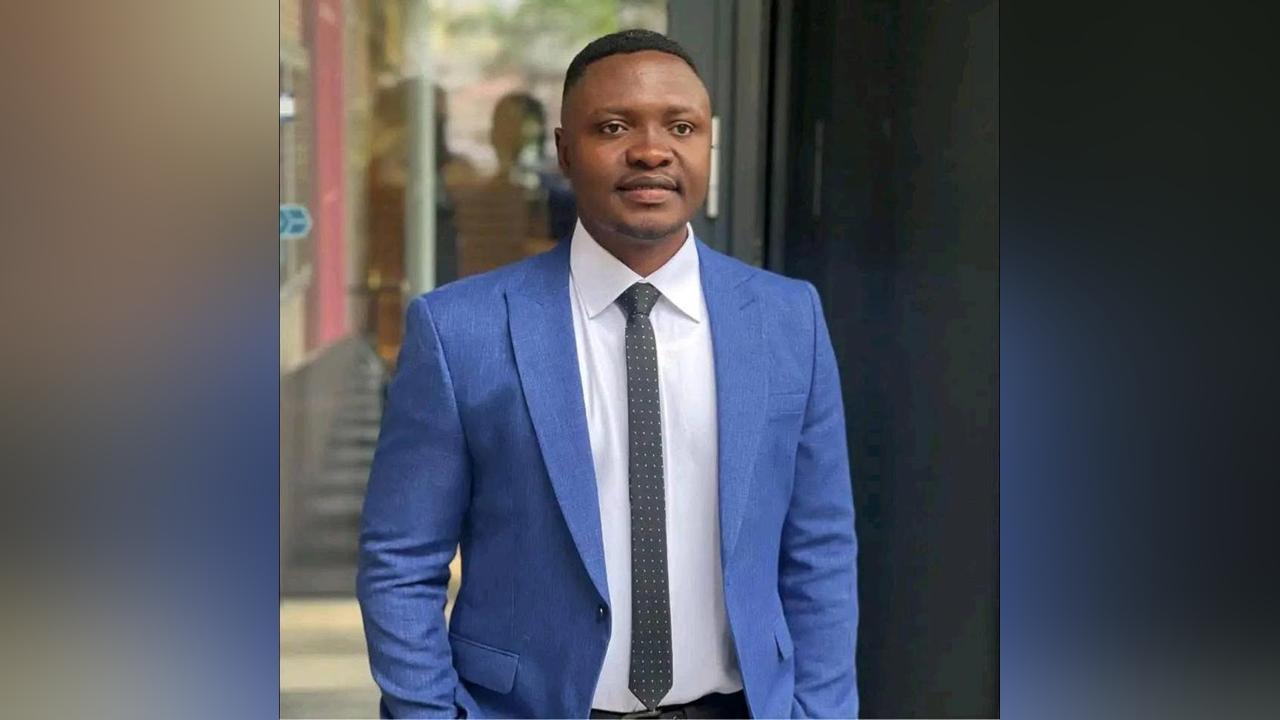
Africa-Press – Liberia. Exiled Liberian advocate Martin K. N. Kollie is encountering significant public resistance following his criticism of Senator Abraham Darius Dillon’s remarks regarding the demolition of structures erected in clearly defined alleyways.
Both Kollie and Senator Dillon were prominent allies during the 2023 presidential election, when they rallied behind President Joseph Boakai and the Unity Party in a successful effort to unseat former President George Weah.
Their cooperation at the time reflected a shared political objective. However, their relationship reportedly deteriorated after Kollie published a series of controversial Facebook posts challenging Senator Dillon’s positions on national matters.
The current dispute was triggered by Senator Dillon’s declaration that any structure built in clearly defined alleyways, where the government requires access for public safety and development, should be demolished.
In response, Kollie posted a critique on Facebook under the title “Why I disagree with Senator Dillon’s Break it down approach.” He argued that while development and public safety are necessary, demolishing homes without providing dignified alternatives for displaced residents would create severe social consequences.
According to Kollie, thousands of citizens are being displaced due to ongoing demolition efforts, and some have developed and occupied those lands for more than 15 to 20 years.
Kollie maintained that squatters have rights within the framework of adverse possession and insisted that the government should not simply “break it down” without establishing a humane and sustainable relocation strategy.
He proposed that authorities initiate dialogue with affected residents to craft a resettlement package that addresses where displaced families will live, how they will rebuild their lives, and how they will find renewed hope.
He further cautioned that sweeping demolitions could result in an unprecedented rise in internally displaced persons, potentially creating a serious crisis with security implications. Kollie emphasized that every government is established to serve, protect, and promote the wellbeing of its people, and therefore must treat citizens with dignity and respect.
Despite his argument, reactions beneath his post were overwhelmingly critical. Many commenters defended Senator Dillon’s position and accused Kollie of politicizing an issue that they believe is rooted in law enforcement and public safety.
Dominic Jayjay Musa wrote that he totally disagreed with Kollie, explaining that he had watched the short video and found Senator Dillon to be precise in his wording. Musa stressed that a clearly defined alleyway is a recognized public passage that should not be obstructed. He added that most individuals occupying such spaces know that the land belongs to the government.
He questioned why the government should expend public funds compensating those who deliberately blocked public access and argued that longstanding leniency has contributed to disorder.
Peter N. Faryen, who described himself as an unprecedented supporter of Kollie, also expressed disappointment. He stated that Senator Dillon’s remarks were clear and definite, and emphasized that citizens cannot continue to build indiscriminately without regard for regulations. In his view, the matter should not be reduced to politics.
Jimmy Wogbeh urged Kollie to preserve his standing as an earnest advocate rather than appearing increasingly political. He asserted that those who constructed buildings on alleyways violated zoning laws and that the government must create roads to ensure public safety.
Wogbeh pointed out that the zoning law requires individuals to obtain permits from the Zoning Division of Public Works before construction. He maintained that the government cannot compensate everyone who knowingly violates established regulations.
Karmoh Bility rejected Kollie’s stance outright, stating that his propaganda would not succeed this time. Michael Moore voiced unequivocal support for Senator Dillon’s statement, noting that blocked alleyways impede access for emergency responders, including the Liberia National Fire Service, during fire outbreaks.
Abraham Tokpah remarked that although he often agrees with Kollie, he disagreed on this particular issue. He asserted that Senator Dillon was entirely correct, explaining that dialogue alone may not resolve persistent violations.
Eric Pennoh expressed support for enforcement actions, though he suggested that some form of compensation might be considered for long-term occupants with valuable properties.
Levi Paye provided a personal account of the consequences of blocked alleyways. He explained that he sometimes must plead for access through private compounds or park far from his residence and walk home because access routes are obstructed. He also raised concerns about land dealers selling alleyways as private property and insisted that public access routes must be restored to promote national development.
Papah Kanneh advised Kollie to use his platform to educate the public about the consequences of building on alleyways instead of opposing Dillon’s position. He warned that when the government eventually enforces removal, affected individuals may not be in a stable economic position to restart, and compensation may not be guaranteed.
As criticism mounted, speculation intensified regarding Kollie’s political ambitions. It is widely rumored that he is eyeing the Montserrado County senatorial seat in 2029, when Senator Dillon’s current term ends. Political observers suggest that this public clash may signal the early stages of a potential contest between the two former allies.
For More News And Analysis About Liberia Follow Africa-Press