Africa-Press – Liberia. John Thomas had never dreamed of living as a squatter. But all that changed in 2008 when the house he was in was demolished in an unexpected fire accident, leaving him homeless and in pain.
“I lost everything in the house,” he says.
Fortunately, his aunt came to his rescue and provided him with a piece of land in Gobachop Community, Redlight, to squat on. He accepted, and about two to three years later built a three-bedroom house, which today makes him one of the billion people living in squatter settlements and slums, according to the 2003 United Nations Human Settlements Programme report.
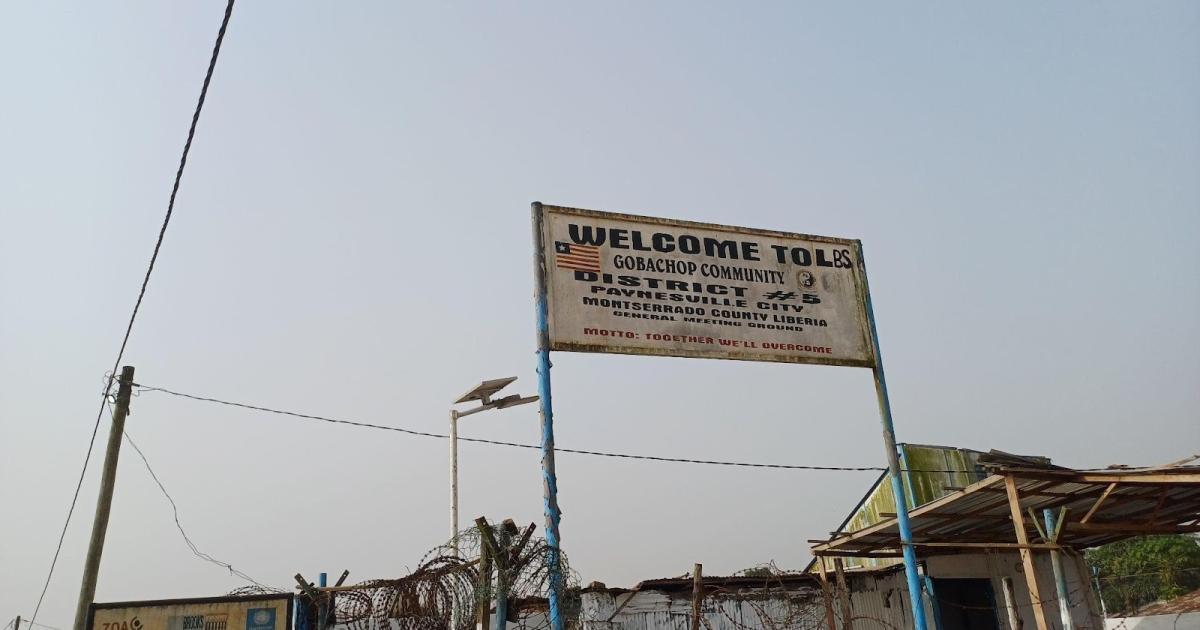
Thomas, who has lived in Gobachop for fifteen years, is now at risk of eviction if he cannot pay a monthly rent of $5.00, as demanded by the Liberia Broadcasting Corporation, which owns Gobachop land. Thomas is now one of the hundreds of squatters who live in the Gobachop community.
However, the squatters argue that the LBS’s action is unfair to them as they cannot become tenants in a settlement that they have developed. Founded in 1960, LBS is a radio and television network owned by the state. The broadcaster requested payment for rental fees in a letter to the Gobachop Community leadership in 2022. The deed viewed indicates that the Gobachop land is owned by the LBS. Due to encroachment by unauthorized occupiers, the 100 acres of land have been reduced to 62 acres.
“We sleep in noise, no respect for us,” said Annie Johnson. Johnson has lived in Gobachop for more than seven years and says living as a squatter is “risky and tough.”
Johnson and many other squatters had come here as a result of the civil war, urbanization, flooding, and industrialization.
A 2011 report by the Norwegian Refugee Council states that “the issuance of squatters’ rights is, in reality, simply an established de facto practice that is broadly accepted but not clearly legal. Regular payment of the fee entitles the holder ‘to occupy the area until the government finds [sic] it necessary to use the land in which case, one month’s notice will be given to vacate the premises.'”
The report, titled “Beyond Squatters’ Rights: Durable Solutions And Development-Induced Displacement In Monrovia, Liberia,” published in May 2011, cites a provision of the 1957 Zoning Code on non-conforming structures as the basis of the informal practice of granting squatters’ rights.
According to the Liberia Housing Profile (2014), published by UN-Habitat, some squatters have been given a measure of security by having paid an annual “squatters’ rights fee” (US$20 per annum), and some have invested in permanent houses. The UN-Habitat document was published four years before the Liberia Land Rights Law was finally passed in 2018.
But even the Land Rights Law, passed in 2018, appears quite vague in terms of recognizing the rights of squatters. The law filters through a range of terminologies such as “License” (Chapter 17) and “Adverse Possession” (Article 58). The law defines a License as “a privilege to use [land] owned or possessed by another and may be created by an agreement expressed or implied.”
Adverse Possession, however, is more elaborate in its definition by law. It is “the acquisition of Title to private land by a person or his privy based on the person’s notorious, continuous, and uninterrupted possession of said private land without any objections being interposed by the owner for the period established in Article 22 of this Act.” Article 22 says 15 or more years.
While adverse possession is the closest thing to squatters’ rights by definition, the law is absolutely clear by saying that “the elements of Adverse Possession do not apply to Government Land or Public Land.”
The NHA is responsible for making use of public land purchased by the government to build housing units that the government can rent out to its citizens. The entity may also issue receipts to people (as was done with Beatrice), giving them squatting rights on the land per the agreement that when the government is ready to use the land, it would resettle the squatters.
“LBS Issues”
In 2022, when the then-LBS boss, Estelle Kemoh, wrote the Gobachop Community leadership requesting a monthly fee of $5, the residents opposed it. Prompting the intervention of former President George Weah, mandating Kemoh to waive the land, according to Benjamin Massaquoi, Assistant Director for Government’s Project at the Liberia Land Authority (LLA). Massaquoi said that the community and the LLA agreed that each identified, established, and vetted squatter would pay $200 for a public land deed.
He added the decision to pay the $200 was agreed upon by the leadership of the community and that each identified, established, and vetted land claimant who is considered as the right squatter of the area will get their deed once they paid.
“Each of the deeds shall be issued directly in the name of the squatter on a plot of land including house, stores, and shop owners,” he said.
Massaquoi added that in 2021, LBS asked the LLA to survey 100 acres of land, but after the survey, they could only identify 62 acres of land due to encroachment.
“The president [Weah] asked us to reserve 4.3 acres of land in the circle to build a public hospital, school, and playground inclusive of a sports pitch, and a public latrine,” Massaquoi added.
But, the newly appointed LBS boss, Eugene Fahngon, says the waiver mandate will be revoked, and squatters will be made to pay a monthly compensation for the area. He claims that this fund will be used to address sanitation and protect the broadcast tower.
The Gobachop community comprises the Kizito, Outland, and Reservoir communities. However, residents within the Kizito, Outland, and Reservoir communities disagreed that they were squatters. They argued that they are occupying private land which they bought from private individuals, not LBS. But a Memorandum of Understanding seen between the LLA and the community leadership referred to Kizito, Outland, and the Reservoir communities as squatters.
Until July 2021, when the government relocated them to Omega land, Gobachop was teeming with sellers and thieves, all amid mountains of garbage.
Now, the only occupants are the residents who were left behind when the business people were forced to relocate. The area also served many underprivileged young people from Paynesville and its environs who have called it home for many years. Gobachop suffers from serious sanitation problems.
Apart from being a slum, Gobachop is challenged by waste disposal, water, and inadequate housing facilities.
The area is an informal settlement, characterized by inadequate housing and squalid living conditions. They are often overcrowded, with many people crammed into very small living spaces, with homes built without any urban planning or adherence to zoning regulations.
Thomas and the fellow squatters interviewed say squatting is not a crime, and as such, they should be treated with dignity and respect.
Gobachop is a slum in Monrovia that formerly hosted marketers until June 2021 when the government of Liberia evacuated sellers from the area to Omega Market along the Coca-Cola Factory Community.
For More News And Analysis About Liberia Follow Africa-Press