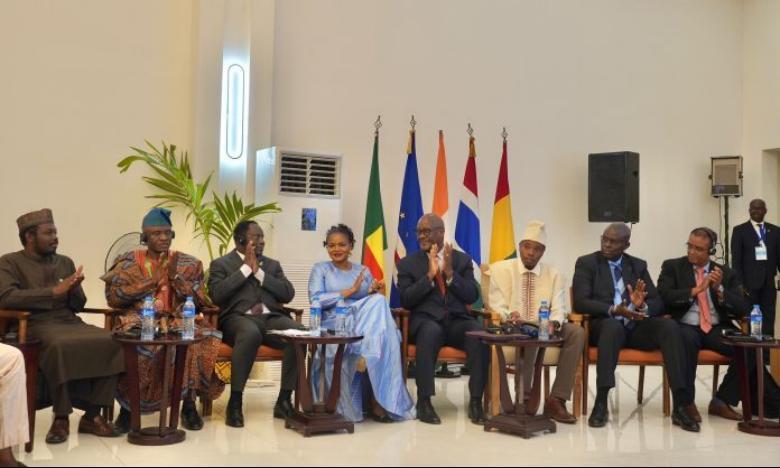
Africa-Press – Liberia. Freetown-Sierra Leone-Health Ministers from across West Africa, under the leadership of the West Africa Health Organization (WAHO), convened for the 27th Ordinary Session of the Assembly of Health Ministers of ECOWAS, unveiling a renewed and urgent regional plan to eliminate malaria.
The initiative aims to tackle what remains the region’s leading cause of death and a major barrier to socio-economic development.
Held under the theme: “Advancing Malaria Elimination Through an Integrated Regional Strategy,” this year’s assembly placed malaria firmly at the top of regional health priorities.
The disease accounts for more than half of global malaria fatalities, with children under five representing the majority of victims.
In his address, WAHO Director General, Dr. Melchior Athanase Aissi, emphasized that despite years of interventions, malaria continues to inflict heavy and preventable losses on communities.
He described the present moment as a critical turning point where scientific innovation, improved surveillance systems and strengthened political commitment must align to drive lasting change.
He stressed that no country can eliminate malaria in isolation. “We need a coordinated regional approach built on solidarity, harmonised interventions, and strengthened data and resource sharing,” Dr. Aissi noted.
While acknowledging progress, including Cabo Verde’s malaria-free certification, he cautioned that sustaining these gains requires stronger political commitment, technical rigour, and sustained domestic financing.
The WAHO boss used the occasion to present the regional strategic framework for malaria elimination, which priorities strengthened health governance, digital transformation, effective data utilization, local innovation and community engagement.
“It’s our ambition to eliminate malaria across the ECOWAS region within the next decade,” he reaffirmed.
Dr. Aissi believes by integrating strategies, aligning investments, and strengthening cross-border collaboration, ECOWAS can deliver the final blow to this ancient disease.
He noted that isolated national efforts can no longer adequately confront rising challenges such as climate change, population mobility, and growing insecticide resistance.
He stressed that a coordinated ECOWAS wide strategy is essential. For his part, Sierra Leone’s Minister of Health, Dr. Austin Demby, echoed the urgency for continued political will, calling malaria elimination both a health priority and an economic necessity.
“Malaria drains billions of dollars in productivity every year and pushes vulnerable families deeper into poverty,” Dr. Demby stated.
“We owe it to our people especially our children to act boldly, act collaboratively, and act now,” he added. He stressed the urgency of intensifying malaria elimination efforts in the face of stalled global progress since 2015, declining external financing, and the growing effects of climate change on transmission dynamics.
He called for increased domestic investment, innovation, and the transformation of health systems into more resilient and responsive platforms.
Dr. Demby highlighted Sierra Leone’s recent efforts, including expanded vector control, nationwide distribution of insecticide-treated bed nets, and strengthened diagnostic and treatment services.
However, he warned that national progress remains fragile without corresponding improvements in neighboring states.
During the multi-day session, ministers and technical experts outlined several strategic priorities to accelerate malaria elimination across the region including but not limited to rapidly detecting and response to malaria across the sub region,
harmonizing interventions to ensure seamless disease control across national borders, mobilize domestic resources to support programs and research initiatives for the elimination of Malaria, strengthening cross border collaboration among member states, enhance the role of community based Initiatives against malaria as well as the immediate establishment of a surveillance and monitoring network to address bottlenecks when it comes to resistance against anti malaria drugs and insecticide.
For More News And Analysis About Liberia Follow Africa-Press