Africa-Press – Liberia. Integrity Watch Liberia (IWL) has launched a €321,000 European Union–funded project aimed at strengthening inclusive participation, human rights protection and corporate accountability in Liberia’s forestry and extractive sectors, amid growing concerns over community rights, environmental protection and regulatory compliance in concession areas.
The 24-month initiative, running from January 2026 to December 2027, will target over 40 civil society and community-based organizations, 300 community leaders, private sector companies in mining and forestry and
journalists and media professionals across Nimba, Bong, Bomi and Gbarpolu Counties.
The project seeks to promote responsible business conduct and support the implementation of Liberia’s National Action Plan on Business and Human Rights (NAPBHR), while improving oversight and civic engagement in natural resource governance.
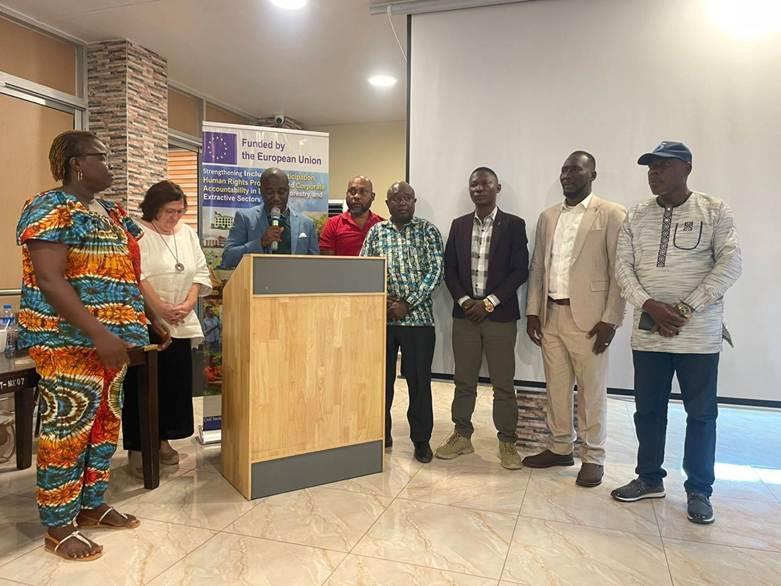
The launch, held in Gompa City, Nimba County, brought together representatives of the European Union, national and local government institutions, regulatory agencies, traditional leaders, women and youth groups, civil society actors and the media.
A representative of the European Union, Ms. Marie-Paul Neuvile, described the project as a landmark engagement between the EU and Liberian civil society on business and human rights.
“We are here for the first activity of this project supported by the European Union, and it is the first project that we are supporting with civil society on business and human rights in Liberia, and we are very happy with this new opportunity,” she said.
Ms. Neuville emphasized that the European Union’s partnership with Liberia promotes inclusive development, investment, human rights, and good governance.
She also announced that the first European Union–Liberia Business Forum will be held in Brussels next week, bringing together high-level government officials and private sector actors from mining, forestry, and agriculture.
The forum will address key sectors including agriculture, road transport, energy, tourism, and education, alongside rule of law issues, in a bid to deepen economic ties and encourage responsible investment.
Government regulators at the launch acknowledged both the economic importance of the extractive sector and the structural weaknesses that continue to undermine public trust.
The Deputy Inspector General at the Ministry of Mines and Energy, Adolphus Gleekia, said the project aligns with the Ministry’s five-year strategic plan (2025–2029) and could help address recurring compliance gaps.
“From the ministry’s point of view, we know that this is a very good platform and a good project to help us solve some of the many problems,” Mr. Gleekia said.
He stressed that Liberia’s mining sector is governed by the Mining and Minerals Law of 2000, which requires companies to meet strict pre-operational conditions before commencing activities.
“The law is clear that before you start any mining operations, you must meet the setting requirements, you need to have an environmental management plan, you need to make sure to meet with the community, and the community must agree,” he said, underscoring the legal requirement for environmental safeguards and community consent.
Similarly, J. Stanley Nyumah of the Forestry Development Authority (FDA) said the theme of the project was both timely and necessary. “Forestry and extractive activities remain central to the economy of Liberia, yet the true meaning of success in these sectors is not only revenue generation, but also that our people feel heard, protected, and respected,” Mr. Nyumah said.
He cautioned against superficial consultations, arguing that community participation must be embedded from the earliest stages of concession negotiations.
“Participation must go beyond consultation meetings after decisions are already made. The community must be involved from the early stages,” he said.
“Women, youth and vulnerable groups must have a meaningful seat at the table.”
Mr. Nyumah also called for greater investment in building the capacity of local authorities under the Ministry of Local Government to effectively facilitate community engagement and monitor compliance at the county level.
The Executive Director of Integrity Watch Liberia, Harold M. Aidoo, framed the project as part of a broader reform agenda aimed at balancing economic growth with rights protection.
“The forestry and extractive sector plays a significant role in our country in terms of the overall economy, creating jobs for many of our citizens… and raising revenue to finance development, infrastructure, health, education and so forth,” Mr. Aidoo said.
“By the same token, we are also aware that the extractive and the forestry sector also have a negative element… that greatly impacts on the environment and often serves as a violation to many of the communities where these extractions take place.”
Mr. Aidoo described the launch as the beginning of a long-term program to address fundamental human rights violations linked to extractive operations, strengthen civic oversight and ensure that concession obligations are enforced.
Officially launching the project, Jeffery Yates, head of the Secretariat of the Liberia Extractive Industries Transparency Initiative (LEITI), said the project aligns with key national frameworks, including Liberia’s ARREST Agenda, which prioritizes domestic resource mobilization, transparency and accountability in public financial management.
“I see the faces of people who are eager to get the project going, and that is my first happiness,” Yates said.
Drawing on his decade of experience at LEITI, he described the project as “designed based on experience” and aligned with the objectives of the LEITI Act, which seeks to ensure that revenues generated from natural resources are properly accounted for and benefit the Liberian people.
Beyond official remarks, the engagement provided space for communities to voice longstanding grievances. Participants alleged that children have been abused in certain mining areas and raised concerns about weak enforcement of license categories, claiming that some Class C miners operate beyond the limits of their permits, effectively functioning as Class A or B operators in violation of regulatory requirements.
Community representatives expressed appreciation for the economic benefits of mining and forestry but called for stricter enforcement of environmental standards, labor protections and concession agreements.
The launch also served as a validation platform for IWL’s Civil Society Capacity Assessment, which identified significant gaps in governance literacy, grievance handling mechanisms, advocacy skills, gender integration, financial management systems, digital monitoring tools and readiness for structured engagement with development partners such as the EU.
Presenting the findings from the assessment, IWL Policy Analyst, Narvin Ireland, highlighted the need for targeted capacity building to ensure that civil society actors can effectively monitor concessions, document rights violations, engage policymakers and contribute constructively to reform processes.
The project’s supporters say its success will ultimately be measured not only by improved policies or training sessions, but by whether communities in concession areas experience tangible improvements — safer working conditions, stronger environmental protections, meaningful participation in decision-making, and a fair share of the benefits derived from Liberia’s natural resources.
For More News And Analysis About Liberia Follow Africa-Press