Africa-Press – Liberia. By Lincoln G. Peters
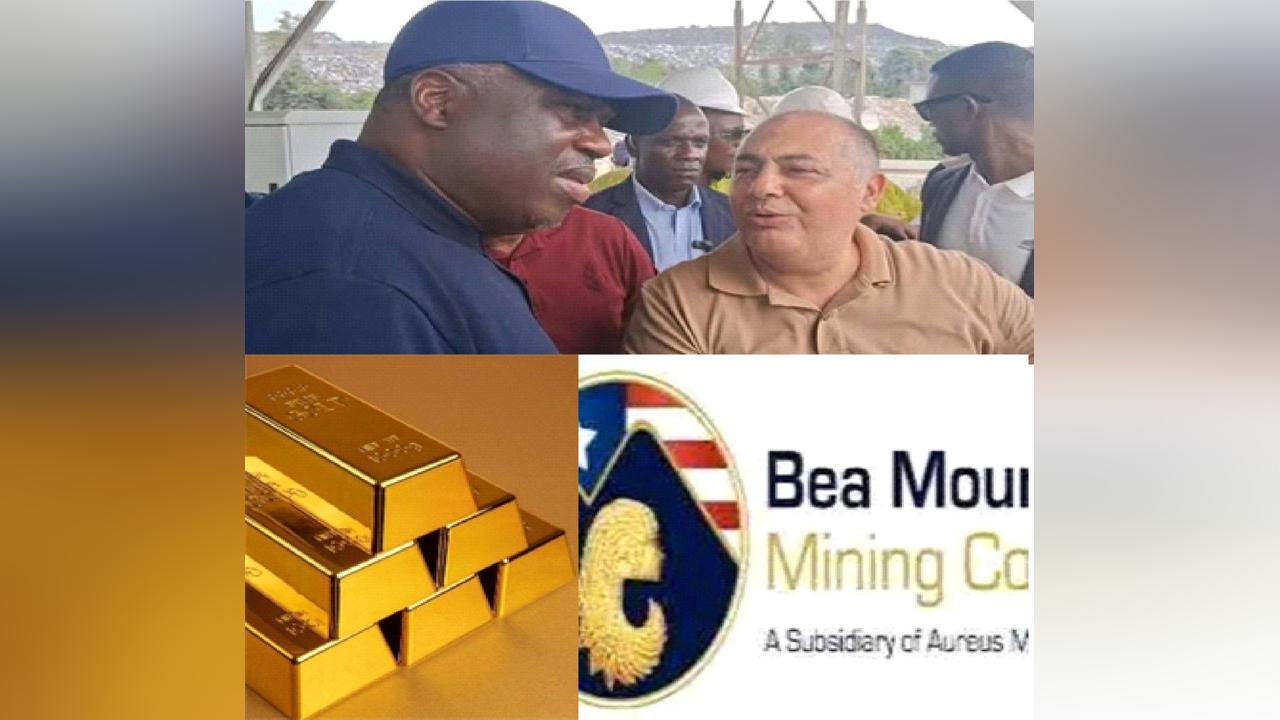
Grand Cape Mount County, April 13, 2026 — A recent visit by Vice President Jeremiah K. Koung to the Bea Mountain Mining Company has reignited national debate over Liberia’s concession agreements, following revelations that the company may be generating significantly more revenue than previously reported.
During a tour of the Bea Mountain Mining concession area over the weekend, company officials informed the Vice President that the operation produces approximately 900 kilograms of gold per month, valued at about US$137.4 million, or roughly US$1.65 billion annually.
However, contrary to the company’s report, documents reportedly indicate that the mining operation actually extracts around 1,271 kilos of gold each month, equivalent to about US$194.1 million monthly and roughly US$2.3292 billion per year.
According to information gathered by the New Dawn newspaper, the discovery raised serious concerns about revenue transparency and national benefit from Liberia’s natural resources.
Sources present during the tour recalled that Vice President Koung appeared visibly disturbed while visiting the gold smelting room, where he was told that a single pallet of smelted gold was valued at approximately US$3 million.
One source recounted that the Vice President appeared troubled as he reflected on the scale of wealth leaving the country while host communities near concession areas continue to face poor living conditions.
The source also reported that no Liberian workers were present in the gold smelting room at the time of the visit, a situation critics say reflects a wider pattern across concession operations.
The revelations have intensified public calls for concession reform, drawing reactions from political leaders across party lines.
Montserrado County Senator Abraham Darius Dillon urged the Unity Party‐led government to demonstrate political will in addressing long‐standing flaws in the concession sector.
In a statement shared on his official social media platform, Senator Dillon stressed that successive governments have failed to ensure that concession agreements deliver meaningful benefits to Liberians, particularly in employment and revenue generation.
He criticized what he described as the growing exclusion of Liberian workers from concession companies, alleging that foreign nationals are being employed in skilled and semi-skilled positions, including carpentry, electrical work, nursing, accounting, driving, and plumbing, despite the availability of qualified Liberians.
“This trend deprives thousands of capable Liberians of jobs that were meant for them under these agreements,” Dillon said. He further attributed the situation to the Ministry of Labor’s issuance of work permits, arguing that revenue considerations have overridden protections for local employment opportunities.
Dillon also lamented what he described as resistance to reform efforts, noting that advocates are often accused of harboring political or regional agendas. “How speaking up for Liberian jobs becomes an attack on any particular county is difficult to understand,” he added.
Meanwhile, Congress for Democratic Change (CDC) stalwart Wantoe Teah Wantoe called for immediate national dialogue on the Bea Mountain concession agreement, cautioning against hasty actions that could expose the country to legal and financial risks.
Wantoe highlighted key provisions in the 25‐year agreement, including fixed tax terms, delayed dividends, and limited community benefits.
He noted that under Section 35.2 of the agreement, any amendment requires mutual consent and legislative ratification, while Section 30.3 mandates that disputes be settled through arbitration in London.
He warned that unilateral cancellation or takeover of the concession could result in severe penalties, reputational damage, and broader economic consequences for Liberia.
“However,” Wantoe added, “the agreement itself clearly shows where the problems lie. A concession that grants such long‐term access must provide commensurate national benefits. Long‐term control must match long‐term value.”
For More News And Analysis About Liberia Follow Africa-Press