Africa-Press – Liberia. By Kruah Thompson
Monrovia, April 8, 2026: The Liberia Electricity Corporation (LEC) is facing mounting pressure as electricity demand across the country continues to outstrip available generation capacity.
Speaking Tuesday at a press briefing in Monrovia, LEC Managing Director Hon. Mohammed M. Sherif disclosed that national electricity access has risen from about 32 percent at the start of the current administration to approximately 38 percent today. However, he emphasized that demand for power has surged sharply in recent months while generation capacity has remained largely unchanged.
As a result, Sherif explained that LEC is unable to fully serve all households currently connected to the national grid, leading to ongoing load shedding. He noted that this challenge is not unique to Liberia, as many countries face similar supply-demand imbalances.
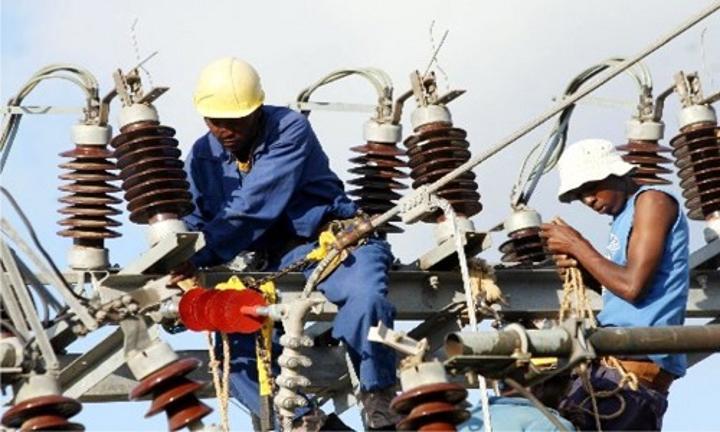
According to Sherif, since last year the corporation has connected more than 63,000 households, replaced over 400 transformers, and expanded electricity services to communities that previously had no access. He added that LEC has also extended power to several underserved “gap communities,” where partial connections existed but coverage was incomplete. While these interventions have improved access, they have significantly increased demand without a corresponding increase in supply.
“This is not a problem that can be solved overnight,” Sherif said, noting that load shedding will remain necessary until generation capacity is restored to stable levels.
During the briefing, he referenced the Millennium Challenge Corporation (MCC) Compact, which he said was developed by Liberia with the support of international partners. Sherif explained that the compact provides a framework to guide the restoration and improvement of electricity supply nationwide.
He further stressed that improving electricity delivery requires long-term planning, particularly in the power sector where utility-scale generation projects involve lengthy procurement, manufacturing, and installation processes.
Despite the current challenges, Sherif expressed optimism about the future. He cited President Joseph Boakai’s vision of achieving an installed electricity capacity of 700 megawatts by 2030, drawing from hydro, thermal, and solar energy sources. According to him, the government is working aggressively to meet this target ahead of schedule.
To realize this goal, Sherif said the energy sector has adopted a three-bucket strategy encompassing short-, medium-, and long-term interventions. The short-term plan focuses on immediate actions to stabilize supply and address urgent gaps.
The medium-term strategy includes increasing generation capacity by introducing thermal plants to meet rising demand once they are operational. The long-term plan prioritizes sustainable expansion of generation capacity.
In the interim, Sherif noted that Liberia will continue to rely on regional electricity imports from Côte d’Ivoire and Guinea through regional power pool arrangements.
Acknowledging public concerns about persistent power outages, he emphasized that LEC is not making excuses but is actively working to restore stable, reliable electricity nationwide, while assuring the public that load shedding will be reduced over time.
For More News And Analysis About Liberia Follow Africa-Press