WILLIAM Q. HARMON
Africa-Press – Liberia. Will the 2023 presidential election be yet another defining moment for the Liberian youth and the future of Liberia? No doubt, this is a delicate question that deserves attention. The most recent National Elections Commission (NEC) voter registration data underscores the magnitude of the stake that youths have in the forthcoming election.
The youth of Liberia have an incredible demographic advantage and, by commission or omission, can and will decide the outcome of the elections.
However, the crucial, sticky rhetorical question to consider is: Will Liberia’s youth constructively deploy their demographic power to influence the outcome of the election and redefine the future of Liberia, or would they sacrifice it on the altar of tribal or religious sentiments, loyalty to political parties, and immediate economic gains?
The youth are the most powerful voting bloc by number. Yet, their potential to reshape the political landscape of this country is often abused by those hustling for power by instigating unrest leading to violence. Being susceptible to such abuses is primarily the result of inadequate self-awareness and vision.
Do they know what they want for themselves or for Liberia? The answer to this question is rooted in a firm foundation of academic and civic education, life skills and vocational training, as well as an ever expanding world view. When youths empower themselves with such knowledge and vision they can then amalgamate their forces into a formidable power bloc in the Liberian vault.
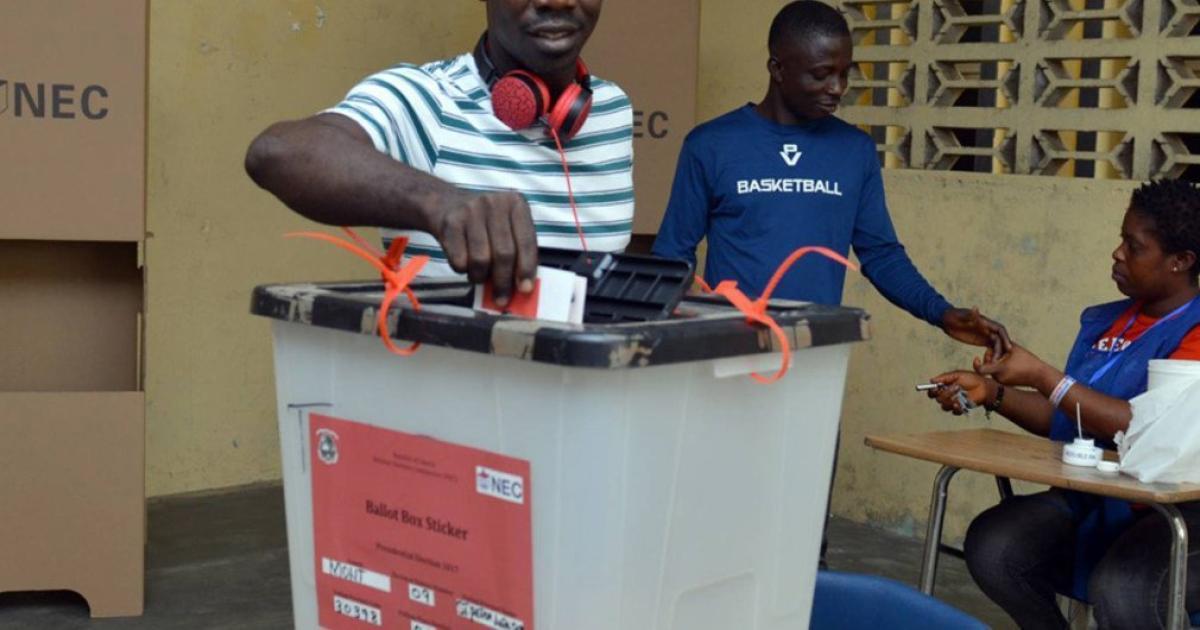
According to the updated voter registration data released by NEC, a little over 40% of registered voters fall within the age range of 18 to 34, which constitutes a significant portion of the electorate. To harness their potential, it is crucial to mobilize youth participation in voting and unite them around a common political ideology and candidates who can lead Liberia towards a brighter future by utilizing its immense potential for the benefit of all citizens.
If properly mobilized, young people can tilt the balance of political election outcomes in whichever way they choose. The key to achieving this lies in first mobilizing the youth to participate in voting, and then succinctly articulating their aspirations as a vision that they can endorse at the voting booth – repositioning Liberia into a country that harnesses their incredible potential for the benefit of all.
Historically, young people have engaged in the political process through various means, such as joining political parties, participating in campaign activities, and voicing their opinions on political matters. However, there was noticeable voting apathy among the youth until 2017, which hindered their ability to influence the country’s leadership — and accrue much needed benefits for themselves and generations unborn. Their participation in the last elections was massive as it propelled their choice of candidate, George Weah, to the presidency. But most have become disenchanted since then, claiming that much is not being done to address their plights.
However, the disconnect between their potential power and their actual participation in voting results in a squandered opportunity for political impact. Consequently, the statement that “youths are leaders of tomorrow” may have a procrastinating effect, as past leaders continue to dominate while the youth either refrain from actively seeking power, or are waiting for a “tomorrow” that may never come.
A few youth are now getting political appointments. Those being considered are not the crème de la crème of the young people, but those who shout the loudest battle cries and who pay political loyalty to their patrons. This means young people are not appointed based on merit but their proximity to political elites.
However, political candidates recognize the nuisance value of young people and youth leaders of political parties are the toast of every candidate, who seeks to mobilize them into dangerous and sinister teams ready to die in doing their bidding of scattering the electoral process or defending it. They act depending on what their political patrons require of them. Historically, the youth participate less in the most critical aspect of the democratic process itself – voting. Herein lies the conundrum. How can youth influence the country’s leadership when there is enormous voting apathy among them, and the few who vote are not coordinated to vote en bloc to influence the outcome of elections? What a waste of political power. Little wonder young people practically have no say in the governance structure.
Nevertheless, recent changes in the political landscape, including the influence of technology, economic hardships, increased civic awareness, and the desire for change, have sparked a revolutionary spirit among young Liberians, particularly those who voice their concerns on social media platforms. However, it is crucial to extend this engagement beyond the virtual realm and ensure that all young people are included, not just those who are well-connected and urban-based.
These forces are unleashing a great revolutionary spirit among the youth and opening them up to becoming interested in the political process.
Despite these promising developments, there is still a lack of political consciousness that could drive real change among the youth. Many are united by poverty and social struggles rather than a shared vision for a better future. Only time will tell whether youth voting patterns will change significantly and exert a noticeable impact on the election outcome.
The 2023 election campaign is quickly becoming a social media event, where a bulk of young people have seized the narrative, are forcing their voices on all, and setting the agenda for political campaigns — though many of the narratives are not issues-based. Although very pungent to the political emancipation of youths in Liberia, yet this engagement is not seen outside the social media in the real political space. Many of our youth are outside social media, which is dominated mostly by urban youth.
However, the political consciousness to drive change is insufficient. The youth are still not united by consciousness but mostly by poverty and social malaise in the country. Only time will tell how the pendulum will swing regarding youth voting and its impact on the election.
Harnessing the enthusiasm among youths is easier now than ever. The reason is that they are getting the brunt of the critical issues plaguing the country. They feel the heat and understand now why it is essential to rescue the country from the brink of collapse. They are beginning to link their myriad of problems to poor leadership. These problems include mass unemployment, but critically massive youth unemployment is crippling many young people, alongside national insecurity; poor quality education from the primary to university level; endemic corruption; and dearth of economic opportunities. These issues stop people of all ages, primarily youths, from fulfilling their potential.
Unfortunately, but true, youth issues are not on the front burner in the discourse leading to this election. Youth issues are given secondary attention or mention and do not constitute key campaign issues. The campaign has been mainly about personalities and less about issues.
Because of the fallback affiliation mood, the tendency to vote en bloc is minimal or completely lost, and this is my fear that the youth demographics may mean little afterall. They are incurably fragmented along different lines to the benefit of the orthodoxy, which is not about their interest. And they are not making a demand on the candidates and political parties on issues of concern to them.
The only way Liberian youth can translate their demographic advantage to tangible influence is to come out and vote in a way that will shape the kind of future they want. Youth in other countries have done it at different times. Young people here must take advantage of this opportunity to reshape their country.
Voting gives youth the power to influence decisions. Their disenchantment with governance in Liberia will become an empty threat if a critical mass does not vote and does not express a clear preference for a secured future. Disjointed participation by the young people will dash the hopes of those who wish to see fundamental changes in the landscape.
Liberian youth have the potential to significantly shape the outcome of the 2023 elections if they are intentional about defining their future. There are instances in other climes when youth influenced electoral outcomes. Perhaps the most well-known is former US President Barack Obama’s 2008 campaign and election, which was driven by young people. It can be done here, too.
It is, however, crucial for all young people to actively involve themselves in the 2023 electoral process. No Time to Waste.
For More News And Analysis About Liberia Follow Africa-Press