
The Association of Female Lawyers of Liberia (AFELL) has renewed urgent calls for the Liberian National Legislature to fast-track the passage of the Women and Girls Protection Act, a landmark bill aimed at criminalizing female genital mutilation (FGM) and other harmful practices, as the country grapples with political resistance and deep-rooted cultural divisions.
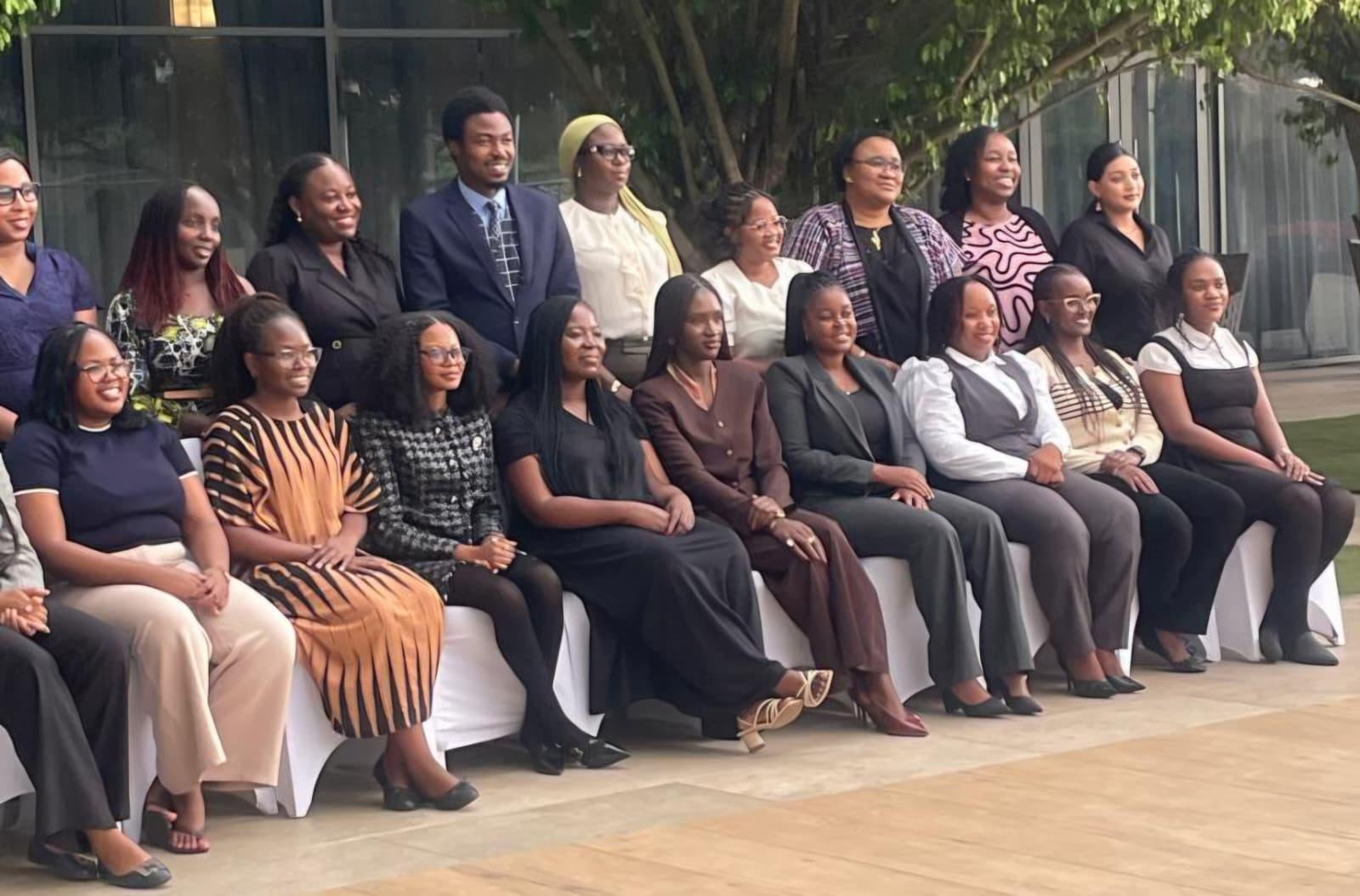
The appeal was delivered by Cllr. Bowoulo Taylor Kelley, Vice President of AFELL, during the third convening of the Clooney Foundation for Justice’s “Waging Justice for Women” Fellowship, held in Ghana.
Speaking as a panelist on “Strategic Litigation in Practice: Female Genital Mutilation,” Cllr. Kelley described the bill as a long-overdue shift from symbolic commitments to enforceable legal protection for women and girls.
“This bill arises from Liberia’s national obligation to protect the dignity, rights, and health of all Liberians,” Cllr. Kelley told the international audience.
“For too long, harmful traditional practices have thrived in the absence of explicit criminal sanctions.”
FGM in Liberia: A Persistent Human Rights Challenge
Female genital mutilation remains a major public health and human rights concern in Liberia, particularly in rural and traditional communities.
According to UNICEF and UNFPA estimates, between 35 and 45 percent of Liberian women aged 15–49 have undergone some form of FGM, with prevalence significantly higher in counties where traditional initiation practices are entrenched.
Liberia is among a shrinking number of countries in West Africa without a comprehensive, standalone law explicitly criminalizing FGM.
While temporary executive moratoriums and child protection statutes have existed, rights advocates argue they lack permanence, enforceability, and victim-centered remedies.
FGM has been linked to severe medical complications, including hemorrhage, infections, childbirth complications, psychological trauma, and in some cases, death.
The World Health Organization (WHO) classifies the practice as a violation of human rights and a form of gender-based violence.
A Bill Years in the Making
Submitted to the Legislature by President Joseph Nyuma Boakai in October 2025, the Women and Girls Protection Act represents the culmination of more than two decades of advocacy by AFELL, grassroots women’s organizations, and international partners.
The bill seeks to explicitly criminalize FGM and related harmful practices, establish penalties for perpetrators and accomplices, provide protection, rehabilitation, and support services for survivors, and align Liberia’s domestic laws with international and regional treaties.
Cllr. Kelley emphasized that passage of the law would enable Liberia to fulfill its obligations under the African Charter on Human and Peoples’ Rights, Maputo Protocol (Optional Protocol on the Rights of Women in Africa) and the Convention on the Elimination of All Forms of Discrimination Against Women (CEDAW).
She also commended President Boakai for demonstrating political will by formally transmitting the bill to lawmakers.
Legislative Turmoil and Political Pushback
Despite broad civil society support, the bill has faced fierce resistance within the House of Representatives.
On November 18, 2025, legislative proceedings descended into chaos when a group of lawmakers disrupted plenary debate, chanting “No gay bill, no FGM bill!”
Among those opposing the bill were Representatives J. Marvin Cole (Bong County), Anthony Williams (Maryland County), and Yekeh Y. Kolubah (Montserrado County), who argued that the legislation was being advanced ahead of a stalled bill targeting the LGBTQ+ community.
Representative Eugene Kollie of Bong County later declared, “This bill will not appear here,” while Rep. Kolubah added, “This paper will never surface on this floor.”
The confrontation ultimately led to a motion ironically introduced by Rep. Cole himself sending the bill to all 73 electoral districts for nationwide public consultations.
Lawmakers framed the move as an effort to balance human rights, cultural values, and national development priorities, though critics argue it effectively delayed urgent protection for women and girls.
Strategic Reframing to Break the Deadlock
The Joint Legislative Committee, chaired by Representative Moima Briggs Mensah, has since proposed significant amendments to ease resistance.
Chief among them is renaming the legislation the “Women and Girls Protection Act of 2025,” a deliberate effort to reframe the bill away from cultural confrontation and toward safeguarding vulnerable populations.
Rights advocates see the renaming as a pragmatic step but warn that dilution must not undermine the bill’s core protections.
AFELL’s Regional and Global Engagement
Beyond legislative advocacy, AFELL continues to strengthen its regional and international partnerships.
During the Ghana convening, Attorney Lauretta Mammah of the Clooney Foundation for Justice was recognized for successfully completing a one-year fellowship with AFELL.
Attorney Bendu Kpoto was formally inducted as AFELL’s new fellow at a human rights lawyers’ conference held at the Alisa Hotel in Tema, Ghana.
The Waging Justice for Women Fellowship is a flagship global initiative supporting women lawyers working on the frontlines of justice in high-risk environments.
AFELL remains one of the few African institutions selected as a host organization, reflecting Liberia’s growing role in continental women’s rights advocacy.
A Defining Moment for Liberia
As debates continue, advocates warn that legislative delay carries real consequences for thousands of girls at risk each year.
“This is not merely a legal debate,” Cllr. Kelley stressed. “It is a moral test of Liberia’s commitment to equality, dignity, and the protection of its most vulnerable citizens.”
With regional and international attention intensifying, the fate of the Women and Girls Protection Act may well define Liberia’s human rights legacy for a generation.