CLAUDIUS T. GREENE JR.
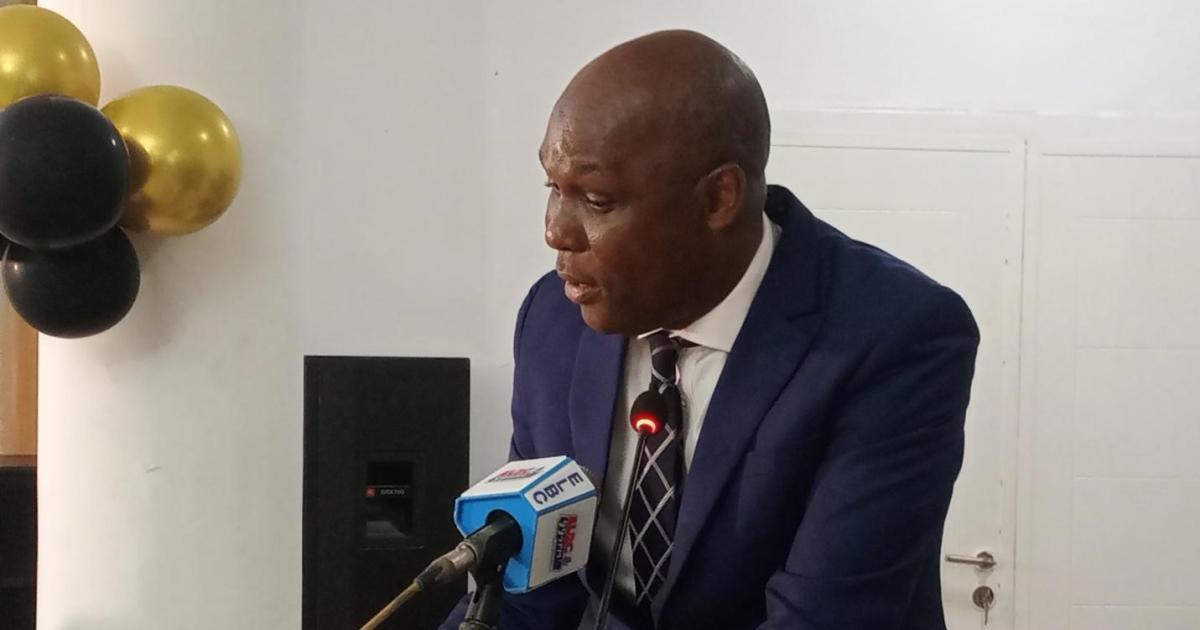
Africa-Press – Liberia. The Deputy Governor for Economic Policy at the Central Bank of Liberia (CBL) has disclosed that the economy of Liberia is confronted by lots of structural problems, and the economic fundamentals are constrained by limited domestic resource mobilization and global uncertainties.
Dukuly added that Liberia’s development and sustenance are constrained by the existence of daunting macroeconomic challenges that engender adversity to price stability.
He said that the world has witnessed the design of a new global development agenda (the Sustainable Development Goals). And there is a global mandate for each country to not only adopt the goals but to fully implement them and ensure that the desired results are attained.
Dukuly, who spoke on Tuesday, July 18, at the launch of the World Bank Fourth Liberia Economic on Liberia, revealed that the IMF asserted that by the end of 2022, at least 123 million people or 12 percent of Sub- Saharan Africa’s population will face acute food insecurity, two-thirds of the total globally.
Quoting the International Monetary Fund (IMF) October 2023 edition of regional economic outlook for sub-Saharan Africa, the CBL Deputy Governor said this is the most food-insecure region in the world, reflecting climate change-induced weather extremes, conflict, and security challenges that disrupt farming and contribute to food price shocks.
He continued by saying that in Liberia, the government was required to spend at least $40 million in 2022 and the projected amount of 79 million in 2023 as direct subsidies and tariff waivers to keep the price of rice low and ease food insecurity for an estimated 2.4 million (51%).
The Deputy Governor mentioned that the budgeted amount by the government as subsidy for rice remains far lower due to the constraint of resource mobilization.
According to him, with the changing social dynamics of a growing population and supply chain constraints, subsidies will always fall short of the required estimated subsidy to completely eradicate food insecurity.
“Moving towards food sustainability requires enormous sacrifice,” he said. “The question is how we can develop a more sustainable strategy toward food sustainability”.
In addition, Dukuly stated that policymakers should begin to rethink a matching strategy. For instance, if the subsidy is 20 million, Liberia invests 10 million in direct rice production and allocates 10 million as a subsidy, or 5 million in rice production and 15 million as a subsidy.
Dukuly told the audience that a combination of temporary and untargeted measures should be pursued gradually in response to the food challenges. But there is no direct fix for this problem.
A combination of temporary and untargeted measures should be pursued gradually in response to the food challenges,” he said
Meanwhile, Dukuly noted that Liberia should rationalize existing policy in the context for its fiscal framework, including cutting taxes on food or agricultural inputs; foregoing import tariff revenues; deferring tax payments; introducing new food, fertilizer subsidies; and wage adjustment.
“Therefore, as I sincerely register my profound gratitude, I also call for you’re the WB unwavering support so that Liberia’s challenges that are reflected in you macroeconomic diagnostic can aid the government’s effort in providing appropriate remedy,” he added
He further said the WB fourth edition launch of Liberia Economic Update is a worthwhile and informative research work that will reveal some of the structural constraints including infrastructure, barriers to rice production in the agriculture sector.
Dukuly disclosed that the CBL’s new Development Finance Concept note places emphasis on financing agriculture.
He also added that the CBL is counting on financial and other support from the National Government, and its strategic partners including the World Bank.
According to him, Liberia is of the conviction that getting rice production right will not only address the supply side constraints, reduce import pressure and make it affordable, and it will significantly boost the Liberia reserve accretion to strengthen the balance of payments position of the country.
He further disclosed that Liberia’s economy has transitioned from contraction in 2019 and 2020 to register 5 percent and 4.8 percent growth in 2021 and 2022 respectively largely on account of development in the mining sector and sustained commitment to policy reforms.
Dukuly revealed that inflation was kept in single digit reflecting profound liquidity management. And that the CBL financial inclusion index has exceeded the 50 percent target ahead of 2024 timeframe, which demonstrates conscious effort to increase access to finance amongst the vulnerable for poverty reduction.
In addition, Dukuly stated that CBL strategic partnership with the World Bank has not only allowed them to receive financial benefits, but also policy advisory support that is critical for its national development agendas.
CBL Deputy Governor told the audience that CBL is very pleased that the Liberia Investment, Finance and Trade (LIFT) project is also catering to three major financial sector project: The National Electronic Payment Switch (NEPS), Modernization of the Credit Reference System, and Provision of Sustainable Financing for MSMEs through a dedicated line of credit has made and always making available resources that continue to bridge the infrastructure gaps, evidence by the financing of road, energy and agriculture projects.
For More News And Analysis About Liberia Follow Africa-Press