Africa-Press – Liberia. The Minister of Agriculture, Jeanine Cooper, has claimed that the Jeety Rubber Factory would play a critical role in providing additional revenue outlets for smallholder and large-scale rubber farmers who are in dire need of cash.
The factory, Cooper believed, would address the critical issue of financial insecurity faced by rubber farmers — playing a pivotal role in ensuring that farmers can sustain their livelihoods — and improve their economic well-being.
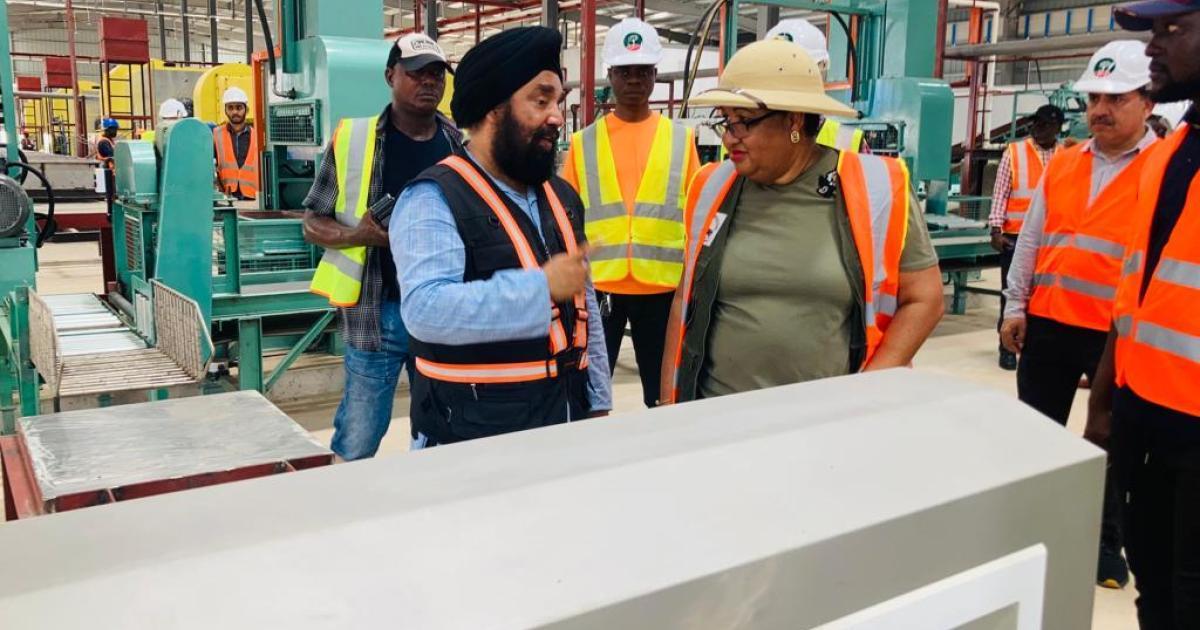
The factory, which is expected to begin processing rubber-finished goods next month, has the capacity to process more than 60 tons per hour.
“Firestone is the main big player that buys from the Liberian farmers,” Cooper said during a visit to the factory over the weekend. “If the Firestone plant breaks down and they can’t buy from the Liberian farmers, the whole economy feels it.”
Liberia, a major exporter of rubber, has seen its farmers, particularly smallholders who constitute a significant portion of the agricultural workforce, struggle on numerous challenges in accessing markets and obtaining fair prices for their produce.
The Jeety Rubber Factory, which is in dire need of rubber for processing now emerged as a key player in bridging the gap between farmers and the market, offering them a reliable avenue to generate income.
The factory, known for its state-of-the-art production facilities, is currently purchasing raw rubber from local farmers at fair prices and is planning on establishing collection centers strategically in rural areas to significantly reduce the transportation costs incurred by farmers.
This would make it easier for farmers to sell their produce, as they no longer have to travel long distances to reach the market. Additionally, the factory provides training and technical assistance to farmers, enabling them to enhance their productivity and improve the quality of their rubber output.
The factory, which is owned by Indian business tycoon Upjit Singh Sachdeva, will be the first in Liberia to add value to the cultivation of rubber, a hugely important commodity for the country’s economy, which currently exports raw products to other nations for processing.
The factory, which Cooper believes will have a positive impact on the host community by providing much-needed jobs, and much-needed skills for the Liberian workforce.
The construction of the factory comes at a time when Liberia is looking to diversify its economy, reducing its dependence on a small number of export industries. According to experts, the factory would serve as a catalyst for further investment in the country, building upon existing successes and encouraging a wave of new developments.
Meanwhile, Cooper said the construction of the factory is in fulfillment of President George Weah’s vision to see manufacturing and processing plants being set up in the agriculture sector.
Cooper added that farmers will now make a choice to sell to any of the players in the sector.
“I visited a few other plants, but I am very proud of what Jeety has done in a year. I have not seen another factory of this size being established with state-of-the-art technology and I applaud him for that. I am very impressed,” Cooper added.
For More News And Analysis About Liberia Follow Africa-Press