WILLIAM Q. HARMON
Africa-Press – Liberia. The promotion of inclusive political participation and the elimination of violence against women in politics are paramount to ensuring that every candidate has fair and equal conditions in an electoral process — as these go a long way in bringing credibility, transparency, and fairness to the outcomes of elections.
But this, according to Medica-Liberia and POWER Liberia, two organizations that advocate for women’’s rights, has not been the case in Liberia, as women seeking public offices are subjected to attacks, intimations, and other forms of violence that scare them away from the process.
Reports of physical attacks, intimidation, and harassment aimed at female politicians, activists, and voters have grown over the years as women have become more politically engaged, Medica-Liberia Head of Programs, Mbalu Winnie Jusu, said.
Often dismissed as the “cost of doing politics,” such acts pose a serious threat to democracy and raise questions about the progress that has been made toward incorporating women as full political actors, women’s rights advocates say.
Jusu said violence against women during election years is pervasive, and there is a need to tackle the problem. “We have to work and ensure that we alleviate bottlenecks that impede women’s participation in elections,” she said on July 11, at the opening of a two-day training of election monitors/observers organized by Medica Liberia and POWER Liberia.
“We are here to provide you with additional knowledge and skills necessary to fulfill a crucial role in ensuring free, fair, and transparent elections.
“As election observers, you all play a role in upholding democratic principles, safeguarding the integrity of the electoral process, and promoting the rights of all, especially women, to participate in the political affairs of Liberia,” Jusu said at the opening of the two-day event.
Violence against women active in political life, the Medical-Liberia head noted, is a form of gender-based violence that manifests physically, psychologically, and sexually, both in-person and online.
However, as the participation of women in politics has increased, so has the violence against them. Data shows that this is due to more women speaking out about the scourge, but also as a result of insufficient countermeasures to address violence.
Those countermeasures could include achieving gender parity, increasing public awareness campaigns and holding perpetrators accountable, said the UN Women Special Rapporteur on violence against women, Reem Alsalem, at an event last year.
The Special Rapporteur also discussed the need to collect data as a tool to assess the level of gender-based violence against women and girls–a gap that Medica-Liberia and partners are endeavoring to address.
Oscar Bloh, who served as one of the facilitators at the training, said that documenting violence against women has been ignored in the past, making it very difficult to have data that would validate the pervasiveness of the scourge.
“We all know that violence against female candidates has been happening, but we don’t have data to attach to it. In the past three presidential and general elections, we have seen that there has been a major gap in the proper documentation of violence against women during the election year,” Bloh, who is the Chairman of the Elections Coordinating Committee (ECC), said. “We have been focusing a lot on monitoring the campaign, campaign financing, the collation and tabulation of results, and the announcement of results, with little or no attention to the issue of violence against women candidates.”
As head of the nation’s largest election observation body, Blog admitted that stakeholders have not placed a gender lens on the issue of monitoring, tracking of incidences of violence against women and how that undermines the electoral process.
“This is why we are undertaking this initiative so that our monitors can be deployed across the country to take stock of the incidence of violence against women politicians,” he said. “When women are physically or emotionally attacked, it scares them away from the process and reduces their chances of participation.”
Women make up close to 49 percent of the total registered voters of Liberia, as per the National Election Commission’s statistics, and 49 percent of the total population of the country, and there should be nothing placed in their way that will undermine their participation in the electoral process.
Bloh, who was a part of an election observation mission to Sierra Leone, noted that the process in that country was characterized by fear and political intimidation–situations that tend to scare away voters, especially women, on election day.
Speaking of the experience he has brought from that observation mission, Bloh noted, “the context is different. I was in Sierra Leone and saw how the tension was building up even the day before the elections, and the entire environment was characterized by fear. And if the area is tense and very fearful, women tend to worry about their safety and that of their families. They could be sexually harassed and intimidated. So the fear of these could make them stay away from the process.
“So in our context, this is why we are starting this early to train these monitors on national and county levels to be able to identify these issues that could be highlighted to policymakers in terms of the early response mechanisms so that on election day and post election day, we won’t see any form of violence that would affect the participation of women in our process.
The UN 2016 Policy Directive on Preventing and Mitigating Election-related Violence understands election violence as a form of political violence that is often designed to influence an electoral outcome and therefore the distribution of political power.
Electoral violence has a broad range of manifestations, ranging from disruption or delay in the polling process to coercive intimidation and threats of physical, psychological, or sexual harm against voters, political supporters, and polling officials. It is employed to achieve a political objective that may vary depending on the perpetrators, be it agents of the state, political parties, or other groups with vested interests in the political process. Women are most often the victims.
Deputy Secretary-General Amina Mohammed told an audience last year that violence against women in politics is a violation of human rights that aims to undermine governance.
“The aim of some groups is to silence women and rob them of agency,” she said via video message.
The UN deputy chief noted that concrete action is needed to address violence against women and girls. Proposals for such national plans are part of the Secretary-General’s Our Common Agenda report, which was the recent focus of five thematic consultations at the General Assembly.
The head of UN Women, Sima Sami Bahous, said that “violence silences women, renders them invisible, and pushes them from public space.” This in turn directly hinders progress on the 2030 Sustainable Development Agenda, which aims to lift people out of poverty and create a more equal, sustainable world.
Ms. Bahous pointed to hate speech as one of the drivers used to discredit women in the public sphere, and noted that such violence is particularly difficult on young women, who may respond by simply shunning political activism altogether.
“Only when women are safe from violence and there is accountability, only then, can we make progress.”
Women today occupy 26.1 percent of parliamentary seats globally, compared to 13.1 per cent in 2000, according to the Inter Parliamentary Union (IPU).
The share of women parliamentary speakers, in charge of managing day to day business in legislatures, has also increased from 8.3 percent in 2005 to 24.7 percent in 2021–this level of global progress is an opposite of the Liberian scenario as women ascendency yo political leadership is declining
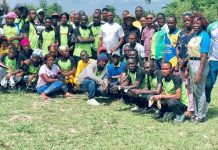
Meanwhile, during the training, the monitors were taught the essential aspects of monitoring and observation of elections.
In addition to identifying barriers to women political participation, monitors were also trained to identify types of violence that women experience during every stage of the electoral cycle, including campaigns and the actual elections.
They were also trained in the use of check-lists on critical incidence and systematically document any form of violence, be it physical verbal or any form of intimidation on be it on the traditional media or social media that will be meted against women.
The training of the monitors is supported by the UN-Secretary General Peacebuilding Fund though UNWOMEN and UNDP.
For More News And Analysis About Liberia Follow Africa-Press