Africa-Press – Liberia. Liberia took a historic step to issue title deeds to rural communities for customary land when the 54th Legislature passed the 2018 Liberia’s Land Rights Act (LRA), which President George Weah signed into law six years ago.
The passage of the law, described as one of the best in Africa in addressing the issue of land, especially granting ownership to indigenous communities, received praise across the country and beyond. This led to communities across the country queuing up to formalize their ancestral land ownership.
On the bright side of things, the Liberia Land Authority, with support from the joint United Nations PeaceBuilding Support Program will on December 2, 2021, commence a historic land survey in Grand Cape Mount, Maryland, Nimba and Sinoe counties, paving the way for the issuance of the country’s first-ever legally recognized title deeds to the indigenous community for communally held land.
This was the first time in the country’s history that the government embarked on formally recognizing traditional land ownership—a move that many celebrated.
But that was the farthest it would get as the process of granting customary land deeds, a process led by the Liberia Land Authority (LLA), has since stalled with hundreds of communities waiting in the winds—waiting on the government to recognize them and grant them rights to their ancestral lands.
“There are One hundred and fifty communities that have been going through the process since the law was passed but none have received a deed,” Nora Bowier, Sustainable Development Institute (SDI) Coordinator of the Community Land Protection Program (CLPP), said at a day-long meeting with representatives of indigenous communities on Wednesday.
Though the government, through the LAA has granted customary land deeds to a few communities out of its own (government) volition, Bowier noted none of the 150 communities that CSOs and the donor community have been supporting to formalize their land ownership have received deeds.
“The fates of these communities are still in limbo and have not received anything,” she said. “We want to understand why these communities have not been able to receive their deeds, especially after most of them have gone through the processes. What are the factors that are affecting this process?”
Most of the communities, if not all, have gone through almost all of the procedures that would eventually lead to the customary land formalization process.
The boundary harmonization and confirming survey, two very important components of the formalization process, would lead to the issuance of legally probated titled land deeds to communities.
The survey identifies and clarifies all existing boundary points between and amongst adjacent communities, including the disputed boundaries in the targeted counties.
“We did all of those things, but our deed has not been given. We have been asking what the problems are, but we are getting no response,” one of the participants said.
Former UNDP Liberia Deputy Resident Representative for Programme, Violet Baffour, 2021 described the boundary harmonization and confirmatory land survey as a major milestone for consolidating Liberia’s fragile peace and preventing future conflicts centering on land demarcation and ownership. “It sets the stage for greater social cohesion, and promotes national reconciliation required to spur sustainable development,’’ she noted.
Baffour said the issuance of community land title deeds could be one of the dividends of peace that will bring about yet a more peaceful social cohesion within and between communities–urging the LLA to go a step further to put in place effective and sustained measures for land management and prompt resolution of land disputes.
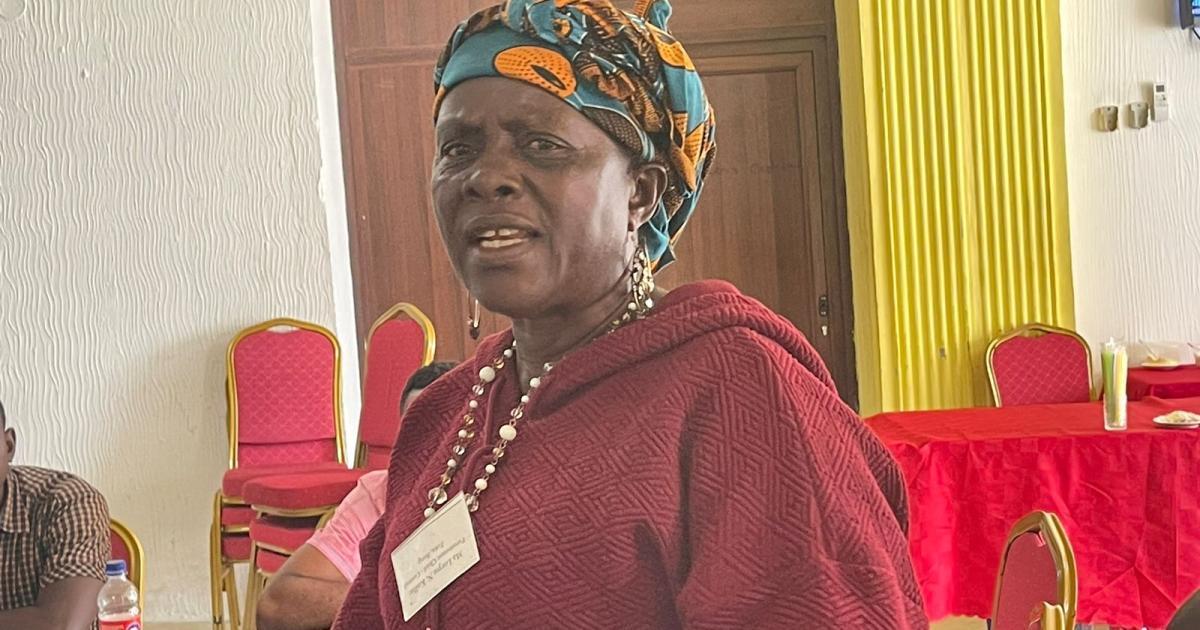
“Unfortunately, these are yet to happen,” Lorpu Kollie, Paramount of Zota District in Bong County, said. “We are still waiting on the government so that we can get our land,” she lamented.
Paramount Kollie complained about the issue of elite land grab, which she noted is brewing tension in her district. “While we are fighting to get our land, some big people are using their power to take our land,” she said. “The government has to do something about it or else there will be serious problems in this country.”
The issue of elites or influential people preying on rural communities is not unique to Zota District as other participants complained that they are also facing similar problems.
Wednesday’s meeting was organized by the Civil Society Working Group on Land Reform to educate and prepare community delegates that will attend the Community land Dialogue between local communities and the LLA slated for today.
The dialogue is intended to focus on the implementation of the Land Rights Act’s customary land component and aims to discuss and develop solutions to issues of interest to communities’ land rights.
Bowier said the meeting also meant to understand whether there are other issues that community delegates, who are due to meet with government representatives today to discuss the glitches to the deeds process, are facing regarding their land rights.
“We want to know whether they [communities] are benefiting from their rights to their lands. This right you have to the land you need to benefit from it…without that it is meaningless,” she said.
“So the government can make all the announcements that communities now have rights to their land. So what? When we talk about land rights we are talking about developments that will improve the living conditions of the people. This is the essence of owning land. This is why land is considered an asset.
Bowier and her team don’t want Land Rights Law and the customary land program to be a failure. “This is why we have called you here to share with us your problem,” she said.
Conflicts over land were one of the factors that fueled the protracted 14-year civil war in Liberia. Land disputes have degenerated into violent conflicts between people and communities, with the destruction of property, the loss of lives, and displacement.
For More News And Analysis About Liberia Follow Africa-Press