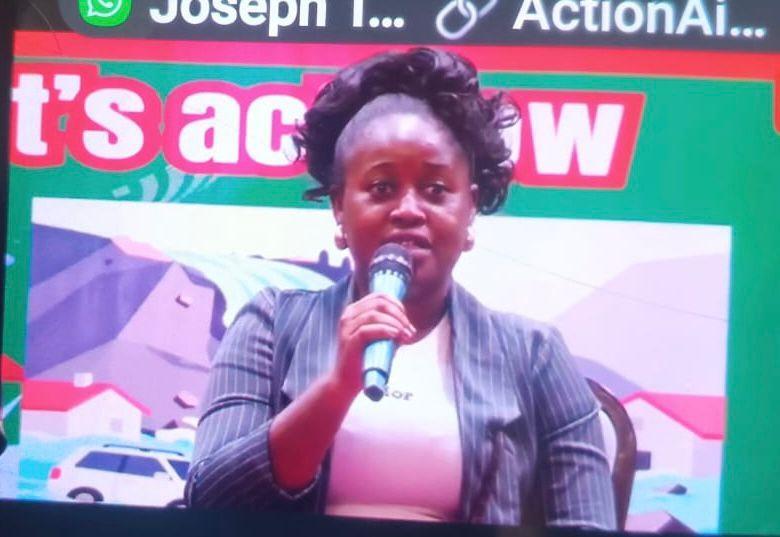
Africa-Press – Liberia. As Liberia grapples with the growing impacts of climate change, the National People’s Climate Justice Summit has emerged as a platform for advocating for bold and inclusive climate action.
The summit, which brought together civil society leaders, youth movements, environmental advocates, and women’s groups, highlighted the urgent need for a just transition that centers the voices of the most vulnerable groups in society.
At the heart of the summit were discussions on scaling agroecology, increasing access to climate finance, and empowering local communities to take action in the fight against climate change.
The panelists also expressed their thoughts on the outcomes of COP 30, underscoring the challenges and opportunities Liberia faces in securing climate funds and implementing effective policies.
Madam Elizabeth Gbah Johnson, Country Director of ActionAidLiberia, was one of the key speakers at the summit. Reflecting on her experience at COP 30, she shared her perspective on the importance of framing climate discussions from a people-centered approach.
“What we saw at COP was a space for intense advocacy, but we also recognized that the issues around climate change can no longer be addressed from a top-down approach,” Johnson said. “It must be from the people’s perspective, focusing on the most vulnerable – women, youth, and marginalized communities.”
Johnson emphasized the concept of a just transition, a key focus at COP 30, explaining that it is critical to ensure that any climate action taken is equitable and inclusive. “When we talk about just transition, we are referring to a shift that prioritizes vulnerable groups. It is not just about addressing climate change but ensuring that those who are already marginalized are part of the solution,” she explained.
Youth and Women’s Empowerment: Bridging the Gap for Climate Justice
The summit also placed a spotlight on youth engagement and the pivotal role that young people play in advocating for climate justice. Ezekiel Nyanfor, a climate justice advocate from Nigeria, shared his experience at COP 30 and his ongoing work with young people across Africa.
He pointed out the importance of integrating youth into climate decision-making processes, especially when it comes to Nationally Determined Contributions (NDCs).
“We cannot talk about climate justice without involving youth. They are the ones who will carry the burden of climate change in the future,” Nyanfor said.
“At COP 30, I was one of the only youth representatives from Liberia focused on adaptation, and that is something we need to change. We need young people in government delegations, working side by side with senior negotiators, to ensure that youth voices are heard at the highest levels.”
Mobilizing Climate Finance: The Need for Community-Led Approaches
One of the key takeaways from COP 30 discussions was the growing commitment to tripling adaptation funding, with a target of $120 billion by 2030. While Liberia stands to benefit from these funds, experts are calling for a more inclusive approach that reaches beyond national governments. Johnson pointed out that the funding mechanisms should prioritize community-led climate actions, especially given Liberia’s context as a developing country.
“There are $120 billion set aside for adaptation, but it’s critical that these funds go beyond the national level and reach community groups,” she said. “ActionAid’s focus has always been on community-led initiatives, and we need to ensure that these groups, especially rural women and youth, have the tools and support they need to access these funds.”
While much of the conversation at COP 30 focused on the need for adaptation funding, Johnson also highlighted the importance of aligning climate finance with gender-responsive policies. “When we talk about funding, we need to ensure that it addresses gender inequalities and is inclusive of all people, especially those most affected by climate change,” she explained.
The Promise of Liberia’s Forests: Opportunities in the Tropical Forest Facility Fund
A significant opportunity discussed at COP 30 for Liberia was the establishment of the Tropical Forest Facility Fund (TFFF), which offers funding for countries that maintain and protect their forests.
Liberia, home to one of the world’s most biodiverse rainforests, is uniquely positioned to benefit from these financial resources, but experts warn that Liberia must strengthen its institutional frameworks to tap into these funds.
“The TFFF is a great opportunity for Liberia,” said Sylvia Dorbor, a climate justice advocate. “Liberia has one of the richest forest resources in Africa, and the world is now willing to pay for keeping these forests intact. But the challenge is that we need to position ourselves as a nation to benefit from these opportunities.”
The Road Ahead: A Call for Stronger Coordination and Capacity Building
As Liberia moves forward in its climate action journey, experts and advocates agree that strong coordination and capacity building are key to ensuring that the country can access international funding and meet its climate goals. Dorbor stressed that national ownership and political will be essential in advancing Liberia’s climate agenda.
“We need to reduce bureaucracy when it comes to climate finance and ensure that local organizations and youth-led initiatives are not left behind,” Dorbor said. “The resources are available, but we need to position ourselves better, both at the national and local levels.”
Looking ahead to COP 31, Johnson and Nyanfor both called for continued advocacy for climate justice and emphasized the importance of engaging youth in shaping Liberia’s climate policies. “At COP 31, we need clear indicators to track progress and ensure that the needs of the most vulnerable are being met,” Johnson stated.
“Liberia’s climate future is at a crossroads, but with the right coordination and investment, we can build a more sustainable and equitable future for all.”
Madam Yunder Butler, the Executive Director of the Liberian Rural Women Organization for Climate Action, reflected on her experience at COP30, emphasizing the significance of technology transfer for climate adaptation and mitigation in developing countries.
Butler underscored the importance of empowering women, youth, children, and people with disabilities to actively participate in the process, ensuring that they are not left behind.
“The negotiations at COP30 brought forward the establishment of a framework for technology transfer, where developing countries, including Liberia, will gain access to critical technologies, with a particular focus on empowering women,” said Butler. She highlighted the need for clean cookstoves—a crucial technology for rural women who rely on traditional cooking methods.
“This is about time that we as civil society people make sure that we have our own accreditation to attend these meetings,” she continued, advocating for greater civil society involvement in climate negotiations. “With proper accreditation, we can advocate more effectively for what women and youth in Liberia truly need in the context of climate justice.”
Butler’s remarks were echoed by Ezekiel, a youth leader, who stressed the importance of establishing dedicated youth delegations to COP negotiations. “It’s vital that we train youth from across different sectors to not only attend but actively engage in climate discussions on behalf of Liberia,” he said.
He added that there’s a need for youth to gain knowledge from seasoned negotiators to ensure intergenerational equity in future climate strategies.
He also pointed out the challenges faced by negotiators, who, despite leading important negotiations on loss and damage, lacked the support of a dedicated team to consult with in real-time.
“We need more youth involved in these processes so they can help shape the future of our country’s climate strategies,” he added.
Another panelist, Friday from ECOWAS highlighted how the Just Transition concept is gaining traction in the region.
“For us at ActionAid, COP30 was a win because the focus shifted toward ensuring that youth and women are not left behind during the energy transition process,” she said. “The financing mechanisms and funds available, like the forestry funds and adaptation financing, should be directed to those who need them most.”
Friday also pointed to the critical need for multi-country alliances within West Africa to advocate for policies that align with the region’s climate priorities.
“We need to speak with one voice on climate justice issues,” she emphasized, noting that regional unity could enable better mobilization of resources for local communities.
“Governments have made their commitments, but we also need citizens to hold them accountable,” Friday stressed. “The process offers an opportunity for young people and women to contribute to policy change in ways that directly affect their lives. We need to build power, speak truth to power, and address the social injustices that are prevalent in our communities.”
For More News And Analysis About Liberia Follow Africa-Press