Africa-Press – Liberia. President Weah Thrilled by Peaceful Voting Process
–Casts Ballot at Kendeja Public School
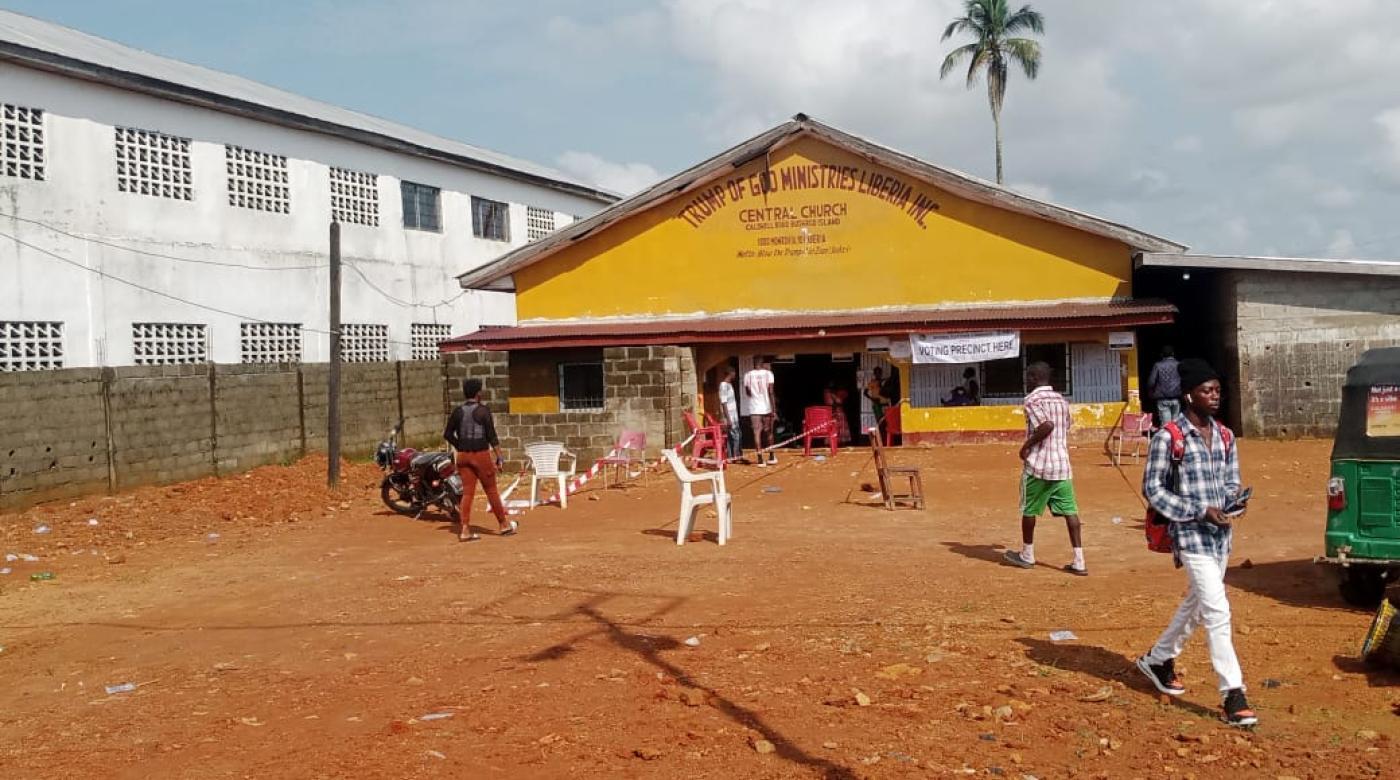
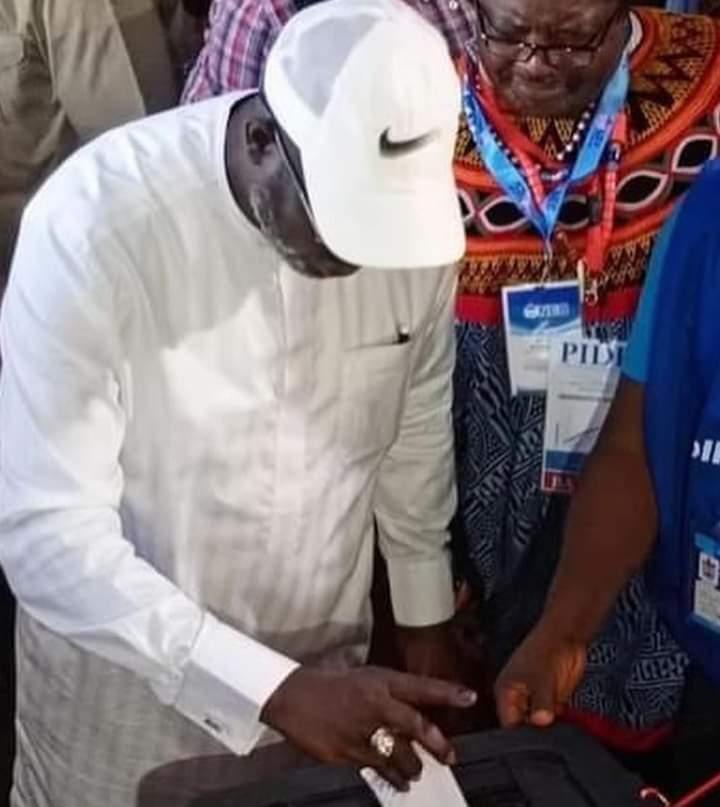
President George Weah has joined millions of Liberians in casting his ballot in a peaceful atmosphere amidst limited tension.
Weah, of the Coalition for Democratic Change (CDC), and former Vice President Joseph Boakai of the Unity Party are in the run-off election for the nation’s highest seat.
“We are seeing a lot of people in the queue, and we hope that they will exercise their democratic rights,” the President said in remarks at Kendeja Public School in Paynesville, outside Monrovia, after voting.
He then calls on voters who are still at home to ensure that they exercise their rights “as they have until 6 p.m.”
Meanwhile, the President expressed confidence in winning the run-off election based on his accomplishments over the last six years.
Why Liberia’s Runoff Election Is Historic?
By Observer Staff
The ongoing runoff election between President George Weah and former Vice President Joseph Boakai is a historic first that has never occurred in Liberia’s 177-year history.
It is the first election where the two major contenders from past elections face off in a runoff rematch. In 2017, Weah defeated Boakai, who was then a sitting Vice President, in the runoff poll with 61.5% to 38.5%. During the first round of voting, the President got 38.4% to Boakai’s 28.8%, but the case is different in 2023 as his rival’s popularity surged, leading to a neck-to-neck contest.
While Boakai lost the 2017 first round by 10 percent, he has put up a strong fight this time with 43.44%, trailing Weah who topped the first round with 43.83%—producing the country’s first razor-thin margin election results, leading to a runoff as neither of them reached the constitutional requirement of 50.1%.
Data from the National Elections Commission reveals that approximately 57% of Liberians voted for opposition candidates in the first round, signaling widespread discontent with the Weah administration.
If the discontent propels Boakai to power, he would be the second presidential candidate in the history of the country to return a former ruling party to power.
The first time this happened was 152 years ago when the True Whig Party returned to power in 1878 with the election of Anthony W. Gardiner.
Boakai’s win would also make Weah the first President in the history of Liberia to lose a reelection. No President in the history of Liberia has lost reelection.
However, former President Charles D.B. King would have been the first if he had not massively rigged the 1920 elections, described as one of the most corrupt elections in the world, with votes obtained exceeding the registered votes.
King’s pattern fueled former Vice President Tolbert’s prolonged stay in power before his death in the 1970s. Former President Doe also followed a similar route as he allegedly rigged the 1985 elections, widely believed that his rival, Jackson Fiah Doe, won.
Weah, who came to power with promises to tackle corruption and improve livelihoods, has faced criticism for what many see as a failure to deliver on these commitments.
Disenchantment among Liberians has grown due to issues such as corruption, high youth unemployment, food inflation, and overall economic hardship.
In response to accusations of mismanagement, he has cited external factors such as the coronavirus pandemic and the consequences of the Russia-Ukraine war for the economic challenges faced by the nation.
The president has been talking about improving education and dealing with unemployment. He has asked voters for more time to see the results of his first-term promises, to root out corruption and improve livelihoods.
Boakai hopes to capitalize on this dissatisfaction, framing his campaign as a mission to rescue Liberia from what he perceives as a decline during Weah’s presidency. He remains confident in his achievements, pointing to initiatives like the introduction of free tuition for university students as evidence of progress.
Boakai, who served as the vice-president to Ellen Johnson Sirleaf, Africa’s first elected female head of state, is going to the runoff after securing the endorsement of three of the four best-performing candidates.
Meanwhile, the Nov. 14 runoff election is the fourth in the country’s post-war presidential election, but the first one without the presence of the United Nations mission, which previously provided support to the country’s electoral commission.
Joseph Boakai Casts His Vote
The Standard Bearer of the Unity Party Ambassador Joseph Nyuma Boakai has cast his ballot at the Kathleen McGuire Catholic School in Paynesville.
The Former Vice President was accompanied to the ballot box by his wife, Mrs. Kartumu Y. Boakai, Former Second Lady of the Republic of Liberia who also has been casting her ballot in that precinct.
The McGuire Catholic School is the precinct where the Former Vice President has been voting in the last two elections.
The first round of the polls held on October 10 put incumbent CDC neck and neck with no clear winner.
The second round in keeping with the constitution was to be held on the 7th of November,2023, but was pushed ahead for the 14th of November something that Liberians considered as a breach of the Liberian constitution.
Today the Former Vice President cast this historic and most important ballot of his life to become the next President of Liberia.
NEC Urged to Exhibit Professionalism During the Runoff
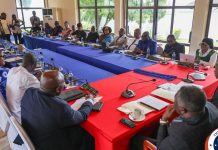
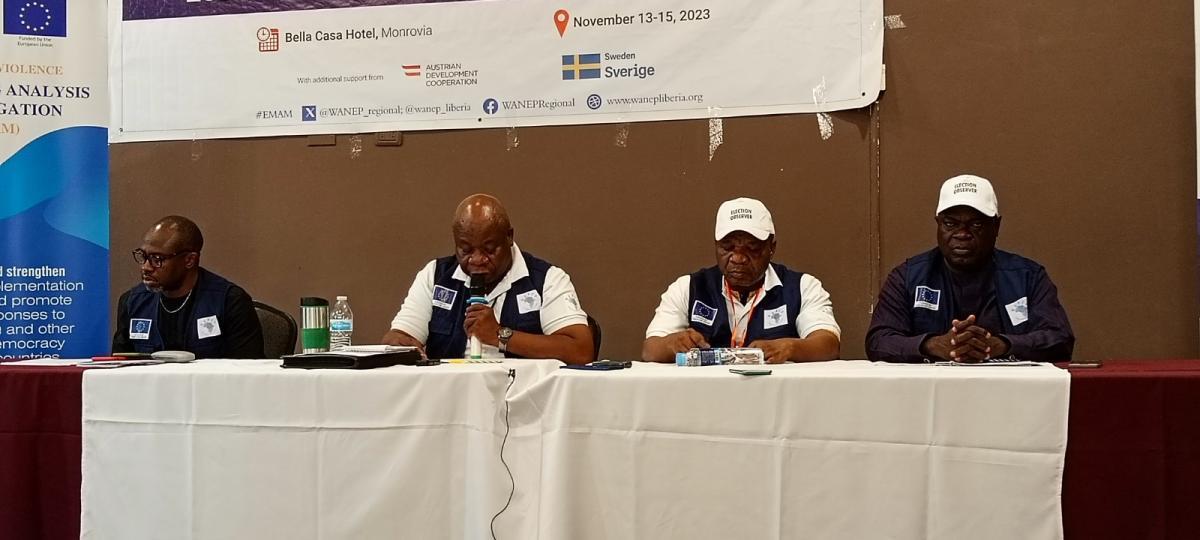
Photo: ESR team at the reopening of its three-day press briefing conference at Bella Casa Hotel in Monrovia.
By Observer Staff
The Election Situation Room (ESR) has urged the National Elections Commission (NEC) to continue exhibiting a high level of professionalism during the November 14 presidential runoff election.
According to ESR, the electoral body needs to remain sensitive to the timely release of the results in line with electoral laws and ensure adequate lighting systems, including solar lamps or torch lights, especially during voting, counting, and tallying processes where needed.
The ESR is therefore “encouraging political parties and supporters to refrain from unofficial pronouncements of election results, intimidation, and violence, and also to avoid rhetoric that deepens divisiveness.”
“The media should refrain from inflaming tensions and being purveyors of mis and disinformation on mainstream and social media,” ESR added.
ESR is designed to mitigate election violence in West Africa through National Early Warning Systems (NEWS) and is complemented by Insider Mediators represented by and through the National Election Response Group.
According to ESR, they will monitor, analyze, report, and facilitate responses to violent threats to the peaceful conduct of the November 14 Presidential Runoff election.
The ESR added that one hundred and thirty-three local observers, out of which twenty were Long Term Conflict Monitors, have been deployed in seventy-three prioritized low, medium to high-risk areas across thirty-eight districts in nine counties in Liberia, including Montserrado, Lofa, Grand Gedeh, Bong, Gbarpolu, Grand Bassa, Grand Cape Mount, Nimba, and Margibi County.
“NEC Has Not Distributed Any Pre-marked Ballot Papers,” Commission’s Chairperson Says
By Observer Staff
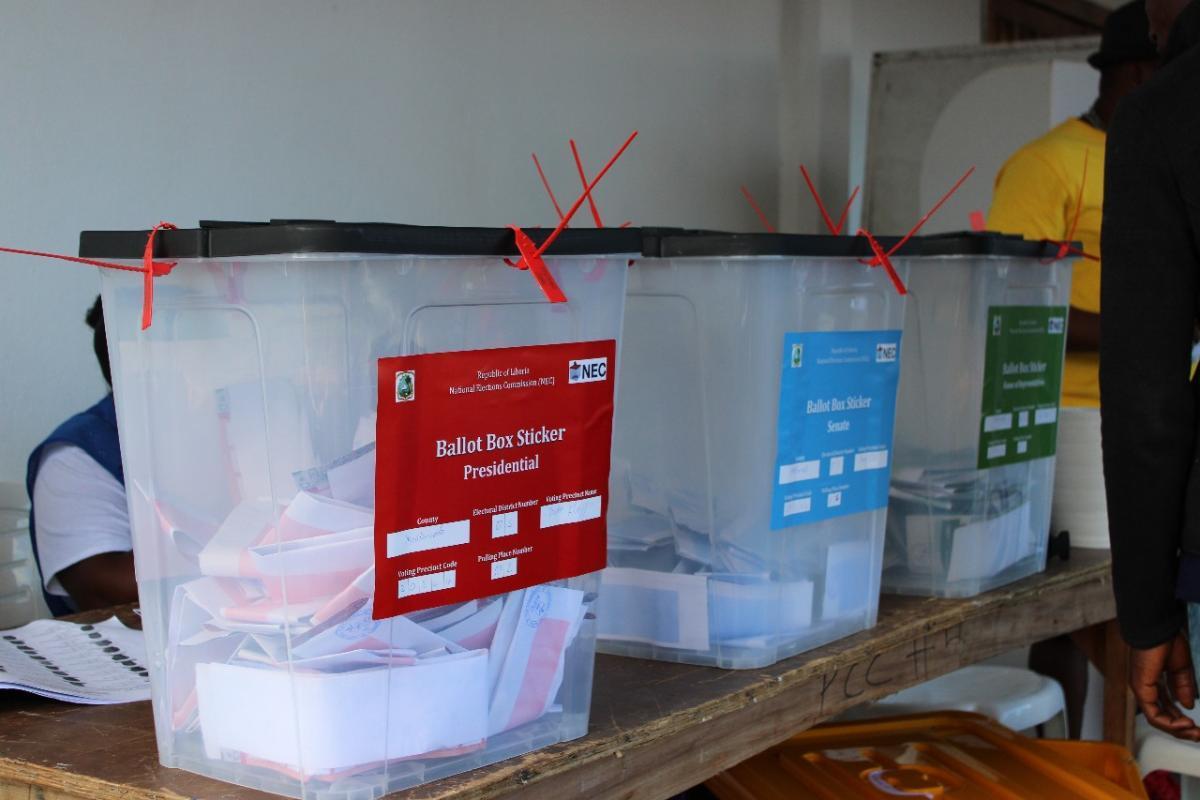
The National Elections Commission (NEC) has dismissed reports circulating on Facebook about pre-marked ballot papers allegedly being in the possession of the ruling Coalition for Democratic Change (CDC).
The NEC’s clarification comes after a helicopter belonging to the ruling party allegedly landed at the Foya Airstrip, in Lofa County, leading to claims that it was carrying “some ballot boxes with pre-marked ballot” papers in favor of President George Weah.
Addressing the issues, Davidetta Browne-Lansanah, the NEC Chairperson, stated that while the electoral body was unaware of the specifics of the reports concerning ballot papers and FRR booklets, they have not distributed any pre-marked ballot papers to the ruling party as alleged.
“The commission has not received this information in the official capacity of the commission,” Browne-Lansanah said at a press conference in Monrovia on Monday. “We hear it is ballot papers, and the FRR booklets, etc. We don’t know what the story is. But what we can say is that, at no time, did the NEC pre-mark any ballot and distribute it anywhere.”
Lansanah noted that all the ballots, securely sealed in plastic and cloth and packed in “Ghana Must Go bags,” are currently stored in the Commission’s warehouses nationwide. “Thanks to the timely delivery of the ballots by the vendor, the NEC has already begun deploying them to the 15 counties, aiming for them to reach the 2,080 precincts and polling places across the country in a timely manner,” she said.
The NEC Chairperson added that the commission is committed to upholding fairness and maintaining a level playing field for all candidates participating in the elections.
She also emphasized that the commission does not engage in spreading rumors and that all official information is communicated through its website, newspapers, radio stations, and press conferences.
She assured the public that the NEC would thoroughly investigate any credible reports brought to their attention.
Liberians Begin Voting in Runoff Elections Amidst Low Turnout
By Observer Staff
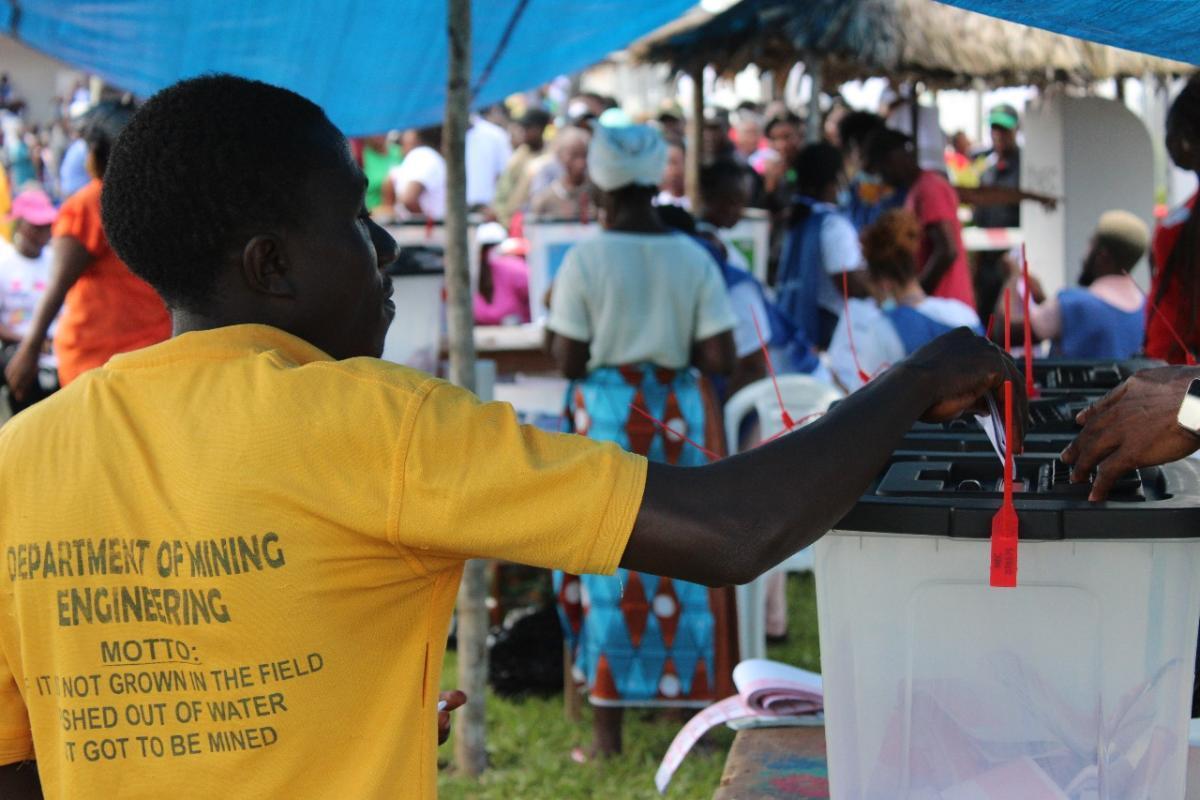
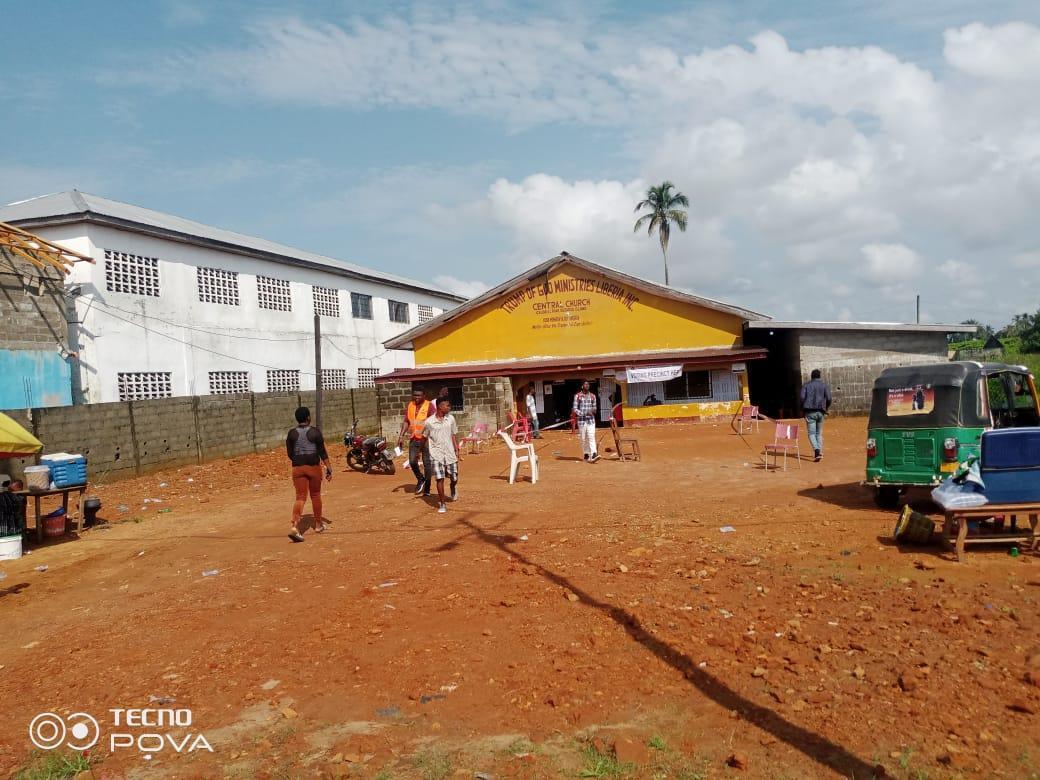
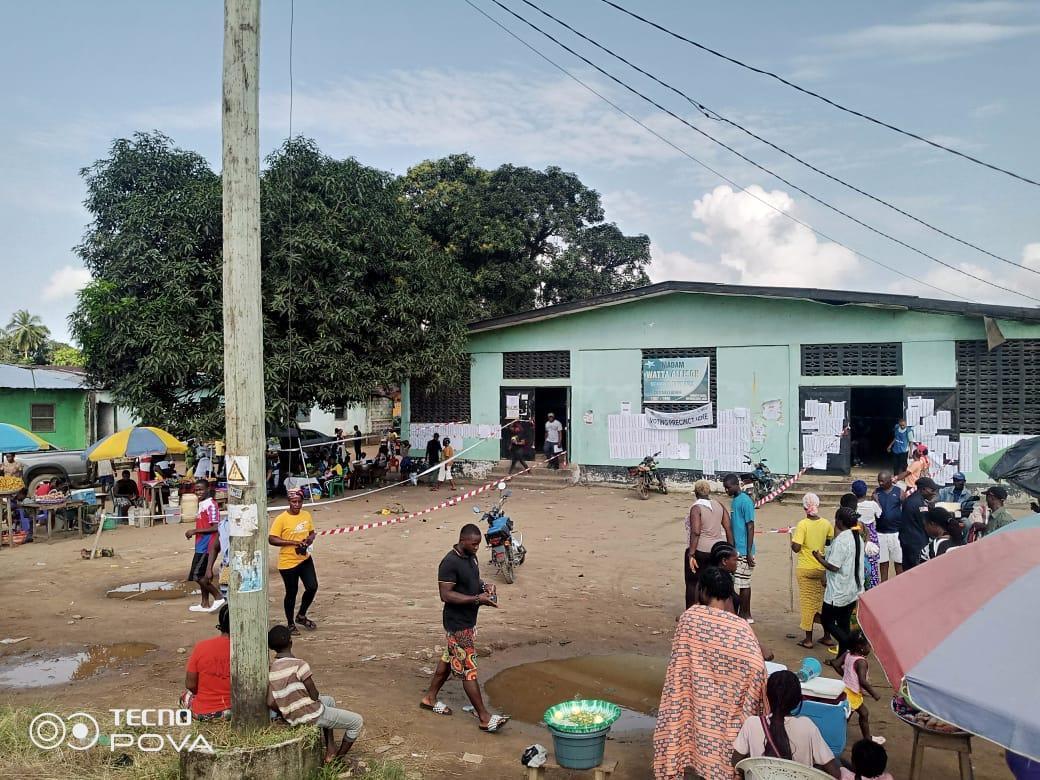
Polls have opened in Liberia for its crucial runoff election amidst low voter turnout across the county, even though the process is going on smoothly without lots of hiccups as compared to the first round.
Historically, runoff elections in the country have struggled to capture the enthusiasm of the first round, and it remains to be seen whether half of the little over 1.9 million Liberians who voted on October 10 will turn out.
The first round of voting, which had the highest turnout in postwar Liberia’s history at 78.86%, saw a little over 2.4 million Liberians registered to vote. The November 14 runoff elections pit incumbent President George Weah against Vice President Joseph Boakai, following a neck-to-neck first round of voting on October 10.
The initial round produced the slimmest margin in the country’s history, with Weah securing 43.83% of the vote and Boakai trailing closely with 43.44%. The constitutionally required threshold of 50.1% eluded both candidates, necessitating the runoff.
Data from the National Elections Commission reveals that approximately 57% of Liberians voted for opposition candidates in the first round, signaling widespread discontent with the current administration.
This raises questions about the potential impact on the runoff, as the non-Weah and Boakai voters scattered their support among 18 candidates who are now out of the race. Analysts posit that the key to victory lies in garnering the support of the largest number of eliminated candidates.
Boakai, who faced defeat against Weah in the 2017 runoff, has demonstrated a stronger performance this time, accumulating a higher share of votes compared to the previous election.
His campaign slogan, “Rescue Mission,” underscores his message of reversing what he perceives as the decline of Liberia under Weah’s leadership.
The President who came to power with promises to tackle corruption and improve livelihoods has faced criticism for what many see as a failure to deliver on these commitments. Disenchantment among Liberians has grown due to issues such as corruption, high youth unemployment, food inflation, and overall economic hardship.
Weah, in response to accusations of mismanagement, has cited external factors such as the coronavirus pandemic and the consequences of the Russia-Ukraine war for the economic challenges faced by the nation.
Boakai hopes to capitalize on this dissatisfaction, framing his campaign as a mission to rescue Liberia from what he perceives as a decline during Weah’s presidency.
He remains confident in his achievements, pointing to initiatives like the introduction of free tuition for university students as evidence of progress.
For More News And Analysis About Liberia Follow Africa-Press