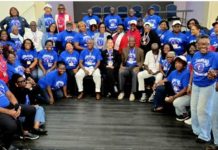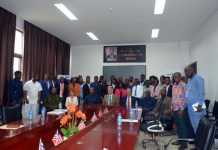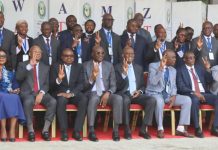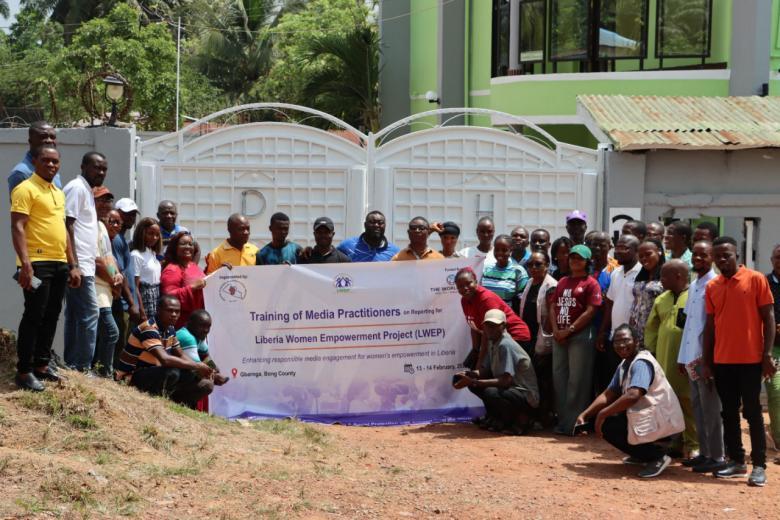
Africa-Press – Liberia. The Liberia Women Empowerment Project (LWEP), implemented by the Ministry of Gender, Children, and Social Protection (MGCSP) with funding from the World Bank, has concluded a two-day Gender-Responsive Reporting Training for 50 journalists and media partners in Gbarnga, Bong County.
The training, held from February 12–13 at the Passion Hotel Conference Hall, was organized by Plan International Liberia, the Lead Service Provider under LWEP.
Participants were drawn from Bomi, Bong, Grand Gedeh, Grand Cape Mount, Montserrado, Gbarpolu, and Rivercess Counties, reflecting the Project’s nationwide scope and commitment to inclusive engagement.
Of the 50 journalists trained, 36 were male and 14 females, demonstrating strong cross-gender participation in advancing responsible and gender-sensitive reporting across Liberia.
The training was conducted under the theme: “Enhancing Responsible Media Engagement for Women’s Empowerment in Liberia.”
It aimed to strengthen journalists’ understanding of the Liberia Women Empowerment Project and promote ethical, fact-based, and gender-responsive reporting on women’s empowerment initiatives.
During the sessions, the Project Management Unit (PMU) provided a comprehensive overview of LWEP, a US$44.6 million, five-year initiative (2022–2027) funded through a World Bank Loan and Grant Arrangement.
Seventy percent of the funding constitutes a loan to the Government of Liberia, while the remaining portion is a grant.
The project became effective in 2023 following the signing of the agreement in May 2022.
LWEP is being implemented in six counties—Montserrado, Bomi, Grand Cape Mount, Gbarpolu, Rivercess, and Grand Gedeh and targets 498 communities, with an estimated 267,200 total beneficiaries.
Of these, 36,000 women will directly benefit from US$18 million in cash grants and livelihood support.
Participants were introduced to the project’s five components, which focus on:
Changing harmful social norms through the SASA methodology (Start, Awareness, Support, Action)
Preventing and responding to Sexual and Gender-Based Violence (SGBV) and Intimate Partner Violence (IPV)
Improving adolescent sexual and reproductive health services
Advancing girls’ education retention and completion Strengthening women’s economic empowerment through skills training and agricultural support
Building institutional capacity within the Ministries of Gender and Agriculture
Enhancing monitoring, evaluation, and the Grievance Redress Mechanism (GRM).
The project allocates approximately US$8 million to social norms change interventions and US$23.6 million toward skills development and agricultural training.
An additional US$18 million is dedicated to cash grants benefiting women entrepreneurs and farmer groups.
The training also emphasized the importance of accurate reporting to prevent misinformation about project funding and implementation.
Journalists were encouraged to provide evidence-based coverage that promotes transparency, accountability, and positive community engagement.
On the second day, facilitators focused on gender-sensitive and ethical reporting practices, fact-checking, and the media’s critical role in challenging harmful stereotypes and amplifying the voices of women and girls.
LWEP officials highlighted the project’s inclusive approach, noting that while 70 percent of beneficiaries are women, 30 percent are men, a strategy designed to reduce household tensions and promote shared economic responsibility, thereby decreasing incidents of intimate partner violence.
As LWEP enters its second year of implementation, the Ministry of Gender reaffirmed its commitment to transparency, citizen engagement, and collaboration with the media to advance inclusive development and gender equality nationwide.
‘West Africa Is Now the Epicenter of Global Terrorism Deaths’
For More News And Analysis About Liberia Follow Africa-Press