Africa-Press – Liberia. As Liberia grapples with a deforestation rate of over 2% per annum, stakeholders in the forestry sector converged in Monrovia and reviewed a groundbreaking pilot project aimed at balancing forest conservation with the economic survival of rural communities.
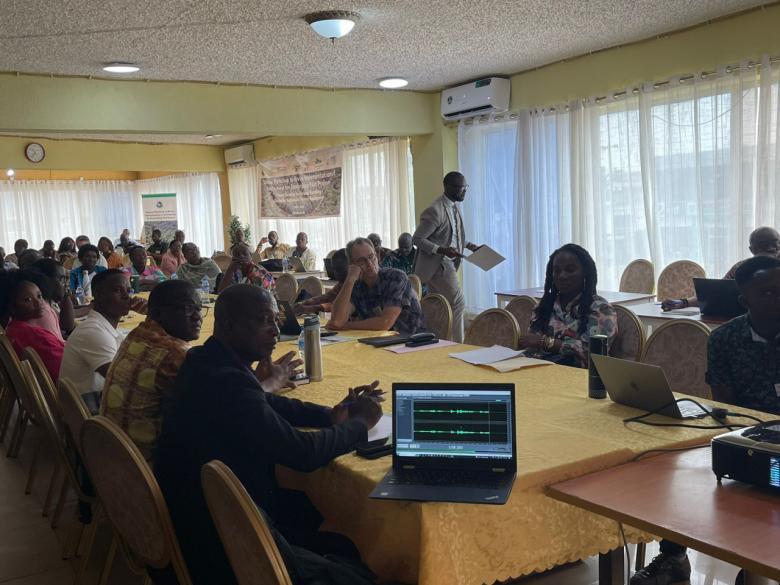
The national workshop, held on Tuesday in Monrovia, under the theme: “Keeping the Forest Standing… Options for Sustainable Forest Management in Liberia,” brought together government officials, international partners and community leaders to evaluate the Payment for Stewardship (PfS) initiative.
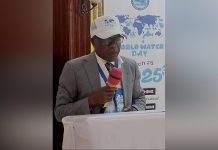
Opening the workshop, Jackson S. Nobeh, Team Leader and Principal Founder of the Partners in Development (PADEV), provided a sobering overview of the state of Liberia’s natural heritage.
“Liberia’s forests are disappearing while the overwhelming majority of the population still lives in poverty,” Mr. Nobeh stated.
“The rate of degradation from dense forest to sparse has doubled in less than a decade. Sustaining these forests is not just a climate issue; it is a social and economic imperative.”
Mr. Nobeh highlighted that approximately one-third of Liberia’s population relies directly on forest products for their livelihoods.
He warned that the loss of forest cover drives “impoverishment and the loss of culture and identity,” noting that any successful intervention must be developed in close collaboration with the communities that call the forest home.
The workshop centered on a review of the PfS pilot scheme launched in 2025 by Integrated Development and Learning (IDL), in collaboration with the Forestry Development Authority (FDA) and with support from the Government of Ireland.
The pilot covered 50,674 hectares of dense forest within the Wedjah and Jeadea Districts.
Unlike traditional conservation models that often exclude locals, the PfS model explores “stewardship” payments—incentivizing communities to protect the standing forest rather than clearing it for short-term gain.
After one year of implementation, IDL commissioned an independent review to identify strengths and weaknesses.
The findings of this review, presented during the workshop, are expected to form the blueprint for scaling the model nationwide.
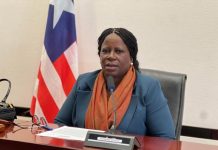
Representing the government, the Deputy Managing Director for Operations at the Forestry Development Authority(FDA), Gertrude K. Nyaley, delivered remarks emphasizing the importance of sustainable management.
She noted that the FDA is keen on models that strike a balance between protection and the enhancement of community well-being.
The event was organized under the auspices of the Community Forestry Working Group (CFWG). PADEV, a leader in collaborative forest management, played a central role in facilitating the dialogue.
“PADEV has footprints in over 100 forest-dependent communities across rural Liberia,” Mr. Nobeh added, pointing to the organization’s history of implementing gender-responsive capacity building and sustainable livelihood projects.
Stakeholders at the workshop discussed proposals to improve the stewardship model based on lessons learned from the first year.
Key discussions focused on refining payment structures to ensure funds reach the most vulnerable community members, scaling SBCC (Social Behavior Change Communication) to discourage illegal logging and poaching and strengthening forest governance through the Community Forestry Working Group.
For More News And Analysis About Liberia Follow Africa-Press