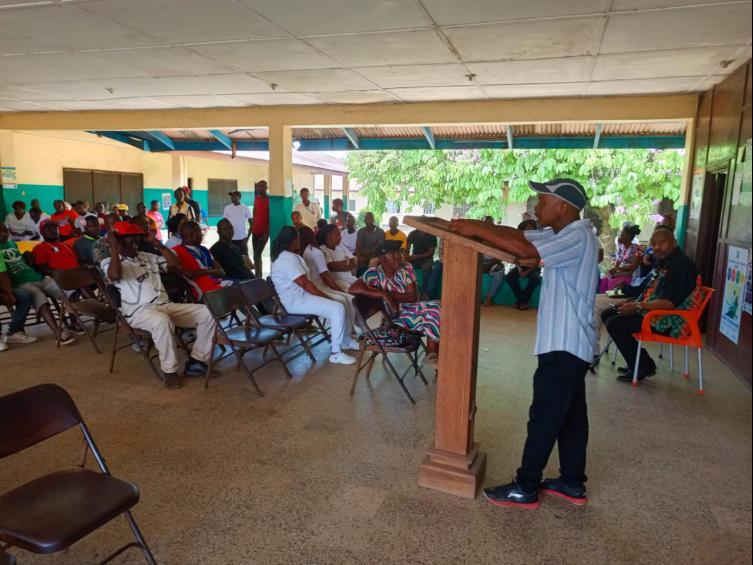
Africa-Press – Liberia. Speaking on behalf of the aggrieved workers, the head of the Phebe Hospital Employees Association, Moses D. David, made it clear that the protest would not be called off until their demands are addressed
Suakoko, Bong County – Health services at Phebe Hospital have been disrupted as aggrieved health commenced a go-slow action following the breakdown of crucial negotiations held on Monday.
The talks, which brought together representatives of the hospital staff, Bong County authorities, members of the hospital’s Board, and the Director General of the Civil Service Agency, Josiah Joekai, ended without any concrete resolution.
The meeting was expected to address a series of long-standing grievances raised by health workers, including salary disparities, employment benefits, poor working conditions, and concerns surrounding employment status for several staff members.
However, after hours of discussions, both parties reportedly failed to reach a mutually acceptable agreement, prompting workers to immediately activate their planned go-slow action.
The protesting health workers have outlined several reasons behind their action. Chief among them are persistent delays in salary payments, lack of risk benefits for frontline medical personnel, and the absence of adequate medical supplies and equipment to perform their duties effectively.
Workers also raised concerns about what they describe as unfair employment practices, including irregular payroll placements and delayed confirmation of employment status for several staff members who have served the institution for years.
According to the aggrieved employees, repeated engagements with relevant authorities have yielded promises but little implementation. They argue that the situation has left many workers demoralized and financially strained, especially amid rising living costs. Some health workers claim they have gone months without consistent pay, making it increasingly difficult to support their families.
The staff further contend that despite their sacrifices and dedication —particularly during challenging periods in Liberia’s healthcare sector —their concerns have not been treated with the urgency they deserve.
Speaking on behalf of the aggrieved workers, the head of the Phebe Hospital Employees Association, Moses D. David, made it clear that the protest would not be called off until their demands are addressed.
“We have engaged the authorities in good faith and exercised patience over a long period of time,” David stated. “But our patience has been stretched beyond limit. We will not abandon this protest until our demands are met. Our members deserve to be treated fairly and with dignity.”
David emphasized that the go-slow action is intended to send a strong message to authorities that the workers are serious about securing redress. He noted that while the staff remain committed to saving lives, they cannot continue working under conditions they describe as “unjust and unsustainable.”
A FrontPage Africa journalist who visited the hospital early Monday morning observed a worrying situation across the facility. The once-busy corridors of Phebe Hospital appeared unusually quiet, with several wards either partially empty or completely deserted.
Other wards inside the hospital were completely deserted, with empty beds neatly arranged but devoid of both patients and staff
In some wards, patients were seen lying unattended on their beds, with no nurses present to monitor their conditions. Family members stood helplessly beside their sick relatives, attempting to provide basic care such as adjusting bed sheets and offering water. In other sections of the hospital, doors remained open but there was no visible medical staff in sight.
The maternity ward, typically filled with activity and the sounds of newborns and attending nurses, was noticeably subdued. Only a handful of patients were present, and relatives whispered anxiously among themselves about the absence of professional care.
In the emergency unit, a few patients waited quietly, some seated on benches while others reclined on stretchers without immediate attention.
Other wards were completely deserted, with empty beds neatly arranged but devoid of both patients and staff. The silence that hung over parts of the hospital was striking, broken only by the footsteps of concerned family members moving from one room to another in search of assistance.
The atmosphere reflected the depth of the disruption caused by the go-slow action. While some administrative staff were reportedly present on the premises, the absence of nurses and frontline health workers significantly hampered the delivery of services.
For More News And Analysis About Liberia Follow Africa-Press