Africa-Press – Liberia. Members of the Kru tribe of Liberia are mentioned in some of the World’s History books on West Africans who migrated to other African Countries through commercial Ships owned by business entities or being operated by Westerners—Americans, Britons, Portuguese, etc.
One of these West African migrants was a Liberian of Grand Kru County, situated in southeastern Liberia. Available records say he was born in 1863, but there is confusion about his name. One record gives “Wolo” as his surname; another presents “Worjloh”.
However, each of the two surnames is a “corrupted version” of the real one (Kru)—Worro, says one of the man’s great-grand children, based in South Africa.
The great-grand child said, majority of Liberians mistake the wrong one, Wrojloh, for the right one (Worro) because pronunciation problems with majority of Liberians, especially the non-Krus
“His real Liberian name was John Worro, and he died on May 27, 1952,” a United States-based Liberian, president of a Liberian heritage-promotion organization, made the correction on the name in an e-mail to the writer of this story December 21, 2021. “I’m quoting the Kru man’s great-grandson,” she added.
The Kru man worked on a British Ship being operated by a Briton, travelled with the Ship to South Africa, but adopted the surname of the Ship’s British Captain—Brooks, disclosed Mrs. Wainie Goe-Abmed, U.S.-based co-founder and president of Liberia Heritage Society (founded in the United States of America), told this writer through an e-mail from America.
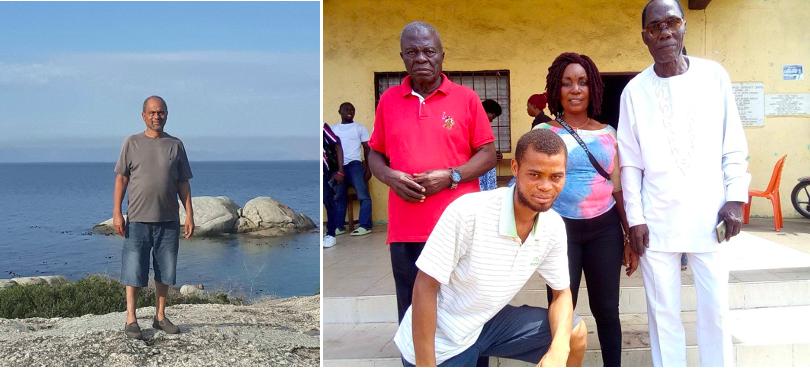
“In South Africa, he married a white South African woman, they had two children, but the woman later left him because of pressure from her relatives and friends who were sternly against bi-racial marriage, and she abandoned the couple’s two children with him to alone take care of,” Mrs. Abmed, born and raised in America, told this writer through an e-mail. “However, the Kru man never forgot his ancestral root, Liberia. When his two children were adults, he narrated stories of their father’s ancestral home, Liberia. Each of the children told his children what grandpa had told him…until the Wolo or Worjloh ancestry story came down to the second-generation of the great-grand father, including Ricardio Brooks—husband of Wendy Brooks who contacted us through our social media page and appealed to us to assist her husband on tracing his ancestral relatives in Liberia,” the Liberia Heritage Society’s head added during her interaction with this writer.
On December 17, 2021, the Liberia Heritage Society convened its first meeting in Town Hall of New Kru Town in Monrovia for all Liberia-based Krus bearing “Wolo” or “Worjloh” as surname. The meeting was convened through Mr. Roosevelt Weah, Liberia-based Field Coordinator of the Liberia Heritage Society. However, only five persons—four men and one woman—from the Wolo and Worjloh Clans showed up for the meeting. The name of the only female was Boyonnoh Worjloh of Sinoe County.
“I had been telling members of the Wolo and Worjloh Clans two weeks ago about today’s meeting, so seeing this small number of representatives from the Clans is shocking to me,” Mr. Weah complained to the gathered members of the Wolo and Worjloh Clans and a team of journalists when the meeting had started.
Later, he came to the purpose of the meeting: interaction between the late Kru Sailor’s living relatives in South Africa and Liberia-based Liberians whose surname is similar to the native/real (Kru), and Liberia Heritage Society’s president (to give a brief historical background of the Kru Sailor as provided by his South Africa-based great-grand children)
Through a video chat, the president of Liberia Heritage Society relayed the information from the late Kru sailor’s family in South Africa. This was followed by other video-related comments from Mrs. Wendy Brooks (an elderly wife of Mr. Ricardio Brooks) and another older woman identified as Teresetta, who claimed she’s biologically related to the now-deceased Kru seafarer.
“We adopted Brooks, as surname, because there was problem with our great-grand father’s Liberian name, Worro,” Madam Teresetta Brooks said to the assembly of Wolos and Worjlohs at the New Kru Town’s Hall. The third video recording was of Mrs. Wainie Abmed’s biological father, Boniface Goe, in America, speaking flawless Kru to those at the meeting.
“The name, Wolo, or Worjloh, is used by the Krus of three Counties—Grand Kru, Maryland, and Sinoe. But that name is most popular with the Kru of Grand Kru County, and those from Sasstown use the name the most,” explained Mr. Victor T. Worjloh, one of those at the ancestral connection meeting, after the video sessions.
In an exclusive interview with the writer of this story, Mr. Victor T. Worjloh said he was born on September 23, 1939 in Grand Kru County, and he’s the Senior Pastor of the Voice of God Mission, based in New Kru Town, Monrovia.
Another participant, Mr. Brown Worjloh Wrawreh, born in 1937, advised those searching for Kru sailor’s living relatives to tour all Liberia’s Counties with this name, only to find the real ancestral root and biological lineage. Mr. Wrawreh said he was born in Grand Bassa County.
“The Kru language has different accents. The Kru spoken by a Kru person in Grand Kru County is different from the Kru spoken by a native of Sinoe County,” Mr. Brown Worjloh Wrawreh said during an exclusive with a team of journalists outside the meeting venue after the interactive sessions.
Liberia Heritage Society’s president is a product from the marital union of Mr. Boniface Goe and Mrs. Elizabeth Teah, she said to this writer during an exclusive interview.
“My father is of Grand Kru County, had lived in the County’s capital, Barclayville. My mother was born in Takoradi, Ghana. My maternal grandmother migrated to Ghana, similar to the story of Mr. John Worro, who later adopted a foreign name,” Mrs. Abmed said.
The Liberia Heritage Society was founded in 2019, but got its legal status in 2020, and started operations on February 1, 2020, Mrs. Abmed said further.
“The Liberia Heritage Society was founded to preserve and promote Liberia’s culture and heritage, encourage tourism, to educate and share information about Liberian heritage to organizations and entities,” she said. The idea, of preservation and promotion of Liberia’s heritage, was formulated through Mr. Lionel Frederick, co-founder, Mrs. Abmed said.
“The organization was born on my husband’s advice, after I became disappointed with invitations to Liberian national arts or cultural festivals, bicentennial celebrations organized by the Government or individuals who didn’t give us credit for our cultural ideas we had shared—the main reason we had been invited,” she complained.
The organization participated in the National Culture Festival on December 9, 2020, organized by La Queen Entertainment founded by Miss Liberia Ms. Wokie Dolo.
Since it began operations, and providing cultural ideas to other heritage/culture-promotion organizations, the Liberia Heritage Society hasn’t received any financial support from any person or Government, the organization’s president revealed further.
“Ninety-five percent of the funding for implementation of the organization’s project comes from me and my husband,” she said, and added, “The organization is open to Liberians and non-Liberians.”
Mrs. Abmed said, even though she yearns for financial support from financially privileged individual persons, organizations, or Government, but she can’t buy into the “conditions” explicitly or implicitly laid-down.
“We won’t do political promotion, cannot do nudity program, and cannot promote fake news,” she said, referring to the conditions from might-be financial supporters or sponsors.
“I’m not somebody that will be another person’s Pilot Paul to receive donations or funding. I respect myself, my work, and my heritage as a first-generation Kru lady, than to fit myself into another person’s clique,” she said.
On achievements by her organization on promotion of Liberia in America and other Countries, Mrs. Wainie Abmed replied: “We have been able to tell the World that Liberia is more than just civil war and Ebola. We have rich documented black heritage-related history that have spanned over 200 years, but this history has never been mentioned in world’s history books.”
The Liberia Heritage Society has been receiving letters from Liberians from Liberia and other Countries, appealing to the organization to facilitate their “relocation” to the United States of America, president Wainie Abmed (Mrs.) disclosed to author of this story.
Concluding with the biological confirmation of persons who claimed ancestrally linked to the 18th-century-born Kru man—who adopted a British name (Brooks), the Liberia Heritage Society president declared to this Author: “The Liberia Heritage Society will take a DNA sample of Mr. Ricardio Brooks in South Africa and match it with each of those bearing ‘Wolo’ or ‘Worjloh’ in Liberia.” She added: “The Liberia Heritage Society is accepting financial donations to fund Kru man’s DNA project.”
For More News And Analysis About Liberia Follow Africa-Press