Africa-Press – Liberia. STAND said to dismiss concerns about a process that evidently lacks extensive consultation and participation is to perhaps further the lukewarm reception being noticed from a significant portion of the international community and partners.
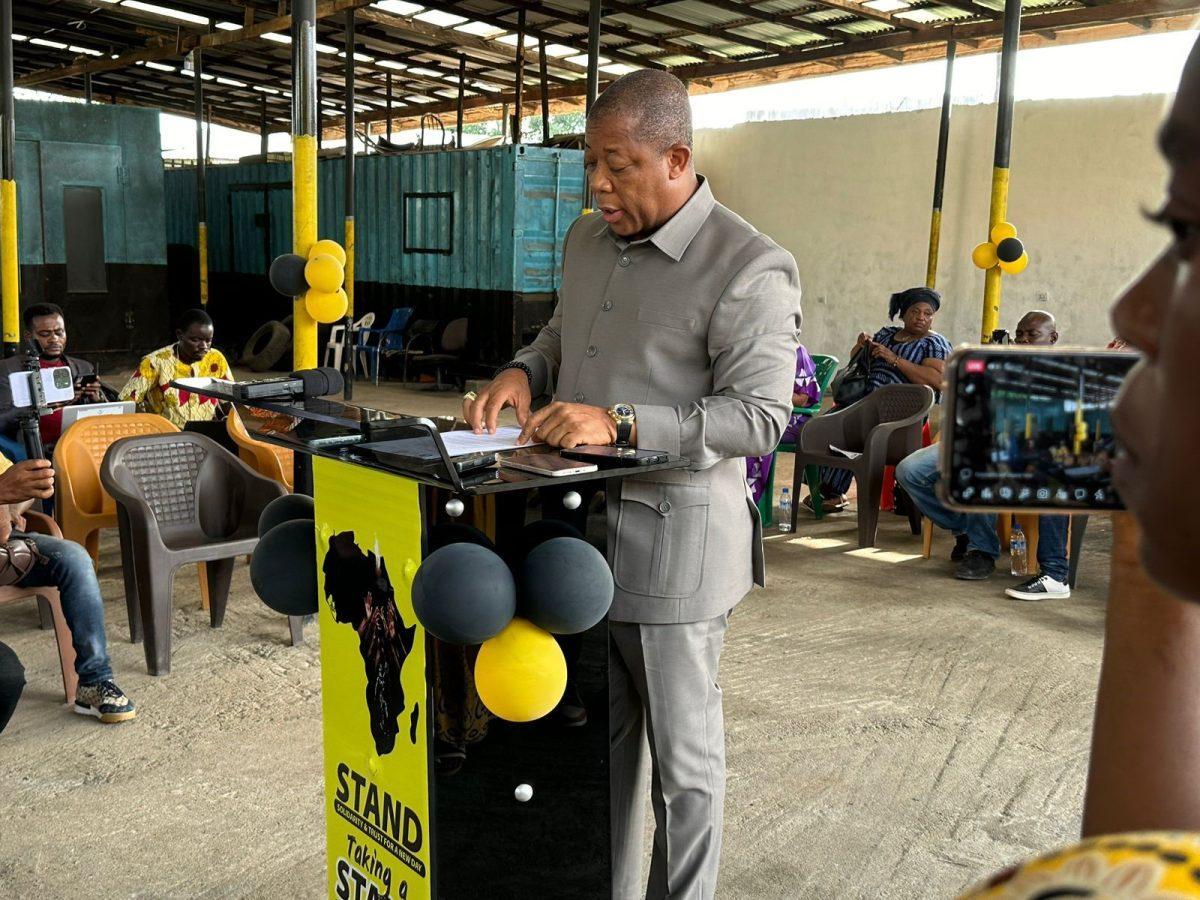
The advocacy group Solidarity and Trust for a New Day (STAND) has formally called on the Liberian Senate to reject the nomination of Jonathan K. Weedor as Chairman of the National Elections Commission (NEC), citing concerns over alleged political bias and the potential erosion of public trust in the country’s electoral system.
In a communication dated April 3, 2026, and addressed to the Senate through the Pro-Tempore, STAND argued that Weedor’s past involvement in the 2023 presidential campaign of Joseph Nyuma Boakai raises serious questions about his neutrality—an essential requirement for members of the NEC.
The group referenced Article 89 of the Liberian Constitution, which prohibits NEC commissioners from holding political party affiliations or public office, but emphasized that mere resignation from party ties does not sufficiently address deeper concerns about perceived loyalty and impartiality.
According to STAND, Weedor reportedly played a “strategic and technical role” in Boakai’s campaign, including involvement in vote tabulation and public communication of early election results on behalf of the ruling Unity Party. The group further pointed to circulating video evidence in which Weedor allegedly described a close personal relationship with the President.
“Even without asserting wrongdoing, such prior operational involvement creates a reasonable perception that future elections—particularly the 2029 general elections—could be influenced or perceived to be influenced by past loyalties,” the statement noted.
STAND warned that public perception of bias within the NEC could undermine confidence in electoral outcomes, potentially delegitimizing results regardless of their technical credibility.
Drawing on Liberia’s history, the group cited the disputed 1985 elections under former military leader Samuel K. Doe, which were widely criticized as fraudulent. It also referenced the role of the then Special Elections Commission headed by Emmett Harmon, arguing that loss of trust in electoral institutions contributed to political instability and subsequent conflict.
“Liberia cannot afford to repeat history,” STAND cautioned, noting that the country’s democratic stability remains fragile amid regional insecurity in West Africa.
The group further recalled President Boakai’s own warning during the 2023 elections that rigging could mean “the end of Liberia,” suggesting that appointing a figure with perceived partisan ties could contradict that stance.
STAND emphasized that the Senate’s role extends beyond routine confirmation, describing it as a “constitutional safeguard” responsible for protecting national stability and democratic integrity.
In addition to its appeal to lawmakers, the organization disclosed that copies of its communication had been shared with key international stakeholders, including the United States Embassy in Liberia, United Nations, European Union, ECOWAS, African Union, and The Carter Center, describing the move as part of efforts to promote transparency and international awareness.
The Liberian Senate has yet to publicly respond to STAND’s appeal, while confirmation proceedings for Weedor are expected to draw heightened public and political scrutiny in the coming days.
For More News And Analysis About Liberia Follow Africa-Press