Africa-Press – Liberia. Since the end of its devastating civil wars in 2003, Liberia has made strides toward a semblance of political stability and governance. However, recent developments indicate a worrying trend that could foreshadow a regression into chaos and conflict.
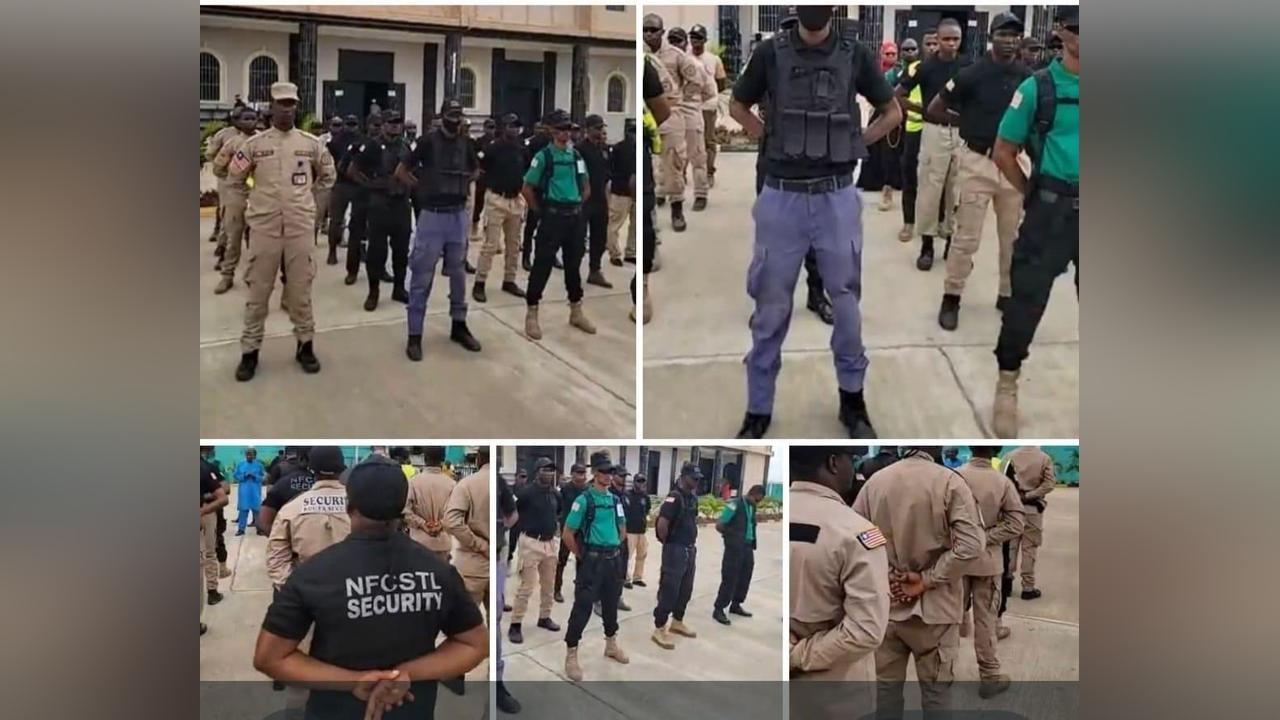
The emergence of groups like the National Fula Security of Liberia, a self-styled militia under the guise of protecting Fula businesses from thieves, formed by citizens of the Fula tribe, allegedly registered by the Liberian government.
The Fula tribe is not officially recognized in Liberia’s sixteen tribal classification, which highlights the latent risks posed by ethnic nationalism and tribal militias.
Such developments necessitate a keen examination of Liberia’s national security landscape and a robust response, and an unlicensed (if licensed as alleged) government response to safeguard the hard-won peace.
The presence of such a group, reportedly located within the compound of a prominent Fulani household in Clara Town, a suburb of Monrovia, suggests that its formation may not be merely incidental.
Thus, considering ongoing regional instability caused by Fulani-dominated militias and jihadist factions in neighboring countries, Liberia cannot afford to ignore the risks associated with allowing private, ethnically exclusive security organizations like the Fulanis to operate unchecked.
Even more troubling about such news is that in countries such as Nigeria, Mali, and others within the Saharan region, currently plagued with Fulani jihadists’ activities, which have resulted in land grabbing and communal bloodshed, Liberia cannot afford to have such an exclusively Fulani militia group operating on its soil.
The Implications of Militia Formation:
Forming a militia like the National Fula Security of Liberia invites a host of implications that reverberate throughout society. The most pressing issue is the potential for civil disobedience.
The existence of a tribal militia undermines the authority of the state, particularly its security apparatus.
Traditional state security forces are engineered to uphold the rule of law, maintain order, and protect the citizenry.
Allowing migrants/non-state actors to operate under the guise of national security directly challenges the government’s legitimacy and diminishes its capacity to enforce laws equitably.
One of the most alarming consequences of such developments is the risk of religious tensions.
With a global resurgence of radical religious movements and the increasing interconnectivity of extremist ideologies, localized militia groups could easily align with or be influenced by larger ungodly terrorist narratives.
The light of tribal divisions crafted by the formation of entities like the National Fula Security could offer fertile ground for extremist ideologies, leading to violence that transcends ethnic boundaries and threatens national and regional stability.
The Liberian civil war must be an example where several tribal groups were formed, resulting in the loss of thousands of lives. and millions of dollars of properties were destroyed, millions were made homeless, internally displaced, and refugees around the world.
Therefore, the government must act swiftly to investigate the establishment of such a force within the country and, if it is established, bring those behind its formation to justice, including, if possible, those in government who sanction its establishment by granting them license to operate.
For More News And Analysis About Liberia Follow Africa-Press