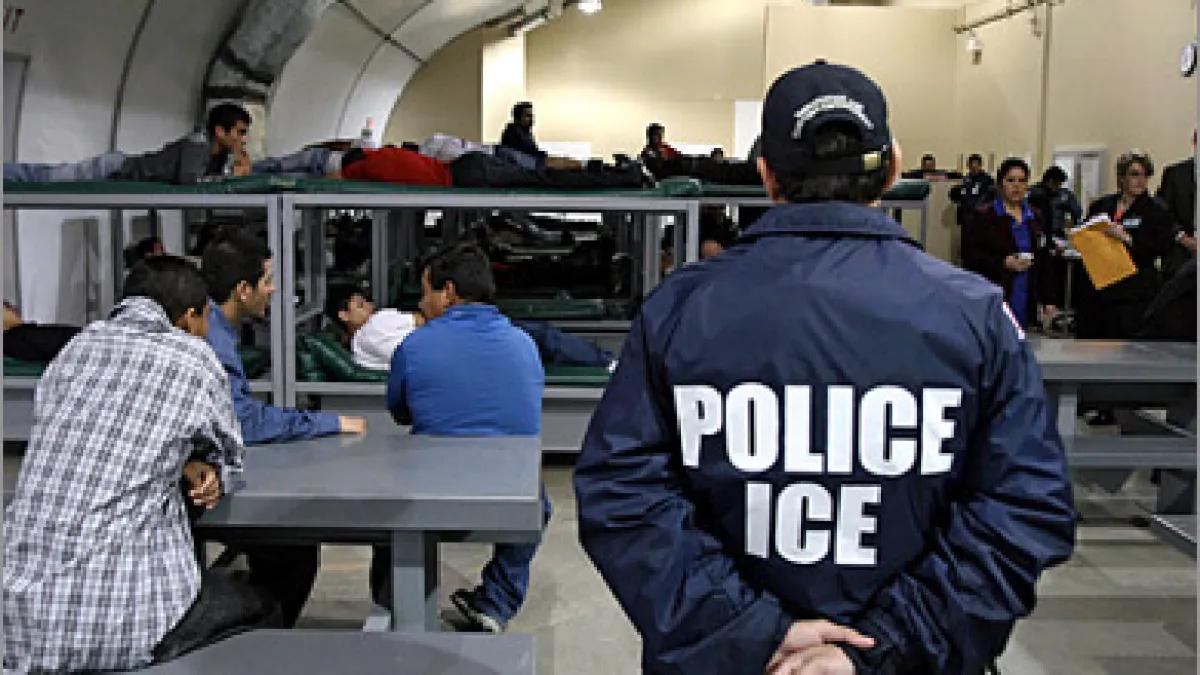
Africa-Press – Liberia. The Guardian has revealed that the administration of U.S. President Donald Trump has expanded its deportation policy beyond returning migrants to their home countries by sending them to third countries with which they have no connection, under arrangements made with governments around the world.
The British newspaper recounts the story of an Iranian woman, Nika, who fled her country and received legal protection against deportation to Iran, only to be re-arrested and transported in shackles to the Central African Republic without being informed of her destination. She is one of more than 25,000 individuals deported by the Trump administration to countries that are not their home nations.
Through an investigation involving The Guardian and 23 media organizations, a vast network of agreements and funding has been uncovered that enabled Washington to expand deportation operations, alongside testimonies revealing what some deportees face upon arrival, and increasing legal objections to the implementation of the policy.
Deportation Deals
To provide a broader picture of the deportation policy to third countries, the journalistic coalition conducted interviews with over 100 individuals affected by Washington’s campaign against irregular migration or who participated in it, and reviewed documents detailing agreements made by U.S. officials with governments worldwide.
The investigation tracked over 100 flights that transported migrants and asylum seekers to 28 different countries, suggesting that the actual number may be higher, as its database only includes flights that could be independently verified.
Internal records reviewed by a local source show that the Trump administration committed at least $410 million to secure agreements with 35 countries, about a third of which are in Africa. It allocated $30 million to Cameroon to support UN operations in the country in exchange for accepting 1,000 migrants, while the Democratic Republic of the Congo was promised $75 million for accepting 2,000 migrants.
The report indicates that Stephen Miller, Deputy Chief of Staff, who has openly expressed his desire to end most immigration to the United States, leads this policy. Current and former U.S. officials have stated that Miller has strengthened his influence within the State Department by pushing for appointments that allowed him to override other foreign policy priorities in favor of implementing his agenda.
Among these appointments is Christian Ehhardt, head of the newly established “Office of Immigration Repatriation,” who helped secure at least 13 agreements for deporting migrants to third countries in Africa after diplomatic rounds on the continent, according to the report.
Alma David, one of the leading immigration attorneys monitoring this policy, views it as an attempt by the Trump administration to “undermine the concept of asylum and protect refugees,” explaining that when the United States cannot legally return individuals to their home countries, it can send them through a third country that considers itself a transit hub.
Exile Without Safety
The newspaper notes that many deportees to third countries are individuals whom immigration judges deemed had serious enough fears of returning to their home countries to prevent their deportation there. The Iranian citizen had received such legal protection and was released on May 28 from U.S. Immigration and Customs Enforcement detention, allowing her to stay and work in the country.
However, her attorney, Sahar Jalili, discovered after her deportation that authorities sent her to the Central African Republic without a passport, leaving her without identification documents or a visa.
The report clarifies that the Central African Republic is one of 13 countries receiving deportees, with the International Organization for Migration, a UN agency, providing support upon their arrival through food, housing, and psychological assistance.
It adds that U.S. support for the organization continues despite the extensive cuts announced by the Trump administration in funding for UN agencies, as there appear to be exceptions when funding contributes to the implementation of the deportation program.
In this context, Nika states that the organization treated her well and provided her with safe housing and transportation when needed, but she describes her situation there as not a real life, as she cannot leave her home without an organization-provided driver, cannot find work, and does not speak the local language.
In contrast, The Guardian notes that a federal appeals court ruled that deportations to third countries are illegal, as they violate due process by not giving deportees enough time to challenge the decision to send them to another country, adding that the government is expected to appeal the ruling and continue implementing its policy.