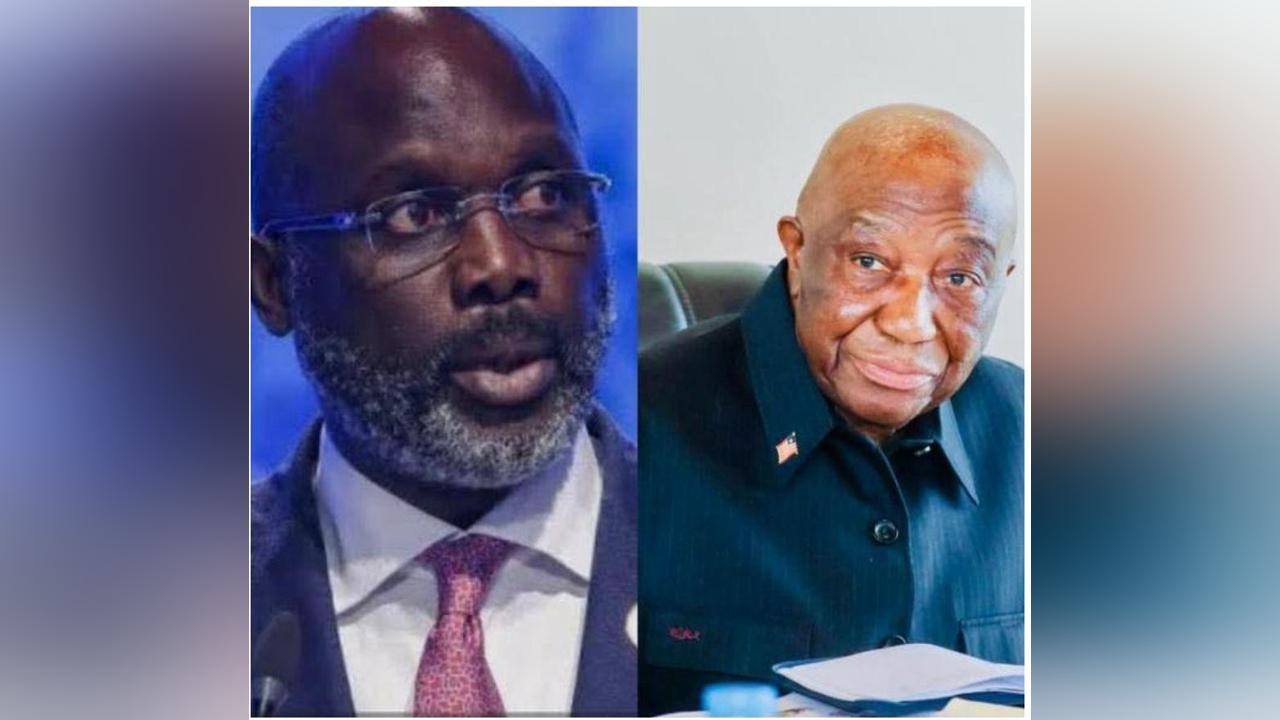
Africa-Press – Liberia. Former President George Weah has criticized the Boakai-Koung-led government’s handling of public protests, warning that democracy cannot be preserved through intimidation, mass police deployment, or the suppression of dissenting voices.
Delivering his end of the year message at the Forky Klohn Jlaleh Family Fellowship Church, Weah said he remains committed to democratic principles, especially the constitutional right of citizens to protest.
“As a true leader, I believe in democracy. Not by putting police all on the streets,” Weah declared.
Weah’s recent remarks on democracy and the right to protest have reignited debate over how successive Liberian governments have handled public demonstrations, drawing sharp contrasts between the Weah-Taylor administration and the current Boakai-led government.
The former president reminded Liberians that during his tenure, protests were allowed even when they targeted his own administration because, in his view, leadership requires tolerance, restraint, and respect for the rule of law.
“I was the President. I believe in the rule of law. I believe in democracy. When the citizens are going to the streets, we allow them to protest. All their voices have to be heard,” he said.
He maintained that suppressing public dissent through arrests and heavy policing only fuels public anger and mistrust in government.
“When the police started arresting them, people walked in the street… You don’t want to repeat,” he warned.
Recalling April 14
During the church service, Weah repeatedly referenced the April 14 protest, a major demonstration during President William R. Tolbert presidency, stressing that he did not distance himself from public discontent at the time.
April 14, 1979, was a pivotal date in Liberian history, marked by the “Rice Riot,” a major protest against a proposed price increase for rice, Liberia’s staple food, that escalated into widespread violence, leading to dozens of deaths and injuries, marking Liberia’s first large-scale civil rights demonstration and a turning point toward future instability,.
The protest was organized by the Progressive Alliance of Liberia (PAL) led by the late Gabriel Baccus Matthews, the peaceful march swelled as citizens joined, resulting in government crackdown, looting, and property destruction, ultimately contributing to the downfall of President Tolbert’s government the following year.
“April 14th, I was not there for nothing. April 14th, I was in the street. We were all there. Same level cause, government decision,” he recalled.
According to Weah, attempts to stifle protests through arrests and excessive policing only deepen public anger and mistrust. “When the police started arresting them, people walked in the street. You don’t want to repeat,” he warned, adding that history has already shown Liberia the dangers of heavy-handed governance.
Warning Against Repetition of Past Mistakes
The former football star-turned-president cautioned the current administration against actions that could reopen old national wounds.
“The right way is not destruction. Because that’s the wrong way — it happened in this country before. We have traces of what happened. You don’t want to repeat,” Weah said.
He argued that true stability comes from engagement and dialogue, not force. “Marching together is the right way. It’s the best way to do it,” he added.
Opposition and Democracy
X
Weah also defended the role of the opposition, insisting that disagreement is not a threat to governance but a necessary pillar of democracy.
“Opposition, you have the right to your opinion,” he said, emphasizing that leadership requires partnership and mutual respect, even among political rivals.
Weah explained that unity does not require uniformity. “Not everybody will be for X. Because you go for Y. Because you live in the same house. So, we have to be friendly,” he said.
A Message on Leadership
Weah stressed that leadership space belongs to the people, not to force or coercion.
“The leadership role, the space, is our normal space,” he said, warning that divisions, repression, and fear ultimately weaken governance rather than strengthen it.
Protests and Petitions Under Weah-Taylor
During the CDC-led administration, Liberia witnessed several large-scale protests, many of which culminated in the formal presentation of petitions to senior government officials—most notably then Vice President Jewel Howard-Taylor.
One of the most prominent demonstrations occurred in June 2019, under the banner “Save the State,” organized by the Council of Patriots (COP), a coalition of civil society groups and opposition parties.
Thousands marched through Monrovia, protesting corruption, economic hardship, and governance failures. At the climax of the protest, a petition drafted by the organizers was officially received by Vice President Howard-Taylor at the seat of government on Capitol Hill, a move protesters described at the time as recognition of their constitutional right to be heard.
Earlier in September 2018, demonstrators took to the streets under the slogan “Bring Back Our Money,” demanding accountability over the controversial disappearance and handling of containers reportedly carrying L$16 billion in newly printed banknotes.
Protesters carried petitions intended for international partners, including the United States Embassy, the European Union, and the United Nations, chanting for transparency and justice.
Police Conduct and Symbolic Gestures
Perhaps most striking was the August 2022 Flag Day protest, when demonstrators publicly acknowledged what they described as a shift in state conduct toward assemblies.
Protest organizers said the government’s posture signaled growing respect for citizens’ rights to peaceful assembly.
During that protest, officers of the Liberian National Police (LNP) particularly the Police Support Unit and National Riot Police were seen distributing hot meals and water to exhausted protesters and passersby.
Protesters described the act as unprecedented
It marked the first recorded instance in Liberia where police fed demonstrators, contrasting sharply with past allegations of aggression, illegal arrests, and assaults during public protests.
Despite the show of restraint, protesters maintained that their grievances remained unresolved. They said they would “never forget the many challenges, unsolved deaths, criminal mischiefs, and corruption in Liberia” during the CDC-led period, underscoring that tolerance of protests did not erase accountability concerns.
December 2022 Cost-of-Living Protest
In December 2022, hundreds gathered at the Samuel Kanyon Doe Sports Complex to protest soaring living costs, just a day before President Weah returned from a 48-day foreign trip. The demonstration was organized by the Coalition of Collaborating Parties (CPP), though internal disputes reportedly left only the Alternative National Congress (ANC) actively participating.
Even then, protesters were allowed to assemble and express dissent publicly, reinforcing Weah’s claim that protests were not suppressed under his leadership. “When the citizens are going to the streets, we allow them to protest. All their voices have to be heard,” Weah said.
A Sharp Contrast Under Boakai
The tone of protest policing has become more contentious under President Joseph Nyuma Boakai, particularly during demonstrations organized by the advocacy group Solidarity and Trust for a New Day (STAND), led by Mulbah K. Morlu.
During the July 2025 and December 17 protests, hundreds of Liberians again took to the streets, voicing anger over alleged corruption, rising cost of living, police misconduct, and what they described as democratic backsliding.
Unlike under the Weah-Taylor administration, protesters say no member of the Executive branch, including President Boakai, received their petitions.
Tensions escalated during protest activities near the Executive Mansion, where police arrested several demonstrators, sparking accusations of profiling and selective enforcement.
Critics argue the arrests reflect shrinking civic space and intolerance for opposition voices—claims the government has disputed.
Weah’s Warning
Weah cautioned that Liberia has painful historical lessons about repression and force. “The right way is not destruction. The wrong way, it happened in this country before. We have traces of what happened. You don’t want to repeat,” he warned.
For More News And Analysis About Liberia Follow Africa-Press