Africa-Press – Malawi. Malawi’s national development goals, including the flagship Agenda 2063 can as well be considered dead on arrival should the nation keep ignoring investing in scientific research; the National Planning Commission (NPC) has warned.
The Commission’s research manager Dr Andrew Jamali hinted the nation needed a rethink on its priorities; arguing that research remains key as Malawi moves towards realising the vision of an inclusively wealthy and self reliant nation.
Speaking in an exclusive interview on Tuesday in Lilongwe ahead of the National Research Dissemination Conference currently underway in the capital on Wednesday through Friday.
Quizzed on how the Conference aligns with NPC-led national agenda, Jamali termed it as one of the key important interventions for speeding the country’s work manufacturing, towards innovation, science and technology.
“The manufacturing and industrialization is very key to our vision. Not only that you but science, technology and innovation, they are cutting across all the pillars and enablers of Malawi 2063.
“As such, we find this conference as going to provide space where various kinds of experts will interface, and tease out the kind of research and innovations and technologies that have been provided for in this space before, and then finding out how best these can be actually scaled up and refined in the course of the process to make sure that they are actually transforming the way we are doing things in the country’s economy,” he said.
Jamali added, “Most importantly, we expect such innovations to make things easier, so that Malawi becomes as competitive as possible within the region”.
The Commission has since said that much as it is encouraged by the seemingly increase in innovation, especially among the youth of late, it was imperative that the nation scrutinises and pick for scaling up and adoption only those that are relevant and are in line with the national agenda.
Jamali explained: “They need actually to find out whether they are responding to the challenges that Malawi is facing or not. For instance, we’re looking at Malawi not producing enough for export. How best can we use the technology base of the country spinning up enough to make sure that we’re actually enhancing our productivity in all these key sectors of the economy?”
His remarks concur with those of the acting director for the National Commission of Science and Technology (NCST) who last week confirmed that her Commission had already started collaborating with its funded researchers so their work resonates well to Malawi’s national development agenda.
“By government mandate, NCST providers grants to researchers in the country for conducting their research because we understand that research has enabled other countries and again enables us to solve our societal challenges. We have challenges in the health area, in the education area agriculture area.
“This explains why research is being aligned to issues that are in Malawi 2063. We are interested in developing national research agendas and quickly launch then in order to align research teams or thematic areas for carrying out research that will be able to achieve the Malawi 2063,” she said.
Initially scheduled to take place late last year, the Research Dissemination Conference, trending under the hangtag NRDCMw2023 at Crossroads Hotel, stands to create the kind of interface for think tanks, academics, researchers, innovators and technology oriented experts in a space where they can now debate with evidence on how best Malawi can harness the potential that exists within the region and the country itself to spin up our growth potential and realise the vision earlier discussed.
Kadzamira also confirmed in a separate interview that the fourth national research conference, an event that happens every two years, will help NCST take stock of the research that their funded researchers have been conducting over the past the past few years; adding the Commission will assess the value of its investment in the same as the findings get presented at the Conference.
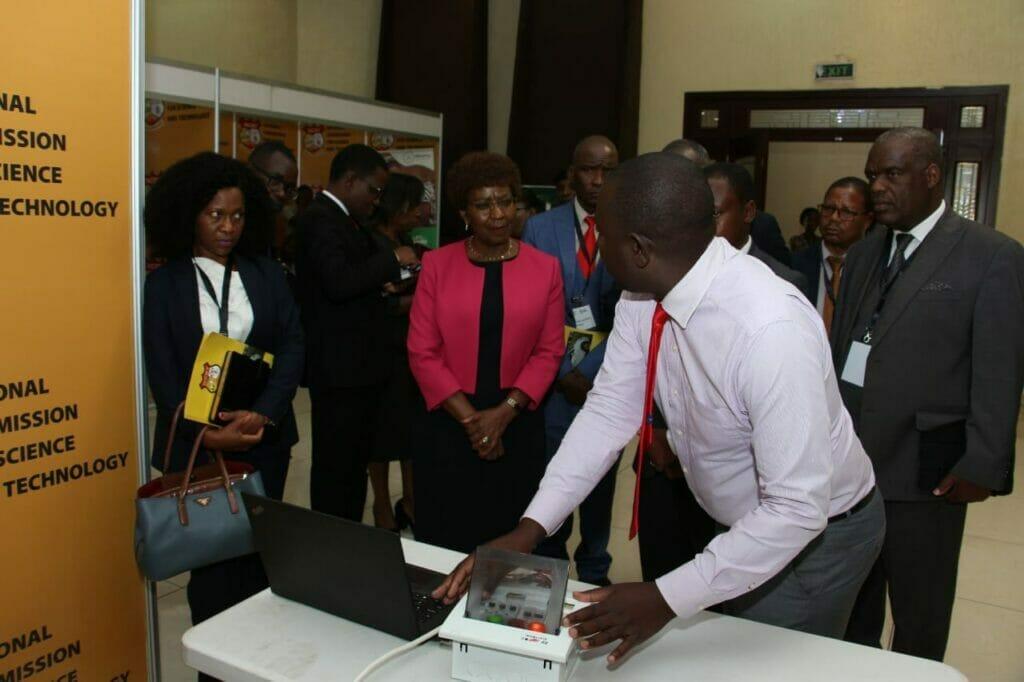
The indaba has attracted various stakeholders including Ministries and government departments, the NGO sector, the private sector, the academia and also the consumers to appreciate various technologies to be presented at the conference.
For More News And Analysis About Malawi Follow Africa-Press