Africa-Press – Malawi. There is a quiet, fragile progress in Malawi’s long battle against hunger—but beneath it lies a painful truth that refuses to go away: too many children are still growing up without enough to eat.
According to the 2025 Global Hunger Index (GHI), Malawi has moved from “alarming” levels of hunger in 2000 to “serious” in 2025, with its score improving from 43.3 to 22.0. It is progress—hard-earned and worth noting. But for thousands of families across the country, that progress feels distant, almost invisible.
Because behind the numbers are real lives.
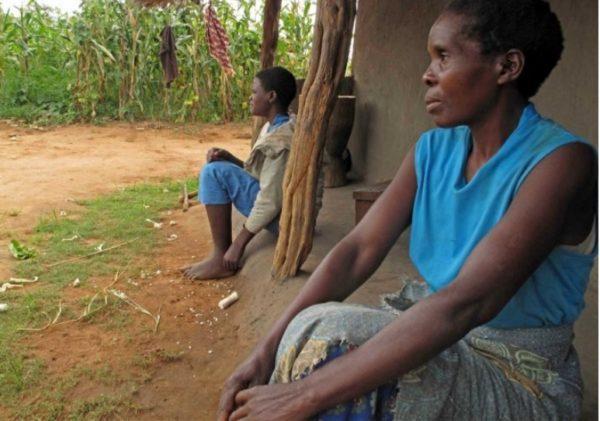
Children whose growth is stunted not by choice, but by circumstance. Children whose bodies carry the silent scars of hunger long before they can even understand it. Today, one in every three Malawian children under the age of five is stunted. That is 33.2 percent—an entire generation at risk of not reaching its full physical and mental potential.
At the same time, 21.4 percent of the population remains undernourished. For many households, meals are uncertain, portions are smaller, and nutrition is compromised. And for 2.8 percent of children, the situation is even more critical—they are wasted, dangerously underweight for their height, their small bodies fighting to survive.
Speaking at the launch of the report in Lilongwe, Principal Secretary for Administration in the Ministry of Agriculture, Irrigation and Water Development, Bennett Nkasala, acknowledged the difficult reality. He pointed to one of the country’s deepest vulnerabilities: over-dependence on maize.
“We are promoting diversification. Farmers should grow other crops for food and as cash crops to generate money,” he said.
It is a call not just for change—but for survival.
Nkasala emphasized the need for large-scale irrigation, faster-maturing seed varieties, and climate-smart agriculture. Because in a country where rains can fail and floods can destroy entire harvests overnight, the fight against hunger is also a fight against uncertainty.
Globally, the picture is just as worrying.
The 2025 GHI report, marking 20 years of tracking hunger, warns that progress towards Zero Hunger by 2030 is slowing. Since 2016, hunger has actually increased in 27 countries. At this pace, at least 56 countries—including many in Sub-Saharan Africa—will miss the 2030 target.
For Malawi, this is not just a statistic. It is a warning.
The report calls for urgent action: strengthening existing food policies, diversifying food systems, and investing in technology to withstand climate shocks that keep pushing families back into hunger.
Nkasala says government is already taking steps in that direction.
“We need to adapt to shocks so that food production is sustained and our citizens have adequate food on the table,” he said.
But for a mother watching her child go to bed hungry… for a child whose growth is quietly slipping away… adaptation cannot come soon enough.
Because while hunger levels may be improving on paper, in many Malawian homes, the struggle is still painfully real—and time is not on their side.
For More News And Analysis About Malawi Follow Africa-Press