By Mercy Matonga & Rebecca Chimjeka Matemba:
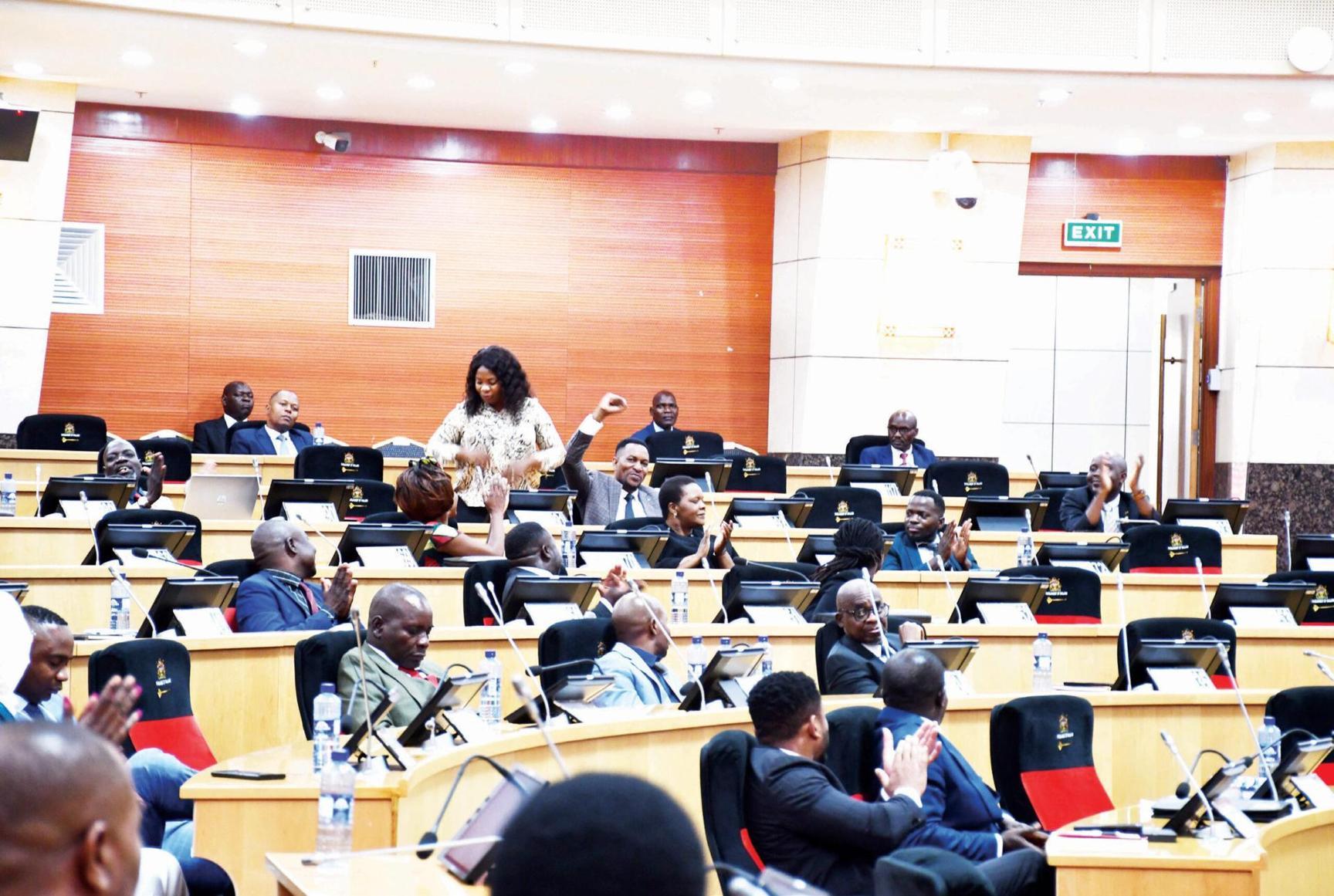
Africa-Press – Malawi. As Malawians grapple with economic hardships, their elected representatives in Parliament are increasingly turning more expensive to the taxpayer, we have established.
We sent an Access to Information Request to Parliament demanding full details of the benefits.
Parliament rejected our request for the details, arguing perks of members of Parliament are confidential.
So, we resorted to speaking with some staff within Parliament, Treasury and MPs themselves who corroborated our findings.
– Advertisement –
Here is what we have gathered:
Each lawmaker earns a basic salary of about K2.03 million per month.
This is supplemented by a fuel allowance of K1.6 million, a house allowance of K580, 800, chauffeur and security allowances of K528,005 each and a utility allowance of K414,480.
Taken together, the monthly wage bill for MPs alone exceeds K1.2 billion— before factoring in additional costs linked to parliamentary sittings, committee work and travel.
– Advertisement –
Also at the last sitting which ran from October 8 to December 5, each lawmaker received subsistence allowances of K120,000 per day.
Over the five weeks during which they met, this translated into roughly K1.62 billion paid out to MPs in subsistence alone.
We have also learnt that transport reimbursements further inflate costs.
MPs are entitled to claim 60 percent of K3,500 per kilometre for return travel to their constituencies.
For representatives from distant districts such as Chitipa—roughly 600 kilometres from Lilongwe—travel refunds for a single sitting can reach as much as K2.52 million.
Beyond MPs’ direct benefits, the hidden administrative costs of running Parliament are also substantial.
The National Assembly operates multiple standing and ad hoc committees, including high-profile ones such as the Public Accounts Committee and the Budget Committee.
Each committee meeting requires extensive staff support, with clerks, messengers and senior parliamentary officers all entitled to duty and sitting allowances.
On average, each committee is supported by about 26 staff members.
Most parliamentary staff are assigned to at least two committees and are paid duty allowances for up to 10 days during two-week meetings.
For Public Accounts Committee and the Budget Committee, which often sit for three to six weeks, allowances are paid for the entire duration.
Senior officers at the National Assembly, including heads of divisions and sections, are also frequently assigned to these committees, making them among the most lucrative postings within Parliament.
Additional costs include premium medical insurance through the Medical Aid Society of Malawi and high-value vehicle loan schemes for MPs.
Under the vehicle loan scheme, MPs obtain loans from commercial banks, repayable over five years.
Government uses taxpayers’ money to cover 50 percent of each loan value.
And now the loan amount has increased dramatically.
In the previous cohort from 2019 to 2025, MPs, according to their conditions of service, accessed loans of up to K50 million to purchase a 4×4 Toyota Hilux, with the government servicing half of the loan.
However, under the 2025 to 2030 scheme, the loan amount has jumped from K50 million to K300 million.
With 193 MPs between 2019 and 2025, the government paid about K5 billion.
For the 2025 to 2030 period, government expenditure is expected to exceed K34 billion—excluding interest. That is if all 229 current MPs were to access the vehicle loan facility.
In our efforts to seek clarity, Parliament referred our questions on the matter to the Treasury.
Treasury insisted that Parliament, as the employer of MPs, is responsible for the matter.
Ian MwenyeParliament spokesperson Ian Mwenye confirmed to Malawi News that MPs are entitled to a vehicle loan.
But he declined to provide details on the amount.
“MPs’ conditions of service provide for a motor vehicle loan facility which MPs obtain from individual banks. It is worth noting that this facility is not mandatory, and several MPs opt not to access it. As regards furniture, there is no such facility.
“For the technical details, please check with Treasury,” Mwenye said.
Treasury spokesperson Williams Banda also declined to comment.
“Treasury only provides funding to the National Assembly,” Banda said.
Commenting on the loan facility, Centre for Social Accountability and Transparency (Csat) Executive Director Willy Kambwandira said the hike reflects clear double standards and undermines claims of leadership by example.
“Raising MPs’ vehicle loan facility from K50 million to K300 million while shielding them from half the repayment and all interest violates the core principles of fiscal responsibility and equity—especially at a time when government is urging citizens to accept austerity, higher taxes and cuts in social spending,” he said.
According to Kambwandira, it sends “a damaging signal that economic hardships are socialised for ordinary Malawians but privatised for political elites”.
“It defeats the government’s moral authority to demand sacrifice from the public,” he added.
Kambwandira further argued that the arrangement is effectively not a loan, but a benefit funded by taxpayers, diverting scarce resources that could otherwise support health, education, agriculture and debt reduction.
“Sadly, it is poor citizens who pay the price through higher borrowing, reduced service delivery and inflationary pressure,” he said.
Analyst Chimwemwe Tsitsi also took issue with the hiking of the vehicle loan.
He described the move as hypocrisy of the highest order.
He said while government has introduced austerity measures, political leaders benefit from enhanced perks amid a rising cost of living.
“There is no sign of fiscal discipline or responsibility in what they have done.
“While adjustments may be necessary due to currency devaluations and rising market prices, if Malawians are being told to endure hardships as part of economic recovery efforts, those sacrifices should equally apply to leaders,” Tsitsi said.
Through the constituency and ward redemarcation exercise which the Malawi Electoral Commission undertook ahead of the elections in September 2025, the number of constituencies rose from 193 to 229 while that of wards jumped from 462 to 509.
Source: The Times Group
For More News And Analysis About Malawi Follow Africa-Press