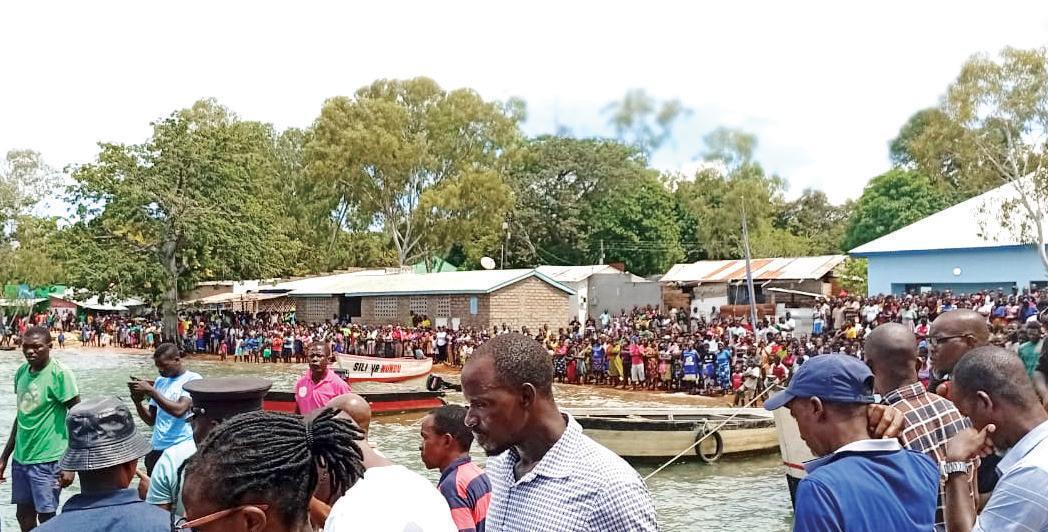
Africa-Press – Malawi. Between 2012 and 2025, over 80 people have died on Lake Malawi due to boat accidents.
We have established that despite clear laws governing inland water transport, many vessels on the lake go unpoliced.
It exposes the deep structural weaknesses in the country’s marine safety and regulatory systems.
In addition, with marine safety split across multiple institutions—the Ministry of Transport, the Malawi Police Service, local councils, and in some cases fisheries authorities—there is no well-resourced lead agency.
The Ministry of Transport and Public Works, through the Department of Marine Services, is legally mandated to regulate water transport on Lake Malawi and other inland waters.
– Advertisement –
Its responsibilities include registering vessels, licensing operators, inspecting boats for safety, and enforcing compliance with maritime laws.
However, interviews with water transport experts within the ministry and outside have revealed that this mandate exists more on paper than in practice.
While Lake Malawi stretches over 560 kilometres, the Marine Department has only a handful of operational stations and limited patrol capability.
The ministry does not have a dedicated marine police force, and routine patrols on the lake are rare.
– Advertisement –
As a result, enforcement is largely reactive.
“The lake is simply too big, and the department too small,” said one water transport sector analyst, Esau Chisale.
“Without patrol boats, fuel, and enough trained officers, you cannot meaningfully police water transport,” he said.
Jappie MhangoMinister of Transport, Jappie Mhango, said the role of policing the lake is domiciled in the Ministry of Homeland Security and the Ministry of Defence.
“The Ministry of Transport has the mandate to regulate maritime operations. Currently, the department does have human resources though not adequate.
“In terms of funds, the department is not sufficiently resourced and government is looking into how best to address the challenge,” Mhango said.
He said dealing with illegal operators requires several stakeholders that includes Malawi Police Services, Immigration and the Malawi Defence Forces.
The Marine Department faces shortages of trained inspectors, surveyors and enforcement officers.
In many districts, a single officer may be responsible for hundreds of kilometres of shoreline.
These constraints mean that vessel inspections are infrequent, safety audits are inconsistent, and follow-ups on non-compliance are rare.
Although the law requires all commercial boats to be registered, inspected and licensed, enforcement is uneven.
On the lake, especially in fishing and island communities, many operators run unregistered or poorly maintained vessels.
Overloading, lack of life jackets, and sailing during bad weather are common practices.
In some cases, operators rely on informal arrangements rather than formal clearance from authorities.
“The system depends too much on trust and voluntary compliance,” said a source familiar with marine regulation.
“And where enforcement is weak, people take chances.”
Experts also said Malawi’s inland water transport laws are old and have struggled to keep pace with the growing number of small-scale boat operators.
There is also no comprehensive digital registry of vessels, operators, or safety compliance records.
Search and rescue capacity is another weak link. Many lake districts lack properly equipped emergency response teams, meaning accidents can quickly turn fatal.
Each major lake accident revives public debate about marine safety, but critics say reforms have been slow and largely cosmetic.
For More News And Analysis About Malawi Follow Africa-Press