By Robert Muyemba Banda
Africa-Press – Malawi. Every morning before sunrise, children from Tchesamu Village begin a journey that is slowly destroying their future. They walk 27 kilometres to Kapanda Community Day Secondary School a distance so long that many never complete their education.
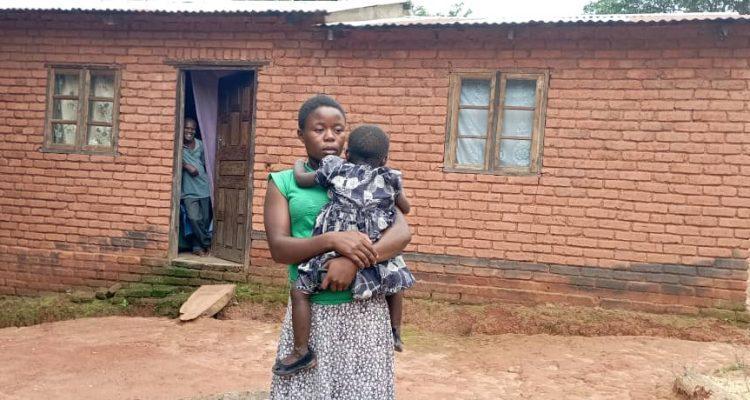
For Downisly Banda, that journey ended her dream. At just 20 years old, she is already a mother to a two-year-old child. The school uniform she once wore with pride has been replaced by the harsh reality of life at home no job, no school, and no clear future.
“I passed my Standard Eight very well, I was excited to go to secondary school. I wanted to become a nurse. But the distance was too much”. Said Downisly
Every day, she walked from Tchesamu to Kapanda CDSS. The exhausting journey left her tired, discouraged, and vulnerable.
Eventually, her parents rented a small room near the school so she could continue her education. Instead, that decision exposed her to new dangers.
“I was staying alone, and I had too much freedom. That’s how I met a man who later made me pregnant. I dropped out in Form Three and came back home. Now I’m just here, doing nothing.” she explains.
Downisly Banda – 19-Years-old
Downisly’s story is not unique. Tchesamu located in the western part of Nkhata-Bay District under Traditional Authority Kabunduli, has closer to 2,000 households but no Community Day Secondary School.
Since 1974, children from this area have been forced either to walk long distances or to live alone near schools far from home.
The result has been heartbreaking: high dropout rates, early pregnancies, poor academic performance, and shattered dreams. Brona Banda, a parent in the area, says the community has lost hope.
“We have suffered for many years, “We molded bricks ourselves and asked the government for help, but nothing happened. Our children are walking too far, and many are failing.”Brona Banda.
Banda
Poverty has made the situation even worse. Most families cannot afford both school fees and rent for houses near the school.
“Sometimes we choose food over rent, Education is important, but we are poor. Without a school here, our children are in danger,” added Banda
For 53-year-old Jessie Longwe, the pain runs deep. She says she has never seen a child from Tchesamu complete higher education.
“We hear stories of children from other villages finishing school and becoming something, Here, instead of celebrating success, we are welcoming babies from our schoolgirls,” said Longwe.
We hear stories of children from other villages finishing school here we are welcoming babies from our schoolgirls- Longwe
Traditional leaders agree that the lack of a nearby school has destroyed learners’ motivation. Group Village Headman Dembathuli says distance has taken away hope.
“Since I was born, I have never seen anyone from this area finish higher education, Children walk long distances, get tired, and lose interest. We make bylaws, but all we hear from leaders are promises. All we want is a school close to our children,” said GVH Dembathuli.
All we want is a school close to our children – GVH Dembathuli
At Kapanda CDSS, headteacher Daniel Kawiya confirms that learners from Tchesamu face greater challenges than others.
Staying alone in rented houses, they lack guidance and discipline – Daniel Kawiya,
Kapanda CDSS
“They are among the most vulnerable, Most of them perform poorly and drop out early. When they stay alone in rented houses, they lack guidance and discipline.” Said headteacher Kawiya
While Kawiya encourages communities to strengthen local rules to protect learners, he admits that distance remains the biggest challenge.
The situation raises serious questions about Malawi’s commitment to education. Under Malawi Vision 2063, the government promises equal access to quality education for all. But for children in Tchesamu, that promise feels painfully distant.
Member of Parliament for the area, Paulos Kapangama Chiumia, says help may be on the way.
“My constituency will start receiving development funds on April 1, from there, we will decide what action to take. People should know that I was elected to solve such problems,” said Chiumia
However, education authorities have remained silent. The Northern Education Division Manager declined to comment, and questions sent to the Ministry of Education had not been responded to by the time of publication.
Source: Malawi 24
For More News And Analysis About Malawi Follow Africa-Press