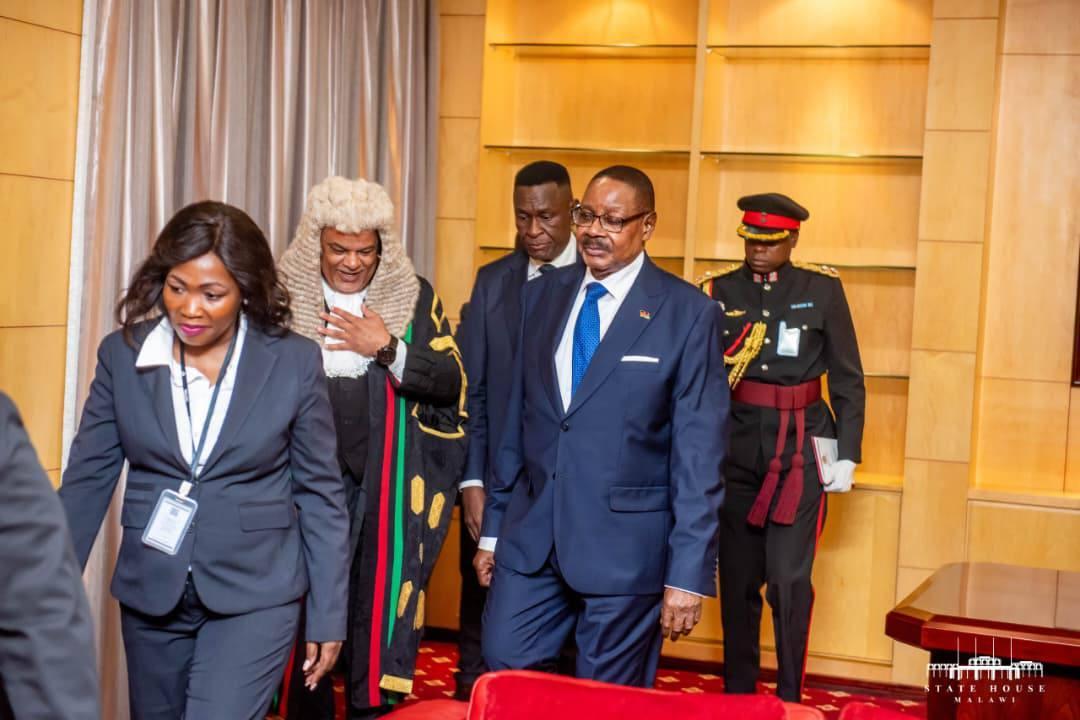
Africa-Press – Malawi. Government has defended the controversial multiple roles held by Deputy Minister of Homeland Affairs and Member of Parliament for Ntcheu Central, Norman Chisale, amid growing public outrage and renewed criticism from social media activist Idriss Ali Nassah.
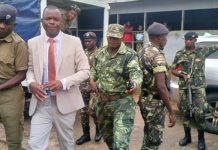
The controversy centres on Chisale simultaneously serving as an MP, Deputy Minister responsible for homeland security, and as a personal bodyguard to President Peter Mutharika—a situation many Malawians see as inappropriate, unconstitutional, and ethically troubling.
Government spokesperson Shadrick Namalomba has moved to calm the storm, insisting that Chisale’s role in protecting the President falls squarely within his official duties.
“Mr Chisale is providing security to the President as part of the functions of the Ministry responsible for homeland security. There is no violation of the law,” Namalomba said.
However, legal expert Jai Banda has challenged that position, urging Parliament to take responsibility and enforce its own rules.
“The law does not allow a Member of Parliament to hold other executive or operational roles that conflict with parliamentary duties, such as serving as a security officer to the President,” Banda argued.
He warned that allowing such arrangements weakens Parliament, blurs separation of powers, and undermines democratic accountability.
The issue has now been reignited by Nassah, whose scathing post has gone viral and reopened a national debate on competence, role conflict, and political patronage.
In his analysis, Nassah argued that Chisale’s election into Parliament “should never have happened,” accusing him of failing to transition from his security background into the intellectual and policy-driven world of legislation.
He compared Chisale to Peter Makossah, a former police officer who later trained as a lawyer in the United Kingdom but, according to Nassah, still behaved like a policeman despite changing professions.
“Makossah, even after the polish of law school, looks, speaks and acts a cop. That is his default. That is his comfort zone,” Nassah wrote, suggesting that professional habits can be difficult to unlearn.
Nassah said Chisale’s case is a textbook example of the “Peter Principle”, a theory that people are promoted to positions beyond their competence.
“Chisale running around playing bodyguard, when he should be in Parliament debating policy and legislation, is perhaps the clearest illustration of this principle,” Nassah said.
“Unable to cope with the demands of being a legislator, he reverts to what he knows best—walking close to the President, wearing an earpiece, and acting the protector-in-chief.”
He went further, arguing that Parliament requires skills such as critical reading, policy analysis, legislative drafting and complex debate—skills he believes Chisale lacks.
“Parliament should never have happened for Chisale. It was the functional equivalent of promoting an employee to their level of incompetence,” Nassah said.
In a broader reflection, Nassah also referenced President Lazarus Chakwera, suggesting that Malawi has repeatedly made similar mistakes by elevating individuals into roles they are ill-prepared for.
“They just won’t have the tools to know how to function in the new, much more complex job,” Nassah concluded.
The Chisale controversy now sits at the intersection of law, politics and public trust. While government insists nothing illegal is happening, critics argue the issue is not just legality—but institutional decay, where Parliament is reduced to a side role while MPs perform executive or personal duties for the presidency.
For many Malawians, the question is no longer whether Chisale broke the law—but whether Malawi’s democracy can survive when lawmakers behave like bodyguards, and power is concentrated around loyalty rather than competence.
For More News And Analysis About Malawi Follow Africa-Press