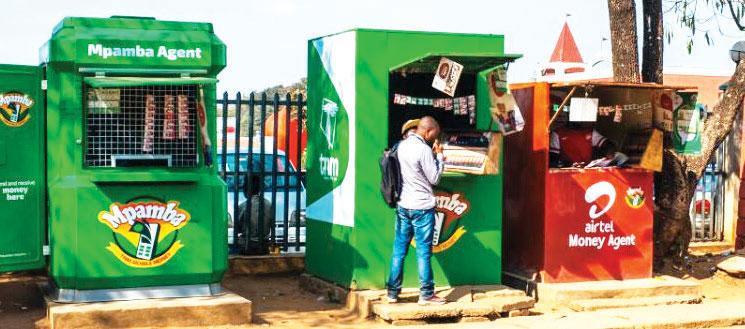
Africa-Press – Malawi. Mobile money services in Malawi recorded significant growth in 2025, as the value of transactions nearly doubled, jumping by 94 percent to K37.9 trillion from K19.5 trillion the previous year.
This is according to the 2025 National Payments System (NPS) Report.
The Reserve Bank of Malawi (RBM) has published the report.
According to the report, in the year under review, the country recorded increased adoption and higher-value usage of mobile money platforms.
The report indicates that transaction volumes increased by 31.6 percent to 2.4 billion, up from 1.8 billion in 2024.
– Advertisement –
However, the central bank notes that despite the growth, the range of mobile money usage remained concentrated in basic services.
Airtime top-ups accounted for 42 percent of transactions while cash-in and cash-out services contributed 33.1 percent.
Merchant payments, a key pillar in building a cashless economy, accounted for only 7.7 percent.
“This indicates continued dominance in cash-substitution use cases, which poses a challenge to the government’s digitalisation agenda and limits the full realisation of a cashless payments ecosystem,” the report reads.
The report further shows that mobile money subscriptions rose by 23.3 percent to 19.9 million in 2025, underlining the growing importance of the service to the country’s financial system.
However, the central bank cautions that the figure reflects registered wallets, which may include inactive or churned SIM cards.
Despite the rise in subscriptions, activity levels remain relatively low, with only 44.8 percent of registered users [about 8.9 million] being active within a 30-day period while 58.8 percent subscribers conducted transactions over a 90-day period.
The report also highlights the persisting gender gap in mobile money usage, as male subscribers account for 54.9 percent while females made up 45.1 percent. Nevertheless, the report notes progress in narrowing the gender gap to 9.7 percentage points from 16.9 percent previously.
The improvement is attributed to the impact of financial literacy campaigns and targeted programmes aimed at increasing women’s participation in digital financial services.
Malawi Economic Justice Network Executive Director Bertha Phiri described the performance as positive.
“It means more people have access to mobile money services. At large, they have access to financial services, particularly to those that don’t have access to others, like banking in the rural areas,” Phiri said.
The Ministry of Finance earlier announced measures including raising wallet holding limits from K1 million to K5 million and increasing transaction limits from K750,000 to K1 million, which the central bank says are expected to further support higher-value digital transactions in 2026.
For More News And Analysis About Malawi Follow Africa-Press