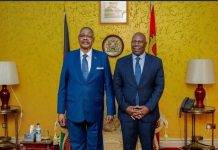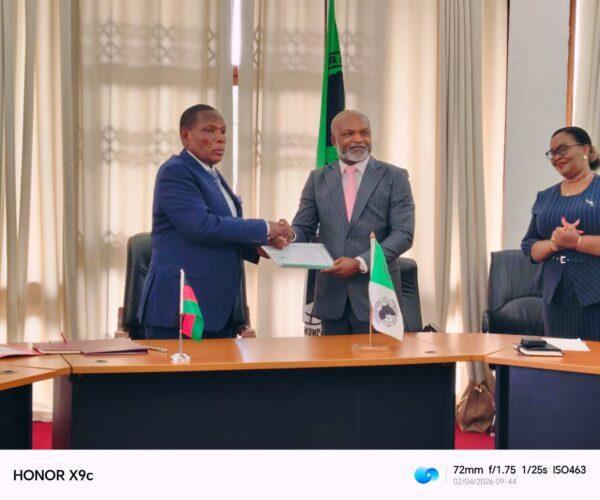
Africa-Press – Malawi. Malawi has secured a major energy breakthrough after the government signed a $23 million (about K44 billion) financing agreement with the African Development Bank (AfDB) to rehabilitate the Kapichira Hydropower Plant—two years after it was crippled by a devastating cyclone.
The deal is more than just a repair project—it is a strategic intervention aimed at powering Malawi’s economic engine. With electricity access currently hovering around 25 percent, the investment is expected to accelerate the country’s ambition to expand access to as high as 75 percent, unlocking growth across key sectors including agriculture, mining, tourism, and manufacturing.
Minister of Finance Joseph Mwanamvekha described the agreement as a turning point in Malawi’s development trajectory, stressing that reliable and sustainable energy remains one of the country’s biggest constraints.
“This milestone underscores the strong and enduring partnership between Malawi and the African Development Bank Group. It reflects our shared commitment to addressing one of the most critical barriers to economic transformation—energy,” he said.
Under the agreement, Malawi will receive a grant of approximately 16.89 million Units of Account (equivalent to about $23.5 million) to rehabilitate key hydropower infrastructure at Kapichira and Nkula B—two pillars of the country’s electricity system. Restoring these facilities is expected to significantly improve generation efficiency and stability, ensuring consistent power supply for households, businesses, and public institutions.
The impact, however, goes far beyond keeping the lights on. Mwanamvekha emphasized that improved electricity generation will stimulate industrialisation, enhance agricultural productivity, strengthen service delivery, and create much-needed jobs—directly feeding into GDP growth.
At the same time, the government is pushing ahead with complementary mega-projects such as the Mpatamanga Hydropower Project, which is expected to generate over 300 megawatts, and the Mozambique-Malawi power interconnector—both critical in closing the country’s energy gap.
AfDB Country Manager Macmillan Anyanwu painted a stark picture of Malawi’s current energy deficit, noting that nearly three-quarters of the population still lack access to electricity. He stressed that the country needs an additional 644 megawatts to meet its target of 50 percent access by 2030, making the protection and rehabilitation of existing infrastructure urgent.
“This investment is about safeguarding what Malawi already has while building toward a more resilient energy future,” he said.
The funds will enable the Electricity Generation Company of Malawi (EGENCO) to rehabilitate two turbines and two generator units at Kapichira, alongside modernising critical systems. These include electrical and protection systems, SCADA (supervisory control and data acquisition) systems, monitoring and instrumentation tools, as well as updating maintenance frameworks to ensure long-term efficiency.
In a country where power outages have long stifled productivity and investment, the Kapichira rehabilitation signals a decisive shift—from vulnerability to resilience, and from energy scarcity to economic possibility.
For More News And Analysis About Malawi Follow Africa-Press