Africa-Press – Malawi. The ambitious Mpatamanga Hydropower Project is steadily moving through its development phase, with government officials expressing clear satisfaction over the progress made so far on what is expected to become Malawi’s largest electricity generation facility.
The $1.5 billion mega project, located along the Shire River in Neno District, is designed to produce 358 megawatts (MW) of electricity and significantly boost Malawi’s long-term energy security. Once completed, it is expected to push national generation capacity beyond 1,000MW and expand electricity access from the current 12 percent to over 30 percent of the population.
At this stage, the project is still in its pre-construction development phase, but visible groundwork is already taking shape. A modern bridge has already been constructed across the Shire River, alongside other enabling infrastructure works that signal movement from planning into execution readiness.
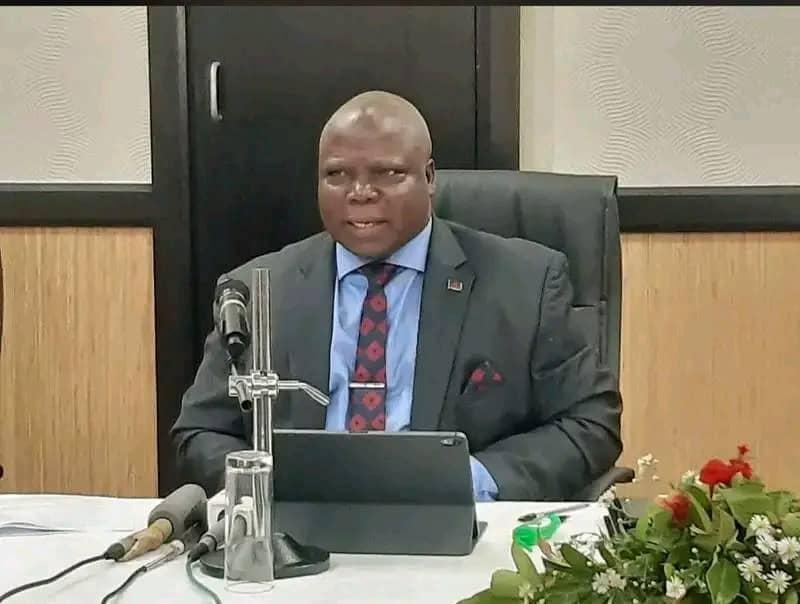
Following a site inspection, Chief Secretary to the Office of the President and Cabinet Justin Saidi said government is encouraged by the progress and remains committed to ensuring the project meets its long-term targets.
“We are excited about the progress and the government is ready to support this project so that, come 2030, we will have achieved what we wanted to achieve,” Saidi said.
He emphasized that the project is a central pillar under the Malawi Energy Compact and a key response to the country’s persistent power shortages, which have constrained industrial growth, business productivity, and household access to reliable electricity.
Saidi also urged energy institutions including the Electricity Generation Company (EGENCO) and the Electricity Supply Corporation of Malawi to maintain strong coordination and commitment as the project transitions toward full implementation.
On the technical and investor side, Mpatamanga Hydro Power Limited General Manager Antoine Gerboud confirmed that the project has already completed feasibility studies and is now approaching the final stages of financial negotiations.
He said that while the project is not yet in full physical construction, it is nearing a critical turning point.
According to Gerboud, actual construction is expected to begin between late 2026 and early 2027, depending on the conclusion of financing arrangements. Once construction starts, the project is expected to take four to five years to complete.
When operational, the power plant is projected to contribute approximately 2.9 percent annually to Malawi’s economy, while creating over 2,500 jobs during construction and operational phases, alongside broader economic spin-offs.
EGENCO Chief Executive Officer William Liabunya described the project as transformative, noting that it will be the largest power generation facility in Malawi upon completion.
“This will be the biggest power generation plant in the country, and this visit has reinforced government commitment to seeing it through,” Liabunya said.
Currently, EGENCO generates close to 400MW from existing stations including Nkula A and B, Kapichira I and II, Tedzani I, II, III, and Wovwe power plants. However, demand continues to outpace supply, leading to persistent power challenges across the country.
For Malawi, Mpatamanga is no longer just a project on paper—it is now in a critical transition phase between planning and construction readiness. The next major milestone will be financial closure and the official launch of full construction works, a moment that will determine whether the country’s long-standing energy ambitions finally move from promise to reality.
If timelines hold, Malawi could begin to see tangible construction within the next year—but until then, the project remains a high-stakes test of delivery, coordination, and national resolve.
For More News And Analysis About Malawi Follow Africa-Press