Africa-Press – Malawi. The ongoing nationwide power blackouts have ignited a blame game within government, with the current administration shifting responsibility to the previous Malawi Congress Party (MCP)-led government—despite technical officials pointing to a completely different cause: crippling forex shortages.
While politicians trade accusations, insiders at Electricity Generation Company (Malawi) (EGENCO) say the real issue is painfully simple—there is no money to keep the machines running.
According to EGENCO officials, the state-run power producer is failing to import critical spare parts needed to repair key hydropower stations due to acute foreign exchange scarcity, a situation that continues to choke electricity generation.
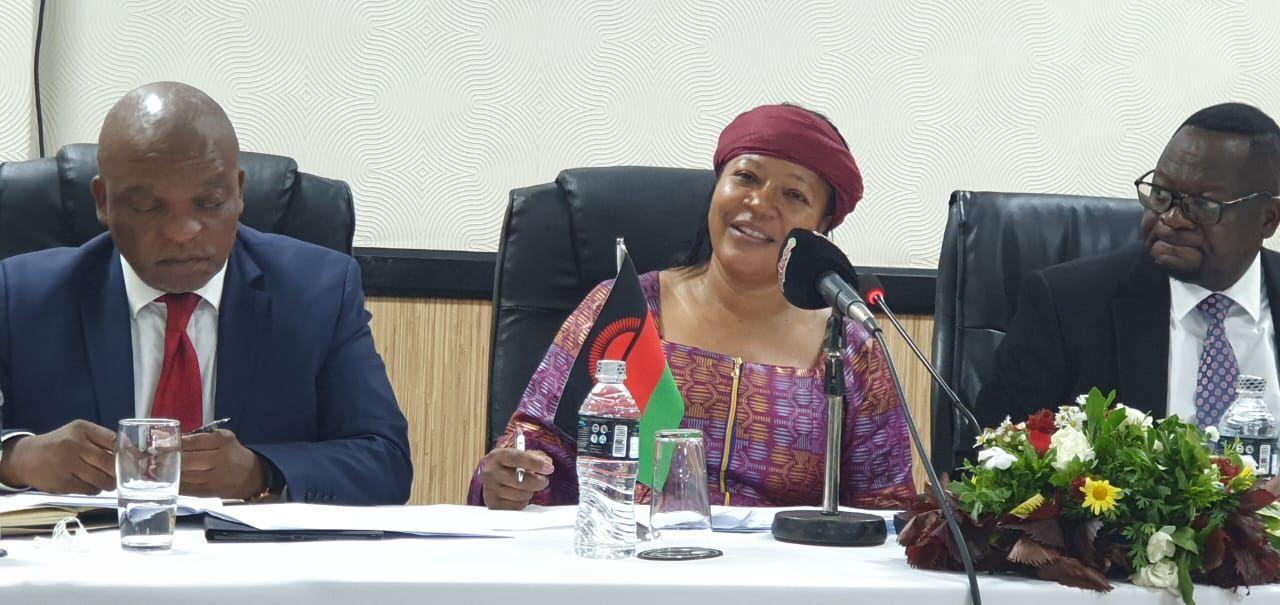
But Minister of Energy and Mining, Jean Mathanga, chose a different narrative—launching a direct attack on the previous administration.
Speaking at a press briefing in Blantyre, Mathanga blamed the current crisis on what she described as the MCP government’s failure to maintain vital electricity infrastructure during its time in power.
She argued that aging and poorly serviced equipment at both Electricity Supply Corporation of Malawi (ESCOM) and EGENCO is now collapsing under pressure, triggering repeated breakdowns.
Mathanga went further, raising the spectre of theft and even possible sabotage, warning that such acts would not be tolerated under the current administration.
Yet her remarks stand in stark contrast to EGENCO’s own admission earlier this week.
In a statement issued on Tuesday, EGENCO attributed the latest wave of blackouts to delays in repairing a fault at the Nkula B hydropower station—delays directly linked to forex shortages.
The company revealed that a 20-megawatt unit has broken down and will remain offline for at least a month while spare parts are sourced from South Africa.
EGENCO also pointed to fuel shortages and forex constraints as major obstacles affecting diesel-powered backup generators in Kanengo and Luwinga—facilities meant to cushion the country when hydropower output drops.
Meanwhile, Electricity Supply Corporation of Malawi (ESCOM) has rolled out an eight-month recovery plan aimed at stabilising the fragile national grid.
The plan includes a nationwide network assessment, preventive maintenance, and accelerated response to faults that have long frustrated consumers.
ESCOM is also banking on long-term solutions such as the Mozambique–Malawi (MOMA) Interconnector Project and the Battery Energy Storage System (BESS) in Kanengo, Lilongwe—projects expected to ease supply pressure and improve grid stability.
However, the utility has quietly admitted that even basic pre-rainy season maintenance was derailed this year by procurement bottlenecks—raising serious questions about planning, preparedness, and governance.
As blackouts persist, Malawians are left in the dark—literally and politically—caught between official explanations that do not align, and a power system that continues to falter under the weight of deeper economic and structural failures.
For More News And Analysis About Malawi Follow Africa-Press