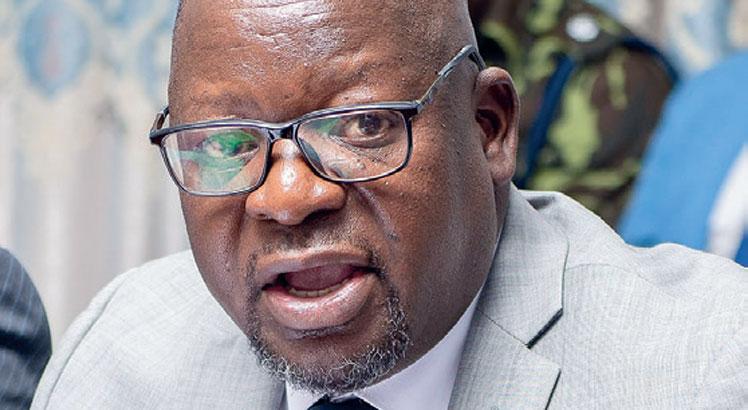
Africa-Press – Malawi. Government spokesperson Shadric Namalomba has flatly rejected a critical global assessment that accuses Malawi’s presidency of tightening its grip on power and weakening democratic oversight, but his response leaves more questions than answers about the true state of governance.
Reacting to the Bertelsmann Stiftung Transformation Index (BTI) Malawi 2026 Country Report, Namalomba dismissed the findings as lacking evidence, arguing that claims of Executive dominance do not reflect the current reality.
“While this may have been the case under the MCP government, it is different under DPP rule,” he said, maintaining that the administration respects the rule of law and treats all three arms of government as equal. He further insisted that Parliament operates independently, strengthened by capacity-building initiatives and free from Executive interference.
Yet the BTI report delivers a starkly different assessment, warning that Malawi’s presidency continues to wield overwhelming influence that quietly undermines checks and balances. According to the report, Parliament remains largely constrained, with its most critical debates confined to committees and rarely translating into decisive action on the floor.
At the heart of the concern is the long-standing control of key public appointments by the Executive, a system that critics say breeds dependence and weakens institutions meant to hold power accountable. The report suggests that this dynamic has contributed to stalled corruption cases, ignored audit findings, and a pattern where parliamentary recommendations fail to trigger meaningful enforcement.
Parliament spokesperson Ian Mwenye acknowledged the report but framed it as part of a broader democratic conversation, pointing to reforms such as the Constitution (Amendment) Act of 2021 and the Parliamentary Service Act as evidence of progress. He also highlighted ongoing oversight efforts, including Public Accounts Committee inquiries and investigations into matters of national interest.
However, governance experts remain divided on whether these developments signal real change or cosmetic adjustments.
Political analyst Gift Sambo argues that Malawi’s institutions retain meaningful independence, citing the landmark 2019 Malawi presidential election nullification as proof that the Judiciary can stand firm against Executive pressure. He contends that structural limits within the system prevent the presidency from becoming all-powerful.
In sharp contrast, governance expert Mavuto Bamusi warns that the country’s oversight framework is steadily deteriorating. He points to deepening patronage, questionable public appointments, and procurement controversies as signs of a system struggling to enforce accountability. Bamusi argues that Parliament’s limited financial and operational independence has left it vulnerable to Executive influence, calling for urgent reforms to strengthen committee autonomy and modernise legislative functions.
Namalomba’s outright dismissal may project confidence, but it does little to confront the substance of the BTI report. The central issue remains unresolved: whether Malawi’s democratic institutions are genuinely independent or still operating under the shadow of a presidency that holds disproportionate power.
As the debate intensifies, the gap between official assurances and critical assessments is becoming harder to ignore, raising uncomfortable questions about whether the country’s democracy is functioning as designed—or merely appearing to.
For More News And Analysis About Malawi Follow Africa-Press