By Hopewell Chinono
Africa-Press – Malawi. What is unfolding in Malawi today is not merely a scandal of excessive travel or poor optics; it is a brutal exposé of moral bankruptcy at the very heart of political leadership in parts of Africa.
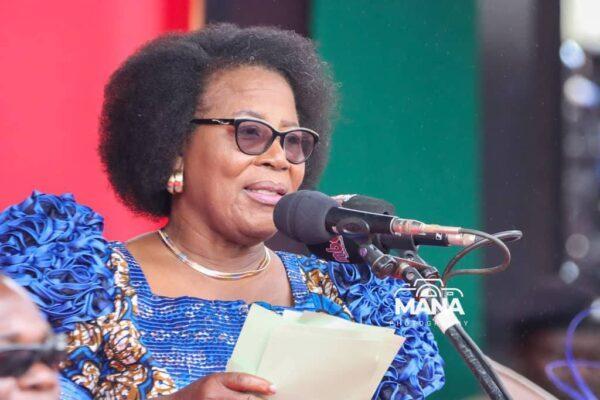
On one hand, Malawi’s Finance Minister, Joseph Mwanamvekha, is in the Middle East—Qatar and the United Arab Emirates—literally begging for food aid. He is pleading for relief for a nation whose people are hungry, whose currency is collapsing, and whose economy is suffocating under the weight of mismanagement and corruption. On the other hand, back in Lilongwe, the Vice President, Dr Jane Ansah, is planning a lavish private trip to Britain to celebrate her husband’s birthday—funded by the Malawian taxpayer.
This grotesque contrast alone should shock the conscience of any serious leader.
But it gets worse.
The Vice President is not travelling alone. She is taking with her a bloated entourage of 23 people: herself in first class, eight officials in business class, seven in premium economy, and another seven—including security and personal aides—whose travel and accommodation are fully catered for by the state. The estimated cost? Nearly MK2 billion for a single trip.
At a time when Malawian hospitals lack basic drugs, when schools are understaffed and under-resourced, when civil servants cannot afford transport to work, and when families are skipping meals, this level of extravagance is not just offensive—it is obscene.
No amount of bureaucratic paperwork, no procedural approval, and no technical justification can cleanse this act. First-class travel, in particular, is morally indefensible in a country whose economy is broken. Leadership demands restraint, sacrifice, and example. What is being demonstrated here is entitlement, detachment, and contempt for the suffering of ordinary people.
Worse still, this trip was sanctioned through the Office of the President and Cabinet (OPC). That means President Peter Mutharika is fully aware of it. This is not a rogue act by a reckless official; it is an executive decision taken at the very top of the state.
That reality strips away every excuse.
If this trip proceeds, Malawi risks undermining the very aid it is desperately seeking. Donors do not just look at spreadsheets; they assess credibility, seriousness, and moral posture. A government that begs for food with one hand while financing luxury junkets with the other sends a clear message: it cannot be trusted.
This episode exposes how many of the promises made to Malawians during elections were nothing more than political theatre—well-scripted performances designed to win votes, not commitments to ethical governance.
The justification of these costs using parallel market (black market) exchange rates compounds the problem. It is an open admission of systemic failure. It normalises illegality while asking the Treasury to legitimise it. Even if every kwacha were technically approved, the decision still fails the public interest test. Leadership is not only about what is lawful; it is about what is defensible. This is neither.
The responsibility does not end in Lilongwe.
If the British Government in Malawi issues visas for what is, in substance, a private trip disguised as official business, it becomes complicit. British taxpayers send aid to Malawi to help feed Malawians, support hospitals, and strengthen essential public services—not to subsidise luxury travel for political elites.
Does the British taxpayer know that some of their aid indirectly underwrites this extravagance? Do British authorities apply any meaningful due diligence, or do they simply rubber-stamp visas while ignoring the moral implications?
These are serious questions—about oversight, accountability, and ethical responsibility on both sides.
This kind of conduct is precisely why figures like Donald Trump feel emboldened to insult African leaders, African countries, and Africans themselves. While his language is crude and unacceptable, the behaviour of some African leaders tragically hands him the ammunition. You cannot demand global respect while governing with such shamelessness.
Dr Jane Ansah needs serious introspection. President Mutharika needs to act decisively and stop this trip immediately. Leadership is tested not in moments of comfort but in times of crisis. Malawi is in crisis.
If this pattern continues—if extravagance, arrogance, and moral blindness persist—then the future is bleak. Aid will dry up. Public trust will erode further. And the distance between African leaders and the people they claim to serve will grow even wider.
History will not be kind to leaders who feast while their nations starve.
Source: Malawi Nyasa Times
For More News And Analysis About Malawi Follow Africa-Press