Africa-Press – Malawi. For more than four years, the Wakawaka market saga has stood as a symbol of policy paralysis in Malawi’s urban governance. It was a conflict defined by fear, political indecision, weak enforcement, and the quiet suffering of poor traders—especially women—trapped in a dangerous and illegal trading space that everyone acknowledged was wrong, yet no one had the courage to decisively fix.
That is why Minister of Local Government and Rural Development Dr Ben Phiri’s intervention marks a rare and important moment of real leadership.
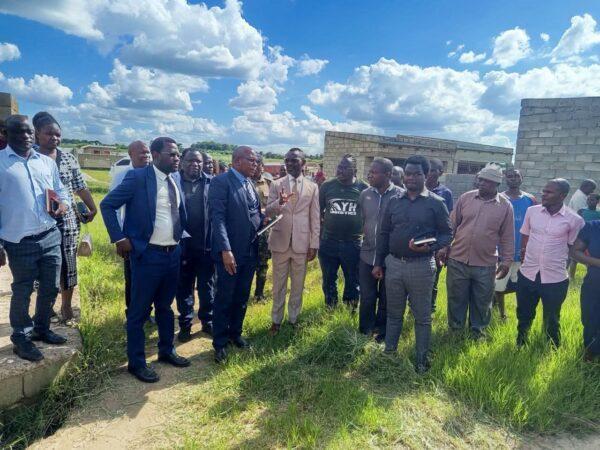
Unlike the traditional bureaucratic approach of issuing circulars from offices in Lilongwe, Phiri chose to go to the ground—physically visiting both Wakawaka and the new Bypass Market. This alone separates him from many of his predecessors. In Malawi’s political culture, problems are often managed through memos, committees and postponements. Phiri chose presence, not paperwork.
But beyond symbolism, his leadership stands out for its strategic clarity.
First, he framed the issue correctly: not as a political problem, but as a governance and legality problem. By stating clearly that no individual has the right to operate a market outside the law, Phiri reclaimed the authority of the state in a space that had been captured by informal power structures and tolerated illegality.
This is critical. Wakawaka survived not because it was right, but because enforcement was weak and politically risky. Phiri cut through that fear by anchoring his position in law, not populism.
Second, his approach is solution-oriented rather than punitive. Instead of simply shutting down Wakawaka, he emphasised a roadmap—a structured transition that protects livelihoods while restoring order. This is smart politics and smart governance. It recognises that informal traders are not criminals, but citizens operating within a system that failed them.
Phiri did not criminalise poverty; he organised it.
Third, his insistence on fairness and justice shows a rare balance between authority and empathy. He directed both Lilongwe City and District Councils to jointly manage the transition and address the needs of those affected. This reflects a leader who understands that development is not just about infrastructure, but about people.
In a country where relocation often means displacement without compensation or planning, this emphasis on fairness is not just progressive—it is politically mature.
Most importantly, Phiri’s leadership demonstrates shrewd political intelligence. The Wakawaka issue is highly sensitive. Vendors are a powerful political constituency. Touching them carelessly has ended many political careers. Yet Phiri confronted the issue head-on, but framed it as protection, not punishment.
He positioned government as a protector of traders, not their enemy.
He positioned the law as a shield, not a weapon.
He positioned himself as a problem-solver, not a remote administrator.
This is why vendors responded with ululation and applause—not because he promised handouts, but because he offered order, safety and dignity.
In real terms, Phiri’s handling of the Wakawaka crisis reflects a model of leadership Malawi desperately needs: leaders who go to the ground, understand the problem structurally, apply the law without fear, and design solutions that balance humanity with authority.
Wakawaka was not just a market problem. It was a governance failure.
Phiri’s intervention is not just administrative. It is a restoration of state credibility at the grassroots.
In an era where leadership is often measured by press statements and political slogans, Ben Phiri demonstrated something rarer and more valuable: leadership that resolves, not manages, crises.
For More News And Analysis About Malawi Follow Africa-Press