
FELT IMPACT OF POWER OUTAGE—
SomanjeBy Imam Wali:
Across the country, asinister black market is crippling the country’s power sector, leaving communities in darkness and threatening progress towards universal energy access.
Alice Zulu, a 16-year-old former student at Chitundu Primary School, knows the impact of this theft firsthand.
A week before sitting her Primary School Leaving Certificate of Education examinations, thieves stripped cables near her school. She was forced to study by candlelight, jeopardising her future.
“The power went off while we were studying. We thought it was the usual load-shedding, but the following day we waited in vain for it to return.
– Advertisement –
Hours turned into days, days into weeks. “Later we were told that thieves had vandalized Escom’s cable in the area.
By the time we were writing our examinations, we could not read at night. Others were using candles. The results were good,” Alice recalls.
The darkness that dimmed Alice’s future also threatened the beginning of life itself at Saint Anne’s Health Centre in the area of Senior Chief Kamenyagwaza in Dedza. In 2023, a vandalized transformer turned the maternity wing into a danger zone. Without constant power for life-saving equipment, expectant mothers were rushed to Dedza District Hospital, their lives hanging in the balance during a bumpy journey on a failing grid.
It was a double blow for Alinafe Somanje.
– Advertisement –
– Advertisement –
“When operations at the facility were paralysed due to vandalism of Escom equipment, I was one of the women referred to Dedza Hospital. I was also unable to operate my salon business for months while the problem was being fixed,” Somanje explains.
The impact cascaded further, disabling the Central Region Water Board (CRWB) pumps and leaving the community without clean water.
Barbershop operator at Nkutu in Dedza, Mathews Kambalame, describes a year of financial ruin. His struggles the local face of a global syndicate.
“I went eight months without serving a customer. I struggled to feed my family because a few individuals stripped a transformer,” he says. The scale of the problem was laid bare when the Zimbabwe Revenue Authority intercepted K1.5 billion worth of copper at Nyamapanda Border.
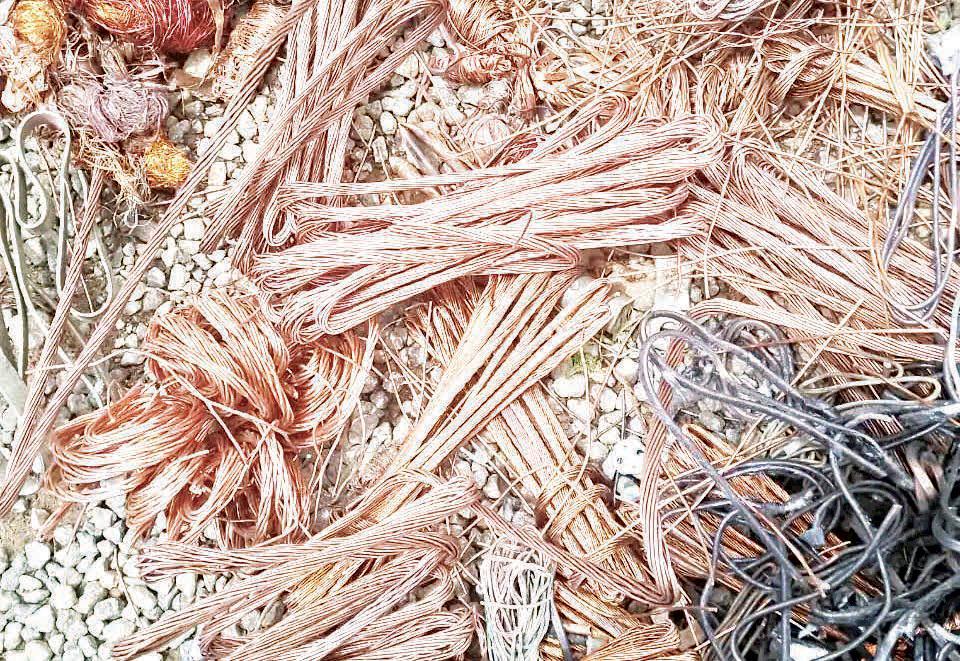
Stolen copper is often repurposed abroad to repair and build electrical motors, while aluminium conductors are usually sold domestically to make cookware or construct cattle pens.
These materials are most vulnerable to theft during power outages or while lines are being installed. Transformers are requently targeted for their copper wiring and cooling oil, which is illegally sold as a substitute for cooking oil.
With only 25 percent of Malawians currently connected to the grid, Escom faces a steep climb to reach its 80 percent target by 2035, especially as K3 billion is lost annually on repairs. The utility requires $5.5 billion (approximately K9.55 trillion) to expand access. On February 18, Limbe Police arrested two suspects with a container holding 195.6kg of copper and 364.2kg of aluminium ready for export. John Labana, 30, in Mangochi, was sentenced to five years’ imprisonment with hard labour for vandalising Escom cables and disrupting healthcare services.
Deputy National Police spokesperson Alfred Chimthere says police are doing their best to arrest those found with or stealing Escom equipment.
“The police and Escom are working together to combat this issue, with arrests and convictions being made,” he says.
In Dedza, Senior Chief Chilikumwendo has established neighbourhood watches to guard local equipment. “These vandals live among us. We will ensure anyone tampering with Escom equipment is brought to book,” the chief states.
General secretary of the Secondhand and Scrap Metal Dealers Association, Frackson Mponda, says the organisation will revoke licences of members found buying vandalised Escom equipment.
MKANDAWIRE—They can use sensorsSecurity expert Sherrif Kaisi calls for a joint security team of Escom and police to investigate vandals. He adds that Escom should employ trustworthy individuals, as some vandalism originates from within.
On his part, information and communication technology lecturer at Malawi University of Business and Applied Science, Higger Mkandawire, urges Escom to invest in technology to curb malpractice. “They can use sensors on every transformer to monitor unauthorised access, install smart meters to detect tampered or stolen meters, use GPS to track stolen equipment and deploy drones in townships where vandalism is high,” Mkandawire says.
Energy expert Beston Ntepa Gama, who is also general secretary of the Renewable Energy Industries Association of Malawi, advocates for smart-grid technologies.
“ESCOM should deploy modern protection systems such as alarms on transformers, tamper-detection devices and remote monitoring systems. Real-time alerts can significantly reduce response time and deter vandalism,” he says.
Escom’s Chief Public Relations and Communications Officer Pilirani Phiri highlights the devastating impact of vandalism, saying it forces the utility into a cycle of constant repairs, costing K3 billion annually and halting new connections.
Phiri explains that this disrupts essential services and diverts resources from expansion projects.
He says, to combat this, Escom has launched antivandalism campaigns, intensified patrols and collaborates with police to track stolen materials.
The 2024 Electricity (Amendment) Act now prescribes stiffer penalties, up to 30 years’ imprisonment, removing the option of fines for serious vandalism.
The Malawi Revenue Authority has also intervened by introducing an export duty on scrap metal to curb theft.