
By Llywellenie Mpasa
The Queen Elizabeth Central Hospital (QECH) Audiology Department has called on parents and guardians to prioritise routine ear examinations for children to prevent avoidable hearing impairments.
Audiologist at the QECH Audiology/Ear, Nose and Throat (ENT) Department, Mwanaisha Phiri, said nearly 80 per cent of the causes of deafness can be treated if identified early.
‘As health professionals, we are concerned that many children are developing hearing problems that could easily be treated if parents sought medical attention early,’ Phiri said.
Speaking during commemorations of World Hearing Day, observed annually on 3 March, Phiri said untreated hearing impairment affects a child’s ability to hear and interferes with speech, language, cognitive and social development.
– Advertisement –
She said this often leads to poor academic performance, reduced employment prospects and long-term disadvantages.
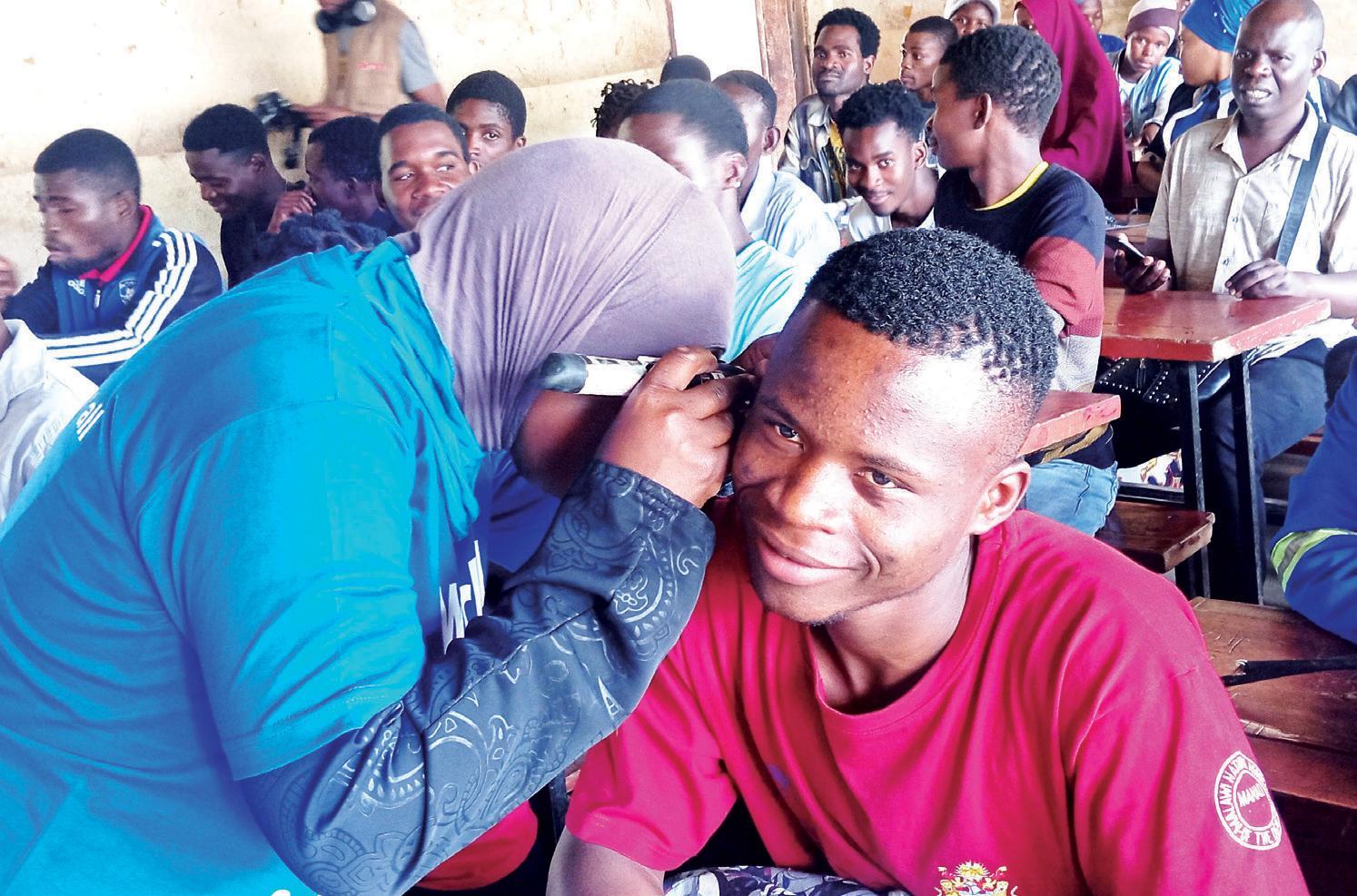
As part of the 2026 commemorations, the QECH Audiology/ENT team, in collaboration with the Muslim Society for the Deaf, conducted an outreach programme at Limbe Primary School in Blantyre, where people were screened and sensitised on hearing care.
Chairperson of the Muslim Deaf Society, Ahmed Saeed Mashah, said there is a need for increased community awareness and the inclusion of sign language in schools.
‘Inclusive education means ensuring that deaf children have equal access to learning opportunities. Having sign language teachers in schools with profoundly deaf learners is a game changer. It bridges the communication gap and empowers them academically and socially,’ Mashah said.
– Advertisement –
– Advertisement –
Guest of honour at the event and lecturer at Blantyre International University, Sherif Kaisi, urged policymakers to prioritise hearing care and inclusive education.
‘If we are serious about leaving no child behind, we must invest in early screening, accessible treatment and inclusive learning environments. Hearing care should not be a luxury but a basic right for every child,’ he said.