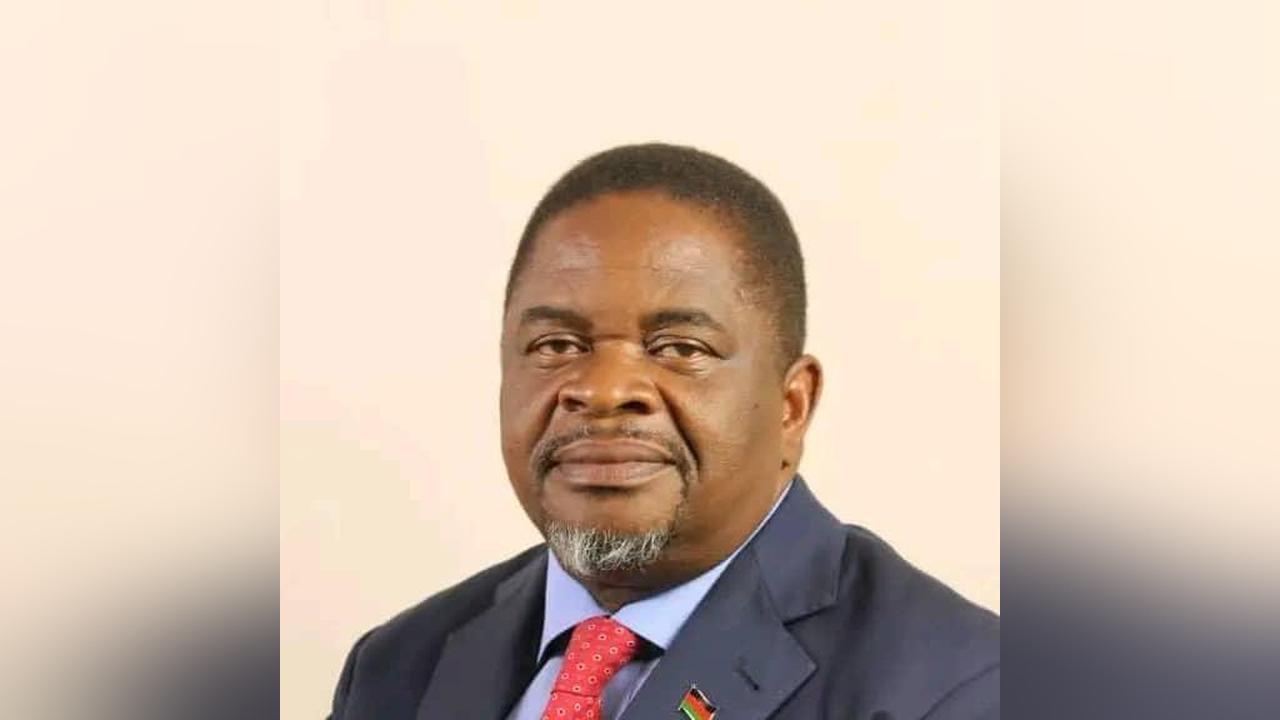
Africa-Press – Malawi. Minister of Education, Science and Technology Bright Msaka has outlined sweeping fee reforms as part of the government’s plan to roll out the Free Secondary Education Policy, setting clear timelines for the abolition of various charges in public secondary schools.
Presenting a ministerial statement in Parliament on Friday, Msaka announced that examination and identity card fees for national examinations—including the Primary School Leaving Certificate of Education (PSLCE), Junior Certificate of Education (JCE) and Malawi School Certificate of Education (MSCE)—have been abolished with immediate effect in all public secondary schools.
He further announced that:
Development fees will be abolished from January 1, 2026 in all public secondary schools.
All boarding fees in government secondary schools will be abolished with effect from April 1, 2026.
All fees related to government open secondary schools will also be abolished from April 1, 2026.
Msaka said the Ministry of Education and the Ministry of Finance will provide matching funds to public schools and the Malawi National Examinations Board (Maneb) to ensure smooth school operations and proper administration of examinations after the removal of the fees.
He called for collective responsibility in implementing the policy.
“This is a major paradigm shift aimed at increasing equitable access to quality and relevant secondary education. We appeal to all stakeholders and development partners to support this transformation,” said Msaka.
The policy announcement triggered questions from Members of Parliament, who raised concerns about fee arrears, teacher shortages and rising enrolment.
Lilongwe Demela MP Monica Chang’anamuno asked what would happen to students who had not paid school fees for the current term due to confusion caused by the free education announcement.
“Teachers are concerned because some students have stopped paying fees after being told education is now free. What will happen to these students this term when free education starts next year?” she asked.
Lilongwe Nyanja MP Steven Baba Malondera questioned how government would cope with high enrolment, especially at a time when teacher recruitment has been frozen.
Mzimba North East MP Catherine Gotani Hara asked what strategies government had put in place to motivate teachers and ensure learners remain in school, particularly in the face of expected congestion.
On outstanding school fees, Msaka clarified that students must still pay current fees, as free secondary education will officially begin in January next year.
“The President already communicated that free secondary education will start in January. Anyone who owes fees must still pay for this term,” he said.
On teacher recruitment and infrastructure, Msaka assured MPs that government would assess enrolment figures and recruit more teachers accordingly, while also expanding classrooms.
“Our population is growing. We will continue increasing the number of teachers and classrooms to match enrolment,” he said.
He also announced that the ministry will take over full management of open secondary schools and employ more teachers to avoid disruption once the free education policy takes effect.
Despite welcoming the reforms, Civil Society Education Coalition Executive Director Benedicto Kondowe warned that the implementation plan lacks a clear and sustainable financing strategy.
“By removing examination fees, school development funds and soon boarding fees, government is dismantling financial barriers that have excluded thousands of learners—especially girls, children with disabilities and rural students,” said Kondowe.
However, he cautioned that success will depend on:
A clear financing strategy
Expanded school infrastructure
Adequate teacher recruitment
Strong governance, accountability and coordination
Kondowe stressed the need for clear timelines, measurable indicators and defined institutional responsibilities, with full involvement of civil society, district education networks and school governance structures.
“Free secondary education can be a transformative national milestone—but only if implementation is disciplined, inclusive, transparent and anchored in long-term sustainability,” he said.
The Democratic Progressive Party (DPP) included free secondary education as one of its key promises in its manifesto ahead of the September 16 elections, making the policy both a major social reform and a central political commitment.
For More News And Analysis About Malawi Follow Africa-Press