Africa-Press – Malawi. Nearly two months after government loudly announced a lifesaving maize import deal with Zambia, confusion, silence and official finger-pointing are now fuelling serious doubts over whether the much-touted consignment will arrive in time — or at all — as millions of Malawians stare hunger in the face.
Our investigations reveal that Malawi only signed an agreement to procure 200,000 metric tonnes of maize from Zambia during the week ending December 5, 2025, raising troubling questions about why a deal marketed as a “rapid response” took weeks to formalise — and why no maize has moved yet.
Sources familiar with the arrangement say the maize may not begin arriving until after December, directly contradicting earlier government assurances of swift intervention to cushion over five million food-insecure citizens.
Even more alarming is the official fog surrounding the deal. Government institutions tasked with food security appear either unwilling or unable to take responsibility, repeatedly referring journalists from one office to another in a bureaucratic merry-go-round that yields no answers.
Dodma Commissioner Wilson Moleni deflected responsibility to the National Food Reserve Agency (NFRA), saying: “NFRA is the procuring entity. Kindly engage them.”
NFRA Chief Executive Officer George Macheka, in turn, pushed the matter to the Ministry of Agriculture, insisting: “The Zambia maize deal is under the purview of the Ministry of Agriculture.”
When contacted, Principal Secretary in the Ministry of Agriculture Erica Maganga initially redirected queries back to NFRA before later requesting “ample time” to identify an official spokesperson — a response that only deepened public suspicion.
Five days later, Maganga finally responded to a questionnaire, stating that maize from Zambia is expected “towards the end of December,” with distribution to hungry households scheduled for January 2026 — months after the crisis was declared urgent.
She maintained that all procurement and international clearance processes had been completed, arguing that what appears to be delay is merely compliance with mandatory procurement procedures such as advertising for transporters, evaluating bids and awarding contracts.
But critics question how a government confronting a declared hunger emergency could take months navigating procedures while citizens skip meals.
Maganga further disclosed that Malawi had just over 38,000 metric tonnes of maize in its Strategic Grain Reserves when discussions with Zambia began — a figure critics say was already dangerously low. Of this stock, about 26,000 metric tonnes were released for free distribution through Dodma, while 10,000 metric tonnes were allocated for subsidised sales through Admarc.
The uncertainty sharply contrasts with confident political statements made weeks earlier. In mid-October, President Peter Mutharika publicly confirmed that Malawi would import maize from Zambia as an urgent response to hunger affecting five million people.
The deal was even publicly affirmed by Zambian President Hakainde Hichilema, who announced during the Southern Province Investment and Trade Exposition in Livingstone that Malawi had requested Zambia to reserve 200,000 metric tonnes of maize.
“Please keep 200,000 metric tonnes of maize for us,” Hichilema quoted Malawi’s President as saying. “We will do it with pleasure,” he added.
In October, the Malawi Government announced it had signed a K135 billion ($77 million) deal to import the maize — a figure that raised public expectations that relief was imminent.
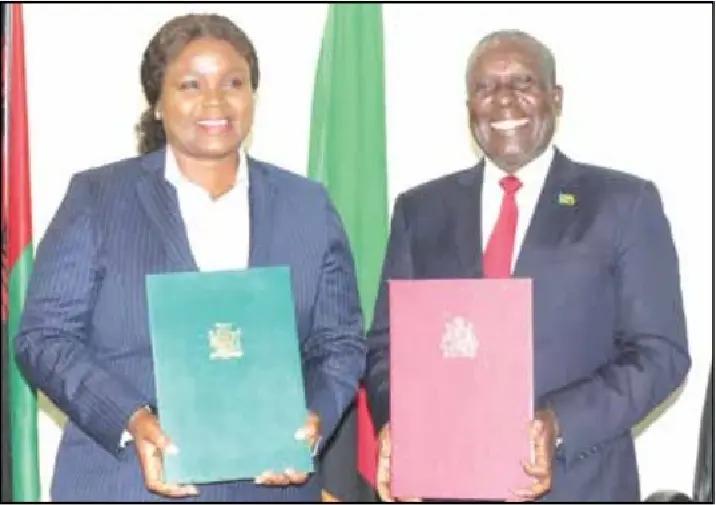
Agriculture Minister Roza Fatch Mbilizi said at the signing ceremony in Lilongwe that government had “no choice” but to act decisively due to the severity of the crisis, assuring Malawians that the maize would cover food needs for six months, up to March next year.
Yet weeks later, the maize remains across the border, timelines remain vague, and accountability remains elusive.
As Dodma and international partners roll out the 2025-26 Lean Season Food Insecurity Response Programme, one question refuses to go away: Is the Zambia maize deal a genuine lifeline — or another headline-friendly promise dissolving under scrutiny while hunger tightens its grip?
For More News And Analysis About Malawi Follow Africa-Press