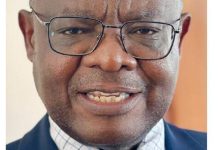
Africa-Press – Malawi. Minister of Justice Charles Mhango has set in motion a high-stakes and closely watched process to recruit a new Director General of the Anti-Corruption Bureau (ACB), activating a special committee to sift through a flood of applications in what insiders describe as “one of the most consequential public appointments in the current governance cycle.”
Multiple sources within the ministry confirm that 50 applications have been received, triggering an intensive vetting process that will begin next Thursday when the specially appointed panel convenes to scrutinise candidates on competence, integrity and leadership capacity—criteria described as “non-negotiable” for a role at the centre of Malawi’s anti-corruption fight.
“The calibre of applicants is high, but the expectations are even higher,” said a source, adding that “this is not just about filling a vacancy—it is about restoring confidence, strengthening enforcement and signalling seriousness in tackling corruption at the highest levels.”
Following shortlisting, interviews are scheduled for April 9–10, 2026 in Lilongwe, where candidates will face rigorous assessment designed to test not only technical expertise but also independence, resilience and ethical grounding in handling politically sensitive investigations.
The process is structured in layers to project transparency while preserving executive control: after interviews, three names will be forwarded to President Peter Mutharika, who retains the decisive authority to appoint the Director General, subject to subsequent parliamentary confirmation.
Insiders say the narrowing down to three candidates will be “the most critical filtration point,” with the committee expected to weigh track records in public service, legal acumen, investigative experience and perceived ability to withstand political pressure.
“The real test is not qualifications on paper,” the source said. “It is whether the candidate can act independently in an environment where corruption cases often intersect with power.”
The recruitment process follows a formal structure beginning with a public advertisement earlier this year inviting qualified Malawians to apply, a step aimed at broadening the talent pool and reinforcing procedural legitimacy. The Ministry of Justice then assumes responsibility for shortlisting and interviews before handing over to the Presidency for final selection and Parliament for confirmation—an institutional chain designed to balance merit, oversight and executive authority.
The successful candidate will serve a three-year contract, renewable once, with renewal contingent on performance—an arrangement intended to combine continuity with accountability in an office where results are closely scrutinised.
At stake is more than a leadership position.
The ACB sits at the frontline of safeguarding public resources, investigating financial misconduct and prosecuting corruption cases that often carry political and economic implications. As such, the appointment of its Director General is widely viewed as a barometer of the government’s commitment to transparency and rule of law.
“This appointment will either strengthen or weaken public trust,” the source noted. “People are watching not just who is chosen, but how the process is handled.”
With scrutiny intensifying and expectations rising, the unfolding recruitment is shaping into a defining institutional moment—one that could recalibrate the credibility, independence and effectiveness of Malawi’s anti-corruption architecture for years to come.
For More News And Analysis About Malawi Follow Africa-Press