Africa-Press – Malawi. Malawi has suffered a major credibility blow in the management of public infrastructure after scoring a paltry 25.41 points in the newly released Infrastructure Transparency Index (ITI)—far below the international average and trailing behind regional peers.
The Construction Sector Transparency Initiative (CoST), operating under the Construction Industry Regulatory Authority (CIRA), on Wednesday released its first-ever Infrastructure Transparency Index report, painting a grim picture of transparency, accountability, and citizen involvement in the country’s construction sector.
The ITI assessment evaluates transparency in public infrastructure projects and shows Malawi lagging behind countries such as Uganda (32.26) and Costa Rica (66.95), while the global average stands at 43.07.
Despite recording a strong Enabling Environment score of 78.20, which reflects the existence of sound laws and policies, the report exposes a troubling gap between legislation and practice. Malawi scored a dismal 6.92 in Capacities and Processes, 3.72 in Citizen Participation, and 20.85 in Information Disclosure—areas considered critical for value-for-money infrastructure delivery.
The report further highlights wide institutional disparities, with bodies such as the Northern Region Water Board emerging among top performers, while several ministries and local councils posted alarmingly poor scores.
To reverse the trend, the report recommends strengthening institutional capacity, enforcing routine publication of project data, improving citizen engagement, leveraging digital platforms to enhance transparency, and promoting peer learning to align Malawi with global best practices.
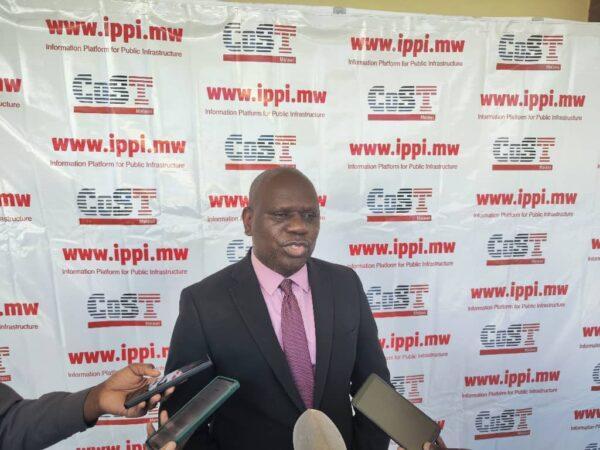
Speaking during the launch, CoST Chairperson Engineer Samuel Biton said Malawi’s biggest weakness lies not in the absence of laws, but in their poor implementation.
“While the country has a strong legal framework, implementation remains very weak. That is why Malawi is scoring poorly,” Biton said.
“There is also very low public participation in the planning, procurement, and execution of infrastructure projects, making it difficult to achieve real value for money.”
As a way forward, Biton emphasized the need to build capacity within implementing agencies and government ministries, noting that translating policy into action is key to improving accountability and service delivery.
Governance expert Mabvuto Bamusi expressed serious concern over the findings, attributing Malawi’s poor ranking to widespread allegations of corruption in contract awards and procurement processes within the construction sector.
Bamusi said weak citizen and civil society oversight has allowed a few actors to exploit the system through bribery, fraud, and poor procurement practices.
“The result is low-quality infrastructure—roads that develop potholes shortly after completion and shoddy maintenance works,” Bamusi said.
“Malawians are losing money, including taxpayer funds and donor support, due to poor value for money. This creates what I call infrastructure poverty—where good laws exist, but the country still suffers from poor and inadequate infrastructure across roads, railways, and inland water transport.”
Reacting to the report, CIRA Chief Executive Officer Engineer Gerald Khonje described the study as a landmark transparency tool for the construction industry and a crucial indicator of the sector’s current state.
Engineer Khonje said the study builds on CoST’s long-standing advocacy for project disclosure and legal reforms, including the review of the Public Procurement Act to embed transparency and accountability throughout the entire project lifecycle.
“While the report shows strong performance in the legal framework—scoring above 70 percent—it also reminds us that the real work lies in enforcement,” Khonje said.
“All stakeholders, especially regulators and implementing institutions, must actively mainstream transparency processes in their day-to-day operations.”
For More News And Analysis About Malawi Follow Africa-Press