Africa-Press – Malawi. Renewed government efforts to revive the long-stalled Mombera University project in Mzimba are drawing praise—but also sharp reminders that Malawians expect action, not another cycle of promises.
The decision to appoint Second Vice President Enock Kamzingeni Chihana to champion the project is being interpreted as a signal that the Arthur Peter Mutharika administration is serious about resuscitating the initiative, which has remained dormant for nearly seven years.
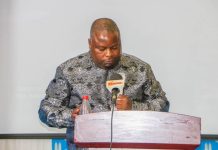
Former Vice President Khumbo Hastings Kachali welcomed the move, describing it as long overdue and critical to restoring momentum on a project first conceived under the late Bingu wa Mutharika.
“It is a strategic decision demonstrating government’s determination to develop Mombera University. It has been close to seven years since any meaningful work was done,” said Kachali.
He noted that initial groundwork—including internal road infrastructure—had already been completed during a previous administration, but the project stalled in the past six years.
Kachali did not mince words, accusing the administration of Lazarus Chakwera of neglecting the project entirely, resulting in lost time and delayed opportunities for the Northern Region.
“But better late than never,” he added, expressing optimism that the latest appointment could finally push the project toward completion.
Mombera University is expected to become the first purpose-built university in the Northern Region, envisioned as a specialised institution focusing on agriculture, livestock, dairy production, mining, and basic sciences. It was originally planned to follow the successful establishment of the Malawi University of Science and Technology (MUST) in Thyolo.
Kachali said the university has the potential to transform Mzimba and the wider Northern Region, much like MUST has done for Thyolo.
“If we can have a similar structure like MUST in Mzimba, it will be a positive development for the nation,” he said, adding that the delay has also stalled other planned projects such as the proposed University of Marine Biology in Mangochi.
Traditional leadership has also weighed in, with Inkosi ya Makhosi M’mbelwa V urging government to move beyond rhetoric and deliver on its promises.
“This is not just for Mzimba—it is a national project that will benefit all Malawians,” said the chief, who previously facilitated the provision of land for the university without compensation.
Meanwhile, Patrick Kabambe, Chief Executive Officer of the Public Private Partnership Commission (PPPC), said progress on financing remains uncertain, revealing that his office is yet to receive formal project proposals requiring private sector investment.
“We have had discussions with the Office of the Second Vice President on exploring public-private partnership options, but no formal submissions have been made,” Kabambe said.
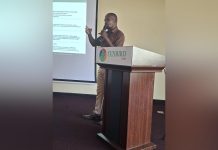
Chihana has indicated that government aims to complete the university and enrol its first cohort of students by the end of 2027—a timeline that will be closely scrutinised given past delays.
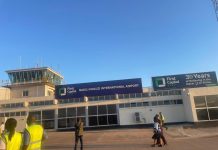
Beyond the university project, Kachali used the moment to highlight broader infrastructure gaps in the Northern Region, including the long-awaited international airport for Mzuzu.
Drawing comparisons with Tanzania, he argued that improved air connectivity is critical for regional development.
“You would want people in Mzuzu to fly directly to South Africa or Zambia or Dar-es-Salaam instead of going through Lilongwe,” he said.
He also called for accelerated investment in tourism-related airport infrastructure, including the proposed Mangochi International Airport.
On road infrastructure, Kachali painted a bleak picture, warning that nearly 60 percent of Malawi’s bitumen roads have outlived their lifespan.
“It is a nightmare travelling between Lilongwe and Blantyre or to other parts of the country. Government must adopt deliberate strategies to revamp road infrastructure,” he said.
While the renewed push for Mombera University has been welcomed, the underlying message from stakeholders is clear: Malawi cannot afford another stalled flagship project. The real test will not be in announcements—but in delivery.
For More News And Analysis About Malawi Follow Africa-Press