Africa-Press – Malawi. Malawi’s emergence as a serious global player in the rutile and graphite market is gathering pace, as Australian-listed Fortuna Metals has announced high-grade drill results from its Mkanda Rutile-Graphite Project in Mchinji, sending a strong signal that the country’s mineral potential runs far deeper than previously imagined.
The discovery sits right next to Sovereign Metals’ Kasiya Project, home to the world’s largest known rutile deposit—suggesting that Malawi may be sitting on a world-class mineral belt, not just a single mine.
In a press statement, Fortuna confirmed that early hand-auger drilling returned in-situ rutile grades of up to 2.21 percent, with continuous mineralised intervals of 1.66 percent rutile over 10 metres and 1.32 percent over another 10 metres—figures that industry experts describe as highly attractive at surface level.
More importantly, the company says the mineralisation does not fade with depth. Four drill holes ended with rutile grades above 1.0 percent, while nine out of ten holes ended above 0.5 percent, meaning the rutile continues beyond the bottom of current drilling.
“These results tell us the mineral system is strong, widespread, and continuous,” said one mining analyst. “That is exactly what investors want to see.”
So far, Fortuna has completed 544 drill holes across 180 square kilometres, using wide-spaced drilling to identify high-grade zones ahead of more detailed work planned for 2026. The strategy mirrors the early approach used at Kasiya—now regarded as a globally significant deposit.
Fortuna CEO Tom Langley said the company is preparing for aircore and push-tube drilling in early 2026, which will allow drilling down to the saprock boundary at around 20 metres or more.
“This would put Mkanda in the same depth range as Kasiya, which dramatically improves resource size and project economics,” Langley said.
If confirmed, this would transform Mkanda from a promising exploration target into a potential long-life mining operation.
The Mkanda and Kampini projects together cover 658 square kilometres and stretch across most of the 70-kilometre mineralised corridor of the Lilongwe Plain—suggesting that Malawi’s rutile-graphite story may be only beginning.
Graphite, the second mineral being explored, is also attracting attention due to growing global demand driven by electric vehicles, batteries, and clean energy technologies.
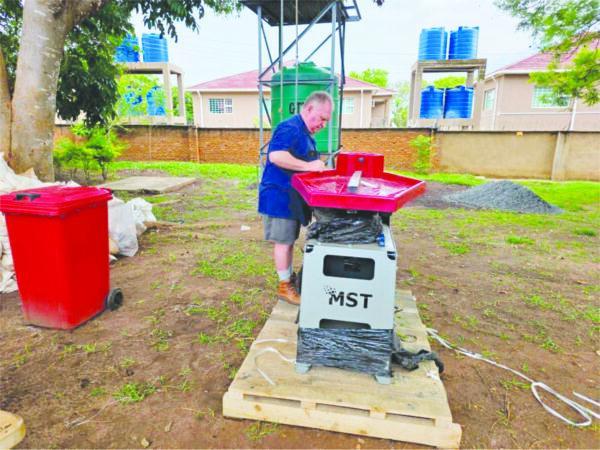
Fortuna has also announced plans to establish a low-cost in-country laboratory, a move that could build local technical capacity and reduce dependence on foreign testing facilities—an early step toward value addition.
Natural rutile is the world’s highest-quality source of titanium, used in aircraft, medical implants, paint pigments, and defence industries. With traditional rutile producers in decline and global supply tightening, demand is expected to rise sharply.
For Malawi, these developments raise both opportunity and urgency.
Experts say the clustering of major discoveries around Kasiya presents a rare chance to build a mineral province, not isolated mines. Done right, this could support shared infrastructure, skilled jobs, and downstream industries.
But they also warn that without firm government policy, Malawi risks repeating old mistakes—exporting raw minerals while value, technology, and profits are created elsewhere.
As Fortuna’s results fuel global interest, the real test is no longer geology—but governance.
Malawi’s mining future is no longer theoretical. It is emerging from the ground, drill hole by drill hole.
For More News And Analysis About Malawi Follow Africa-Press