By nyasatimes
Africa-Press – Malawi. A fierce institutional clash has erupted as Parliament’s Public Accounts Committee (PAC) pushes to table its Amaryllis Hotel inquiry report this week—defiantly proceeding without the testimony of key figure Colleen Zamba, whose continued absence is now the fault line of a deepening credibility crisis.
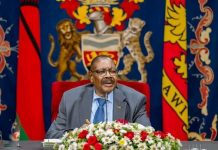
PAC chair Steven Baba Malondera confirmed the committee’s hardline position after Zamba failed, for the second time, to honour a summons. Through her lawyer, George Jivason Kadzipatike, she cited ongoing medical treatment abroad—yet provided no supporting documentation, a gap PAC has seized on to justify pressing forward.
Malondera’s stance is unequivocal: the committee is “extremely satisfied” with the documentary record and will not be stalled by what it views as an unsubstantiated excuse. In effect, PAC has drawn a line—asserting that its findings are complete, its mandate fulfilled, and its report ready for Parliament, with or without Zamba.
But that position has detonated sharp resistance.
Civil society actors and governance commentators warn that PAC is rushing a politically sensitive report while a central witness remains unheard, thereby risking not just procedural weakness but outright reputational damage. Benedicto Kondowe, chairperson of the National Advocacy Platform, has cautioned that submitting findings absent potentially critical testimony could fatally undermine the inquiry’s integrity.
His critique is blunt and layered: if Zamba’s role is material—and all indications suggest it is—then excluding her account leaves a structural gap in the evidentiary chain, one that could render conclusions contestable and the entire process suspect.
Kondowe goes further, indicting the inquiry itself as uneven and, at points, unfocused. He points to episodes where questioning drifted off-track, diluting evidentiary rigor and reinforcing perceptions of internal disarray within PAC. The implication is stark: this is not merely about a missing witness, but about a process that may already be compromised.
At the core of the controversy is Zamba’s alleged involvement in decisive actions underpinning the K128 billion transaction—her participation in a March 6, 2024 meeting, her purported guidance, and the legal basis upon which she is said to have directed the Public Service Pension Trust Fund (PSPTF) to issue commitment letters and accelerate the deal’s execution.
Proceeding without fully interrogating those elements, critics argue, transforms the report from a comprehensive inquiry into a potentially incomplete narrative.
Overlaying this is the broader institutional scandal. The Reserve Bank of Malawi, led by Governor George Partridge, had explicitly ordered PSPTF to suspend the transaction pending further review. That directive was reportedly ignored, with approximately K90 billion disbursed toward the acquisition despite regulatory objections.
This sequence—regulatory warning, institutional defiance, partial payment—has already raised serious questions about governance, oversight, and accountability. PAC’s current posture now risks compounding those concerns by appearing to prioritise procedural closure over evidentiary completeness.
What is unfolding, therefore, is not a routine parliamentary process but a high-stakes confrontation over legitimacy itself.
PAC insists it has sufficient evidence and must proceed. Critics counter that without Zamba’s testimony, the report’s foundation is inherently fragile. Between those positions lies a stark dilemma: deliver a timely report that may be challenged for incompleteness, or delay for fuller accountability at the cost of political and procedural momentum.
In choosing the former, PAC is making a calculated—and deeply contested—bet.
Because once tabled, the report will not simply record findings; it will define responsibility, shape public judgment, and potentially foreclose further scrutiny.
And if that judgment is perceived as rushed, selective, or structurally deficient, the consequence will be severe: not just a disputed report, but a further erosion of trust in the very institutions tasked with safeguarding public accountability.
In blunt terms, the warning from critics is unforgiving: A report delivered without its central witness risks reading less like a conclusion—and more like a compromise.
Source: Malawi Nyasa Times
For More News And Analysis About Malawi Follow Africa-Press