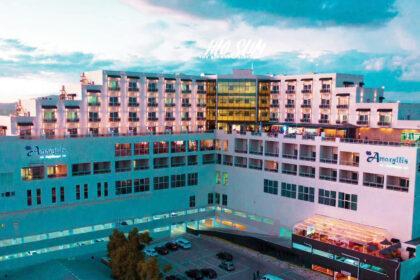
Africa-Press – Malawi. A stunning intervention by Malawi’s financial regulators has laid bare what insiders are calling a “systemic breakdown” in oversight, after authorities confirmed that at least K72.6 billion linked to the controversial Amaryllis Hotel deal has been traced, with large portions already frozen or secured.
Appearing before the Public Accounts Committee, Kaluso Chihana, representing the Registrar of Financial Institutions, delivered a blunt assessment of the unfolding scandal—revealing not only the scale of the الأموال involved, but also the extent to which regulatory directives were allegedly ignored.
Chihana disclosed that on March 4, 2026, the Reserve Bank of Malawi (RBM) imposed a K40 million fine on each trustee of the Public Service Pension Trust Fund (PSPTF) after ordering that the Amaryllis transaction be reversed within seven days—a directive that came too late to stop funds already in motion.
“What shocked us,” Chihana told the committee, “was that the Fund had already signed the sale agreement, even though some trustees were not aware of the deal.”
The admission strikes at the heart of governance within PSPTF, raising serious questions about internal controls, transparency, and whether due process was deliberately bypassed in pushing through one of the most expensive property deals in Malawi’s history.
Regulators revealed that once it became clear that payments had already been effected—despite earlier instructions to halt the transaction—their focus shifted from assessing the viability of the purchase to damage control and enforcement.
“Right now, we have the money… payments have been made, so we focused on compliance with the direction,” one RBM official told the committee, underscoring the urgency of tracing and securing public funds already in circulation.
The central bank moved swiftly, formally engaging the Financial Intelligence Authority on February 27, 2026, to track and freeze funds connected to the deal, a move that has so far resulted in billions being preserved as investigations intensify.
But the revelations carry deeper implications.
The fact that such a massive transaction—reportedly valued at over K128 billion—could proceed to advanced stages of payment while regulators were still issuing directives exposes a troubling disconnect between oversight bodies and the institutions they supervise. Even more alarming is the suggestion that some trustees, legally mandated to safeguard pensioners’ funds, were in the dark about key decisions.
For analysts, this is not just a case of regulatory breach—it is a test of institutional credibility.
“How do you sign off on a deal of this magnitude without full board awareness?” asked one governance expert. “This is not a clerical error; it points to a deliberate sidelining of governance structures.”
The freezing of K72.6 billion may signal progress in containing financial damage, but it also underscores the scale of risk pensioners were exposed to in a deal now mired in controversy, secrecy, and regulatory defiance.
As investigations continue, pressure is mounting on authorities to move beyond containment and pursue accountability. The key questions now are unavoidable: who authorized the payments in defiance of directives, why were trustees kept uninformed, and will those responsible face consequences?
For now, the RBM’s actions amount to a sharp regulatory slap—but whether it translates into lasting accountability or fades into another unresolved financial scandal will define public confidence in Malawi’s oversight institutions.
For More News And Analysis About Malawi Follow Africa-Press