Africa-Press – Malawi. Malawi’s collapsing road network is no accident of fate or technical failure — it is the direct result of deliberate policy decisions and fiscal indiscipline that have starved the Road Fund Administration (RFA) of at least K218 billion in unremitted fuel levy over the past two-and-a-half years.
The staggering arrears, confirmed by RFA, have effectively crippled road construction and maintenance nationwide, exposing a governance failure that analysts say sits squarely with government policymakers who diverted or abandoned a legally ring-fenced revenue stream meant to keep the country’s roads functional.
RFA chief executive officer Stewart Malata laid bare the scale of the crisis at a briefing convened by the Centre for Democracy and Economic Development Initiatives (Cdedi) on Friday, ahead of a proposed toll hike scheduled for 1 January 2026.
Malata made it clear that the breakdown is not due to institutional incompetence, but to policy decisions taken at the centre of government.
“This is not a capacity problem. It is a policy-driven problem,” Malata said, noting that fuel levy contributes about 85 percent of the Road Fund’s revenue.
Because the levies were collected at fuel pumps but not remitted to the RFA, the administration has been forced to halt disbursements to local councils for routine road maintenance and new projects — leaving potholes unpatched, urban roads crumbling and contractors unpaid.
“As things stand, we are no longer disbursing funds to councils the way we used to. Our coffers are crippled,” Malata said.
Analysts say the revelation confirms what road users have experienced daily: collapsing tarmac, stalled projects and ballooning vehicle maintenance costs — all while billions of kwacha meant for roads disappeared into government accounts with no public explanation.
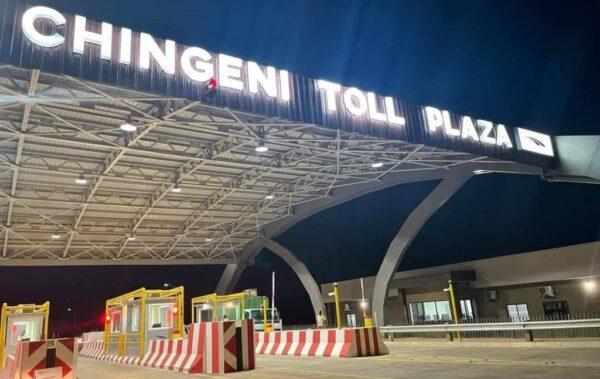
The funding crisis has widened the gap between Malawi’s deteriorating roads and its rapidly expanding urban centres, piling pressure on toll gates at Chingeni and Kalinyeke, even as motorists question why they are paying toll fees on roads that continue to deteriorate.
Malata acknowledged the frustration, but stressed that toll gates are being wrongly scapegoated for a problem they were never designed to solve.
“Those concerns are valid,” he said. “But toll revenues are legally restricted to maintaining the specific roads on which they are collected. The fuel levy was meant to support the rest of the national road network.”
In other words, tolls are being stretched to mask a fiscal hole created elsewhere.
Roads Authority chief executive engineer Amiel Champiti reinforced the argument, revealing that the failure to remit fuel levy funds has stalled planned infrastructure expansion.
He said at least three of the five proposed toll gates — on the Salima–Ntcheu, Mzuzu–Salima and Lilongwe–Mchinji roads — could have been completed if government had honoured its own financing framework.
Records seen by Nation on Sunday show that Chingeni and Kalinyeke toll gates each collect about K200 million per month, with cumulative collections of approximately K16.5 billion since their commissioning in November 2021 — a figure dwarfed by the K218 billion fuel levy arrears.
For analysts, this contrast exposes a deeper policy contradiction: government abandoned a broad-based, predictable funding mechanism in favour of politically convenient pump-price controls, then shifted the burden onto road users through tolls.
The roots of the crisis trace back to 2023, when government scrapped the fuel levy under the Automated Pricing Mechanism, arguing it wanted to keep fuel prices “affordable.” While pump prices appeared stable in the short term, economists later warned the move was fiscally reckless and structurally unsustainable.
That warning has now materialised in cracked highways, stalled roadworks and a Road Fund unable to meet its statutory mandate.
Cdedi executive director Sylvester Namiwa said the situation underscores the need for radical transparency to restore public trust.
“Quarterly income and expenditure reports should be made public. Malawians deserve to know how much is collected, how much is remitted and where the money goes,” Namiwa said.
Cdedi has since endorsed the proposed toll hike, arguing that charges unchanged since 2021 no longer reflect inflation and currency depreciation — a reluctant concession that analysts say punishes motorists for failures they did not create.
At its core, the K218 billion fuel levy arrears expose a governance crisis where politically expedient decisions trumped legal frameworks, long-term planning and infrastructure sustainability.
As roads crumble and toll fees rise, the unresolved question remains: who authorised the diversion or non-remittance of fuel levies, where did the money go, and when will those responsible be held accountable?
Until those questions are answered, analysts warn, Malawi’s road crisis will remain a manufactured disaster — driven not by lack of resources, but by choices made at the highest levels of government.
For More News And Analysis About Malawi Follow Africa-Press