Africa-Press – Malawi. State-owned companies in Malawi are becoming weaker financially, with their assets and income falling when compared to the size of the economy. This means these companies are now playing a smaller role in supporting national development and delivering public services.
This is according to the 2024/25 Consolidated Report for State-Owned Enterprises released by the Ministry of Finance, Economic Planning and Decentralisation.
The report shows that although state-owned enterprises (SOEs) remain important providers of services such as water and electricity, their overall contribution to the economy continues to shrink.
The report assessed the financial and operational performance of 23 commercial SOEs using audited results for the 2024/25 financial year.
Its release comes at a time when Malawi’s public finances are under pressure. A few weeks ago, the World Bank warned that weak governance, political interference and hidden debts in SOEs are undermining the country’s economy.
According to the report, total assets held by SOEs rose slightly from K2.37 trillion in 2024 to K2.50 trillion in 2025. However, their share of gross domestic product (GDP) dropped from 22 percent to 20 percent. This means the economy grew faster than the SOEs, reducing their importance in overall economic activity.
The Ministry of Finance says this trend partly reflects slower growth in SOE assets compared to the economy, as well as ongoing reforms aimed at improving efficiency and controlling investments.
On the income side, the situation is more worrying. Total SOE revenue fell from K679.4 billion in 2024 to K561.6 billion in 2025. As a share of GDP, revenue dropped from six percent to four percent.
The report says the decline is due to weak demand, customers failing to pay bills, delays in adjusting tariffs for water and electricity, and operational problems in some trading enterprises. These challenges have reduced sales and limited service delivery.
As a result, SOEs are accumulating assets more slowly and generating less income than the economy is growing, weakening their ability to fund operations, invest in infrastructure and repay debts.
The government has identified Blantyre Water Board (BWB), Electricity Supply Corporation of Malawi (Escom) and Electricity Generation Company (Egenco) as the highest-risk SOEs.
These key utility companies face serious financial problems, including heavy debts, cash shortages and reliance on government support. This situation threatens the reliability of essential services such as water and electricity.
Blantyre Water Board is described in the report as the worst-performing SOE and a major risk to government finances. Although its losses have reduced, it has recorded losses for several years in a row.
In the 2024/25 financial year, BWB recorded a net loss of K10.2 billion, an improvement from the K37.8 billion loss in the previous year. It also recorded losses of K20.7 billion in 2022/23 and K8.2 billion in 2021/22, despite supplying about 86 million litres of water every day.
By the end of the 2024/25 financial year, BWB owed Escom more than K28 billion in unpaid electricity bills, further weakening the power utility’s finances.
The report shows that BWB’s debts had grown to K86.38 billion, while its total assets stood at K78.88 billion, meaning it owed more than it owned. In the short term, the situation is even more severe, with current debts of K32.76 billion compared to current assets of just K5.56 billion.
Escom recorded a profit of K4.8 billion in 2024/25, reversing a massive loss of K65.3 billion in the previous financial year. However, its overall financial position remains weak.
Escom’s total liabilities rose from K509.56 billion in 2024 to K648.62 billion in 2025, mainly due to increased long-term borrowing, which grew from K249.31 billion to K324.82 billion. Short-term debts also rose to K148.86 billion, showing growing operational pressures.
Egenco also recorded a modest improvement, posting a net profit of K644.82 million in the 2024/25 financial year. However, its financial position weakened slightly as interest-bearing loans increased to K7.17 billion.
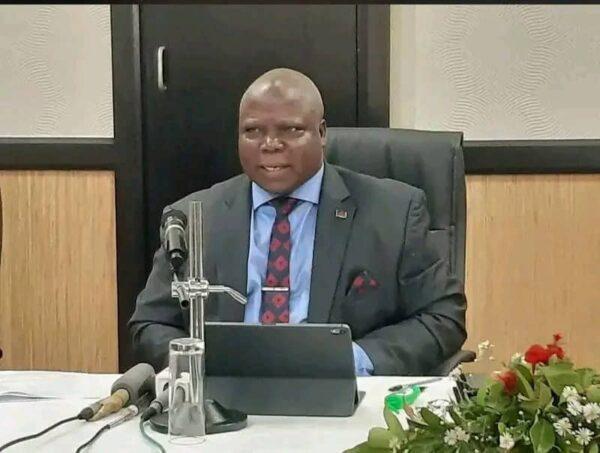
Treasury spokesperson Williams Banda said weak cash flow, historical losses and high debt levels mean several SOEs are likely to need government bailouts or direct financial support. He said even SOEs that are currently making profits remain vulnerable.
However, Banda said government is taking steps to reduce debt risks by limiting guaranteed loans and providing controlled financial support instead of open-ended bailouts.
Escom spokesperson Pilirani Phiri said the company has started a broad turnaround programme focusing on financial recovery, operational efficiency and institutional reforms. He said the return to profit in 2024/25 shows that progress is being made.
Officials from Egenco and Blantyre Water Board did not respond to questions sent to them.
Financial analyst Sylvester Malumba said the problems facing SOEs put serious pressure on the national economy. He said repeated losses, weak balance sheets and cash shortages force government to step in through loan guarantees, debt repayments, clearing arrears and injecting capital.
He warned that such interventions divert limited public funds away from critical areas such as health, education and development projects, worsening public debt and fiscal stress.
Malumba said reforms must focus on improving efficiency, governance and management before turning to tariff increases or more government support. He said the problems at Escom, BWB and Egenco reflect deep structural weaknesses rather than one-off financial failures.
Social and consumer rights activist Lucky Mbewe said political interference has long weakened SOEs and reduced their ability to serve the public effectively.
He said this must end if Malawi is to achieve long-term development goals such as Agenda 2063, warning that many citizens continue to suffer due to poor service delivery by state-owned companies, which he described as a violation of people’s rights.
For More News And Analysis About Malawi Follow Africa-Press