Africa-Press – Malawi. A stark warning has been issued to Malawi: mine its minerals, yes—but not at the cost of its future.
Speaking at the Annual General Meeting of the Malawi Law Society, UNDP Resident Representative Fennella Frost laid down a challenge that cuts to the heart of the country’s development agenda—prioritise environmental protection now, or risk irreversible damage later.
Her message was clear and urgent: Malawi cannot afford to chase mineral wealth blindly.
The warning comes at a time when government is aggressively pushing its ambitious ATM&M (Agriculture, Tourism, Mining and Manufacturing) strategy—an economic blueprint designed to unlock growth and improve livelihoods. On paper, it is bold and promising. In practice, it is increasingly fraught with risk.
With nearly 1,300 mining licences already issued as of May 2025, the rush is undeniable. Malawi is positioning itself to tap into its vast mineral potential. But beneath the surface of this momentum lies a growing environmental crisis that is becoming harder to ignore.
Across the country, the scars are already visible.
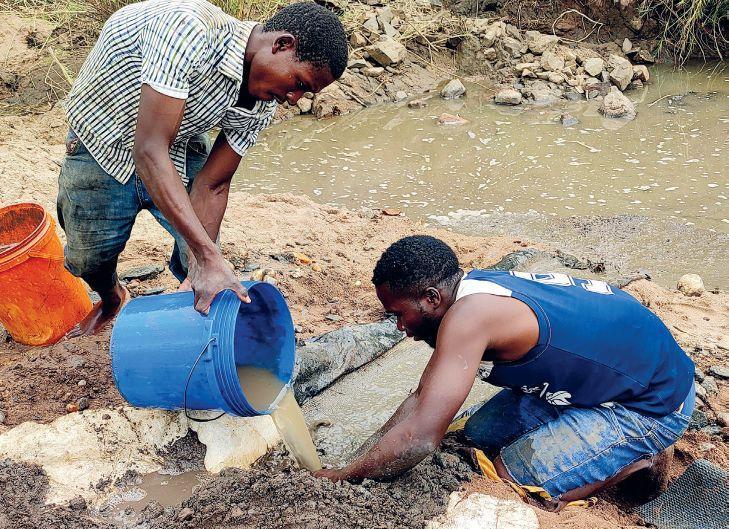
Unregulated artisanal miners are leaving behind gaping pits that may never be restored. Forests are being stripped bare. Once-productive farmland is turning into wasteland. Rivers are choking with silt, threatening water systems and communities downstream.
Even more concerning are reports that large-scale mining operations—expected to bring order and investment—are themselves contributing to environmental degradation, displacing communities and polluting ecosystems.
Nowhere is this tension more visible than in Mulanje, where a mining project has ignited fierce resistance from conservationists determined to protect Mulanje Mountain—a natural and cultural treasure they fear could be permanently damaged.
This is not a uniquely Malawian dilemma. Across Africa, mining has often delivered more destruction than development, giving rise to what economists call the “resource curse”—where countries rich in natural resources paradoxically suffer from environmental ruin, weak governance, and limited long-term benefit.
That is the path Malawi is being warned against.
The country stands at a critical crossroads: it desperately needs the economic boost that mining promises, yet it cannot afford to sacrifice its environment—the very foundation of agriculture, tourism, and human survival.
What Frost’s intervention has done is strip away the illusion that this is a simple development story. It is not. It is a high-stakes balancing act.
Handled well, mining could transform Malawi’s economy. Handled poorly, it could leave behind a legacy of destruction that no amount of revenue can repair.
The question now is whether Malawi will act before the damage becomes irreversible—or continue down a slippery path where short-term gains overshadow long-term survival.
For More News And Analysis About Malawi Follow Africa-Press