
What You Need to Know
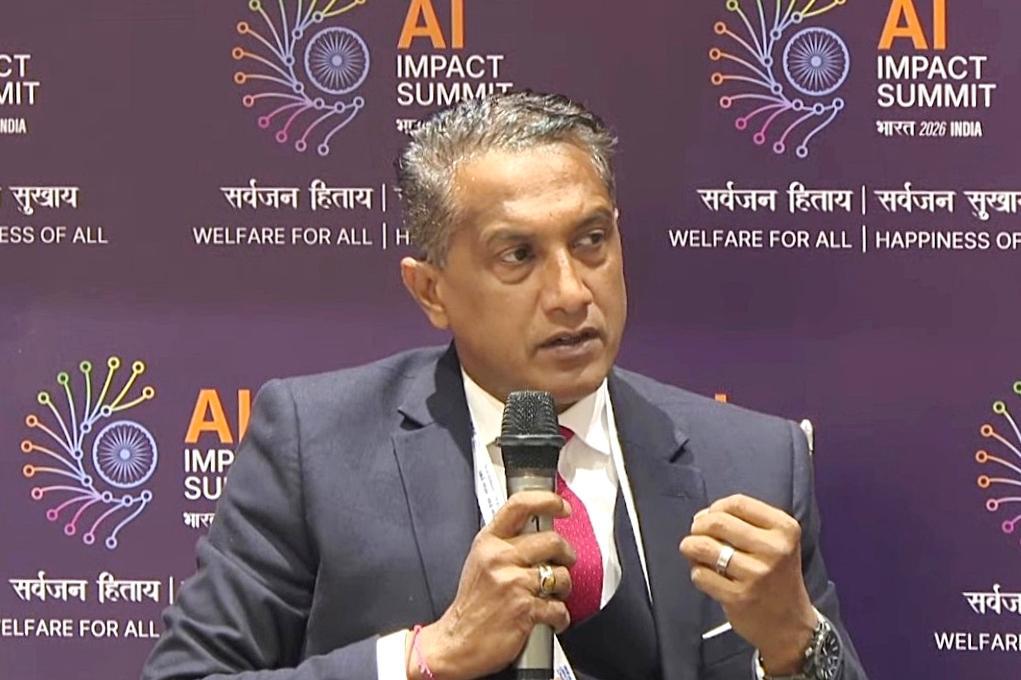
At the AI Impact Summit 2026, Dr. Avinash Ramtohul, Mauritius’ Minister of Information Technology, highlighted the importance of integrating AI into disaster management. He warned that digital threats are as critical as natural disasters and called for strategies that address both physical and cyber risks to enhance resilience in communities.
Africa-Press – Mauritius. The Minister of Information Technology, Communication and Innovation, Dr Avinash Ramtohul, urged global leaders to recognise cyberspace as a critical frontline in disaster management, warning that digital threats can be as destructive as floods or cyclones.
He made these remarks, today, during his intervention at the Artificial Intelligence (AI) Impact Summit 2026 in New Delhi, India, in the session on ‘AI for Resilience: Closing the Technology Adoption Gap in Disaster Risk Reduction.’
The Summit, running from 17 to 22 February, brings together global leaders and experts to discuss how AI can be developed and governed responsibly, promote inclusive innovation, and address societal challenges.
In his address, Dr Ramtohul emphasised that the scope of disasters has expanded beyond natural hazards such as floods and cyclones to include cyber threats, ransomware attacks, and failures of critical digital infrastructure. He explained that disruptions in digital systems can impair emergency services, utilities and public safety, producing consequences as severe as those caused by physical disasters. He therefore called for disaster management strategies that integrate both physical and digital risks to ensure comprehensive resilience for countries and communities.
Minister Ramtohul further highlighted the role of digital twins in bridging the physical and virtual worlds. These detailed virtual models of infrastructure, buildings, and public spaces can provide emergency responders with real-time access to structural layouts, utility networks and the location of people, enabling faster and more precise interventions during emergencies. He added that technologies such as thermal imaging and occupancy sensors could further enhance situational awareness and help save lives during fires, floods, or other crises.
Dr Ramtohul also cautioned against overreliance on fully automated AI systems in life-critical operations. While AI can support early warning and decision-making, he stressed that human oversight is essential to prevent errors, cyber manipulations, or false alerts that could disrupt emergency response or undermine public confidence. Retaining human control in sensitive situations, he added, ensures accountability, reliability, and safety in AI-enabled disaster management.
Referring to Mauritius’ vulnerability as a Small Island Developing State to flash floods and extreme weather events, the Minister noted that the country is deploying early warning mechanisms, including cell broadcast systems. He emphasised that critical emergency decisions must remain human-verified, highlighting the importance of keeping humans central in AI-driven governance and decision-making.
Mauritius, as a Small Island Developing State, faces significant challenges from climate change, including extreme weather events and flash floods. The country has been proactive in implementing early warning systems to mitigate these risks. The integration of AI in disaster management represents a forward-thinking approach to enhance the effectiveness of these systems, ensuring that both physical and digital threats are addressed comprehensively. This reflects a growing recognition of the need for innovative solutions in the face of evolving challenges.